Navigating the Evolution of Section 503 Compliance: Sustaining Disability Inclusion Under New Federal Regulatory Frameworks

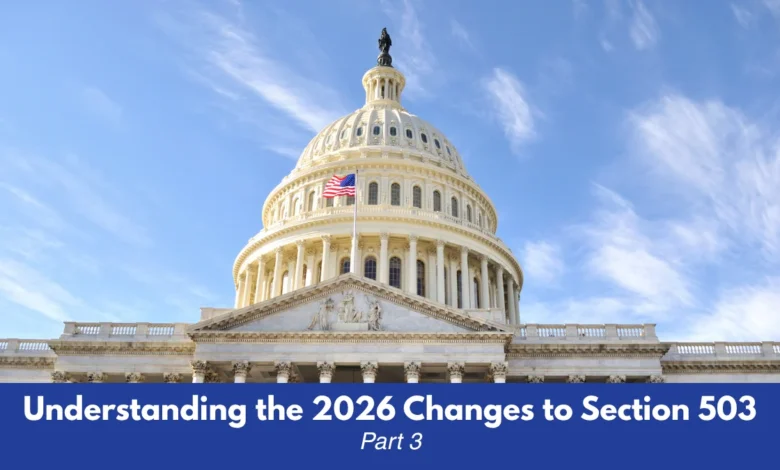
The regulatory landscape governing federal contractors and disability employment underwent a significant shift with the Department of Labor’s 2026 final rule, which effectively retired the long-standing 7% utilization goal. As federal contractors transition into this new era of compliance beginning September 21, 2026, the fundamental obligations under Section 503 of the Rehabilitation Act of 1973 remain intact. While the specific federal measurement requirement has been removed, the mandate for contractors to take affirmative action to employ and advance qualified individuals with disabilities persists as a cornerstone of federal contracting policy. This third installment in our series examines how organizations can leverage increased regulatory discretion to refine their inclusion strategies, maintain accountability, and foster truly accessible workplaces.
A Chronology of Section 503 Regulatory Evolution
Section 503 of the Rehabilitation Act has served as the primary legislative vehicle for ensuring that companies doing business with the federal government provide equitable opportunities for people with disabilities. Since its inception in 1973, the law has been periodically updated to reflect the changing nature of the workforce and the evolving technological landscape.
The most notable recent iteration occurred in 2014, when the Department of Labor’s Office of Federal Contract Compliance Programs (OFCCP) introduced a 7% utilization goal for qualified individuals with disabilities in each job group. This metric was designed to provide a quantitative benchmark for contractors to gauge the effectiveness of their outreach and recruitment efforts. However, over the subsequent decade, stakeholders—including both contractor advocacy groups and disability rights organizations—engaged in a complex debate regarding the efficacy of this fixed percentage.
By 2024 and 2025, federal regulators signaled a move toward a more qualitative, outcome-oriented approach. The 2026 final rule, finalized in August 2026, officially phased out the mandatory 7% goal, replacing it with a framework that grants contractors broader discretion to determine how they measure and evaluate their own progress. This transition marks a departure from rigid, top-down compliance metrics toward a model that encourages individualized, enterprise-level strategies for disability inclusion.
Data-Driven Perspectives on Disability Employment
The shift away from the 7% goal does not occur in a vacuum. Labor market data consistently highlights that individuals with disabilities remain underrepresented in the workforce despite the mandates of Section 503. According to data from the Bureau of Labor Statistics (BLS), the labor force participation rate for people with disabilities has historically hovered significantly below that of their non-disabled counterparts. In early 2026, the participation rate for persons with a disability was approximately 24%, compared to roughly 68% for persons without a disability.
For federal contractors, these figures underscore the necessity of robust, proactive recruitment strategies. The elimination of the 7% goal removes a specific compliance hurdle, but it also creates a vacuum that, if left unfilled, could lead to a decline in accountability. Industry analysts suggest that organizations that abandon all quantitative tracking risk losing sight of internal barriers that prevent the advancement of disabled talent. The goal of the new framework is not to reduce the rigor of compliance, but to allow contractors to implement metrics that are more reflective of their specific industry, geographic location, and organizational structure.
Strengthening Accessibility in the Digital Hiring Age
One of the most critical components of the modern compliance strategy is the accessibility of the hiring process. As recruitment has moved almost entirely online, the digital interface has become the first point of contact—and often, the first point of exclusion. The 2026 rule places renewed emphasis on ensuring that application systems, career portals, and assessment technologies are fully compatible with assistive technologies such as screen readers, magnification software, and keyboard-only navigation.
Accessibility extends beyond the technical requirements of the website. It involves a holistic review of the candidate journey. Employers are encouraged to perform audits on job descriptions to identify "accidental barriers"—such as requirements for physical capabilities that are not essential functions of the job, or language that implicitly discourages individuals with certain disabilities from applying.
Furthermore, the process for requesting reasonable accommodations must be transparent and easily accessible to all applicants. Data suggests that candidates are more likely to self-identify as having a disability during the application process if they have clear instructions on how to request accommodations and confidence that their request will be handled professionally and without bias. Providing this information upfront, rather than waiting for a candidate to reach out, is a best practice that aligns with the spirit of Section 503’s affirmative action mandate.
The Role of Strategic Partnerships and Community Engagement
Meaningful disability inclusion requires a departure from transactional outreach. Historically, some contractors have relied on high-volume, low-impact events—such as sporadic job fairs—to meet compliance obligations. The new regulatory environment encourages a shift toward sustained, multi-year partnerships with disability-led organizations and specialized recruitment agencies.
By engaging with organizations that have deep roots in the disability community, contractors can gain qualitative insights into the barriers that potential employees face. These relationships allow for a bidirectional flow of information: the organization helps the contractor refine its recruitment practices, while the contractor provides the organization with a better understanding of the skills and roles needed within the firm. This strategic approach to outreach is more likely to yield long-term retention and advancement outcomes than traditional, short-term campaigns.
The New Framework: A Shift Toward Voluntary Accountability
While the federal government has removed the mandatory utilization goal, it has explicitly stated that contractors remain free to continue conducting utilization analyses voluntarily. For many large-scale federal contractors, maintaining a consistent data set is essential for benchmarking and long-term planning.
However, the legal landscape surrounding these voluntary measures requires careful navigation. The final rule emphasizes that any internal tracking must remain compliant with broader employment laws, including the Americans with Disabilities Act (ADA). Contractors are advised to consult with legal counsel to ensure that their voluntary data collection methods do not inadvertently create risks related to discrimination or the improper handling of sensitive health-related information.
Effective internal accountability systems under the new rule may include:
- Pipeline Analysis: Tracking the percentage of applicants with disabilities at each stage of the funnel, from initial application to interview and offer.
- Retention Metrics: Monitoring the turnover rate of employees with disabilities compared to the general workforce.
- Advancement Audits: Examining the promotion rates of employees with disabilities to ensure that career development pathways are truly inclusive.
- Climate Surveys: Utilizing anonymous feedback tools to assess the inclusive nature of the workplace culture and the effectiveness of accommodation processes.
Broader Implications and Strategic Outlook
The transition to a more discretionary compliance model represents a mature stage in the evolution of federal disability policy. It shifts the burden of proof from a simple numerical check-box to a requirement for demonstrable, continuous improvement. For federal contractors, this is an opportunity to move beyond "compliance for the sake of compliance" and toward the integration of disability inclusion as a core business strategy.
The potential for competitive advantage is significant. Organizations that cultivate truly accessible and inclusive environments are better positioned to tap into an underutilized talent pool, fostering innovation and resilience. As the workforce demographic shifts and the labor market remains competitive, the ability to recruit and retain high-performing individuals with disabilities will likely become a key differentiator for top-tier federal contractors.
In summary, while the regulatory goalposts have moved, the fundamental mission of Section 503 remains unchanged. The removal of the 7% utilization goal is not an invitation to scale back efforts, but rather an invitation to innovate. By focusing on accessibility, fostering deep community partnerships, and implementing voluntary, data-driven internal metrics, federal contractors can ensure they are not only meeting the requirements of the law but are actively contributing to a more equitable and inclusive economy. The period beginning September 21, 2026, will be defined by the proactive choices of employers who recognize that true inclusion is a continuous process, not a static destination.