The Power of Refusal: How Studio Fizbin’s Say No! More Intersects with Palliative Care Communication

The modern workplace and daily social interactions are heavily governed by an implicit expectation of compliance. From childhood, individuals are socially conditioned to equate the word "yes" with cooperation, congeniality, and politeness, while "no" is frequently stigmatized as disruptive, confrontational, or aggressive. This societal pressure often forces individuals into agreeing to demands, tasks, or social engagements that run entirely counter to their personal well-being and best interests. Nowhere is this dynamic more acutely felt than in high-stress corporate environments or complex medical situations.
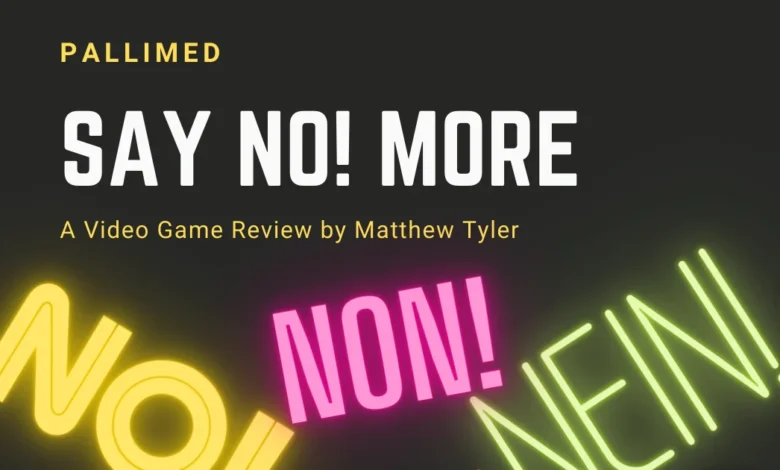
Examining this phenomenon from a unique intersection of interactive entertainment and clinical practice, Chicago-based palliative care physician Dr. Matthew Tyler recently explored how the fundamental right of refusal influences human agency. Utilizing Studio Fizbin’s satirical video game Say No! More as a conceptual springboard, Dr. Tyler’s analysis highlights a critical communication hurdle: how breaking free from reflexive compliance can radically improve conversations in high-stakes environments, particularly in serious illness discussions between clinicians and patients.
The Corporate Satire of Say No! More
Released by German independent developer Studio Fizbin, Say No! More presents an exaggerated, comical take on workplace subservience. Players step into the shoes of a customizable corporate intern who suffers the ultimate indignity when upper management steals their lunch. Driven by a newfound sense of injustice, the protagonist embarks on an odyssey through the corporate hierarchy—confronting middle managers, executives, and eventually the C-suite—armed with a single, potent weapon: the word "no."
In the game’s universe, the ability to utter this previously forbidden word becomes a physical force capable of blasting obstacles and forcing antagonists to reevaluate their domineering behavior. While undeniably silly and lighthearted on the surface, the game subtly tackles deep-seated issues of social conditioning. It forces players to confront the psychological barrier preventing them from setting boundaries. By turning refusal into a mechanics-driven triumph, the title illustrates that saying "no" is not merely an act of defiance, but a vital mechanism for self-preservation and psychological reclamation.
Social Conditioning and the Autopilot "Yes"
The psychological reluctance to decline requests is deeply rooted in human socialization. Behavioral studies and negotiation frameworks, such as those outlined by negotiation expert Chris Voss in Never Split the Difference and William Ury in The Power of a Positive No, emphasize that humans naturally seek harmony and fear the perceived social friction of rejection. Consequently, when confronted with a direct inquiry, individuals frequently respond on autopilot with an affirmative answer to avoid discomfort, even when that answer introduces personal detriment or operational strain.
This behavioral reflex presents a formidable challenge in professional fields where clear, unvarnished communication is essential. In healthcare, particularly within palliative care and serious illness management, understanding a patient’s true desires requires piercing through this layer of reflexive agreeableness. Patients frequently want to please their medical team, avoid being labeled as "difficult," or spare their families additional emotional burden. As a result, they may readily agree to aggressive medical interventions or schedules that do not align with their personal values or quality-of-life goals.
Reframing Clinical Communication: Disrupting the Reflex
Recognizing this automatic compliance, proactive clinicians are increasingly revising how they structure inquiries to eliminate the burden of refusal. Standard medical communication often relies on questions that subtly bias the patient toward an affirmative response. For instance, asking a hospitalized patient, "Do you still want us to do everything?" or "Would you like to go home?" carries an inherent linguistic weight that pushes patients toward giving the answer they believe the physician wants to hear, rather than what they genuinely feel.
To counter this, communication experts advocate for questions that normalize and destigmatize negative responses. Timing is a critical first variable. When a clinician initiates a sensitive conversation—whether in person or via telephone—asking, "Is this a good time to talk?" almost invariably prompts a polite "Yes," regardless of whether the patient is driving in heavy traffic, sitting in a crowded room, or distracted by pressing family matters.

By shifting the phrasing to, "Is this a bad time to talk?", clinicians disrupt the autopilot response loop. This simple linguistic adjustment yields profound behavioral results. If the timing is genuinely poor, the patient can readily answer "Yes" and follow up with a more appropriate time window, or they can answer "No" with a sense of ownership, feeling fully engaged and mentally prepared to transition their focus to the discussion at hand.
Prioritizing Values Over Binary Choices
Beyond timing, the architecture of clinical inquiry dictates whether a patient can establish meaningful boundaries regarding life-prolonging therapies. Palliative care frameworks emphasize that clinicians should first explicitly unearth what matters most to the patient before presenting clinical options or treatment forks.
Once a patient’s core values—such as prioritizing comfort at home over hospital-based interventions—are clearly articulated, the subsequent questions must force introspection and prioritization. A well-constructed conversation might involve a clinician stating:
"I am hearing that spending as much time at home with your family is very important to you, but that you are also interested in this clinical trial. Would you be willing to risk that time at home for the chance to extend your life?"
In this scenario, a response of "No" empowers the patient to draw a distinct boundary around their treatment trajectory, safeguarding the lifestyle and moments they value above all else. Conversely, a response of "Yes" explicitly clarifies their internal priority hierarchy, enabling the medical team to tailor their advisory role and guide the patient toward informed next steps. Far from being a mere obstruction, the ability to say "no" functions as a precise instrument for mapping personal autonomy.
Broader Implications and Interdisciplinary Insights
The intersection of video game culture and clinical communication highlights a growing recognition that empathy and effective dialogue can be examined through unexpected lenses. Media analysts, educators, and healthcare professionals are increasingly utilizing interactive media to train empathy, explore systemic power dynamics, and reflect on human psychology.
Platforms such as the YouTube channel hosted by Dr. Amiad Fredman, Digital Doc Games, frequently examine how video games can impart profound lessons applicable to real-world medical practice, education, and emotional well-being. By framing serious concepts through accessible mediums like Studio Fizbin’s Say No! More—which is widely accessible across PC via Steam, iOS, and Nintendo Switch platforms—professionals across various disciplines are finding fresh avenues to discuss complex psychological phenomena.
Ultimately, palliative care aims to restore a sense of control and dignity to individuals navigating life-limiting illnesses. Creating a conversational environment where patients feel safe, empowered, and psychologically validated in saying "no" is an essential component of that mission. Whether navigating corporate hierarchies, managing high-stakes negotiations, or discussing end-of-life care, recognizing the profound value of refusal ensures that human agency remains preserved in an increasingly demanding world.
Related posts: