IAPC releases new educational infographic on the significance of palliative care at home as part of ongoing care continuum series

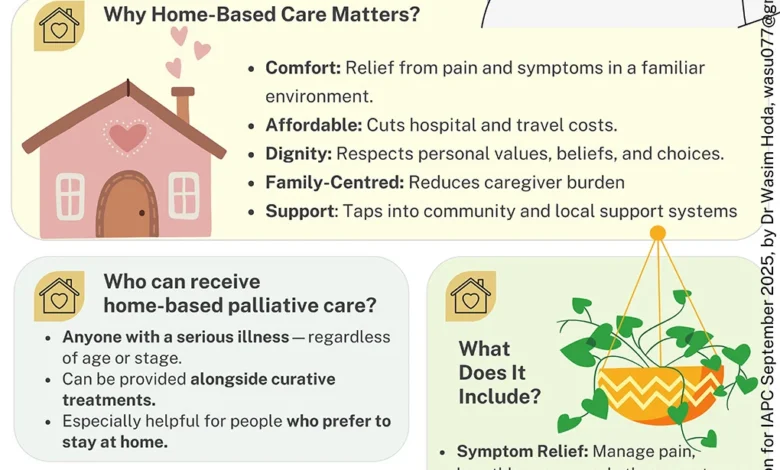
The Indian Association of Palliative Care (IAPC) has officially released the third installment of its comprehensive infographic series, focusing specifically on the critical domain of Palliative Care at Home. This latest educational resource, launched in September 2025, serves as a strategic extension of the organization’s “Care Continuum” initiative, which first debuted in June 2025. By distilling complex medical and logistical information into accessible visual formats, the IAPC aims to bridge the gap between clinical providers and the patients they serve, particularly those residing in domestic settings who require specialized symptom management and supportive care.
The Evolution of the Care Continuum Series
The IAPC’s decision to develop a dedicated infographic series stems from a broader systemic challenge within the Indian healthcare landscape: the transition of patients from hospital-based acute care to home-based palliative support. The “Care Continuum” series was conceptualized to address the fragmentation often experienced by patients suffering from life-limiting illnesses.
The first chapter of the series, released in June 2025, provided a foundational overview of the trajectory of palliative care, mapping the journey from diagnosis to end-of-life support. Following the positive reception of the first two installments, the third part—Palliative Care at Home—was prioritized to address the growing demand for community-based care models. This specific focus acknowledges that for a significant majority of patients, home remains the preferred environment for receiving care, provided that adequate medical guidance and support systems are in place.
The Role of Home-Based Palliative Care
Home-based palliative care is defined by a multidisciplinary approach that optimizes the quality of life for patients and their families. It encompasses the relief of physical pain, management of psychological distress, and the provision of social and spiritual support. The new IAPC infographic highlights several key pillars of this model, including:
- Symptom Management: Training family caregivers to monitor and mitigate common symptoms such as pain, nausea, and dyspnea.
- Care Coordination: Establishing a clear line of communication between the patient’s home environment and their primary palliative care team.
- Caregiver Wellbeing: Addressing the physical and emotional burnout that often affects family members acting as primary caregivers.
- Resource Mobilization: Identifying essential equipment and medication access points that allow for professional-grade care within a residential setting.
The infographic serves as a simplified roadmap for families who may otherwise feel overwhelmed by the complexities of clinical care delivery in a home environment.
Supporting Data and Demographic Context
The necessity for such educational initiatives is underscored by shifting demographic and epidemiological trends in India. According to recent data from the Lancet Commission on Palliative Care, the demand for palliative care in low- and middle-income countries is projected to rise significantly due to an aging population and the increasing prevalence of non-communicable diseases (NCDs) such as cancer, cardiovascular disease, and chronic respiratory conditions.
Current estimates suggest that fewer than 4% of those in need of palliative care in India have access to these services. The vast majority of the population lacks formal training in symptom management, leading to unnecessary hospital readmissions and prolonged suffering. By promoting home-based care, the IAPC is aligning its advocacy with global health standards, which emphasize that palliative care should be integrated into primary healthcare systems rather than being relegated exclusively to specialized hospital wards.
Contributions and Expert Collaboration
The development of the September 2025 infographic was facilitated by the expertise of Dr. Wasimul Hoda, a Fellow in Pain Medicine at the Department of Anaesthesia, Critical Care, and Pain Medicine at the All India Institute of Medical Sciences (AIIMS), New Delhi. Dr. Hoda’s involvement brings a layer of clinical rigor to the project, ensuring that the visual guidance provided aligns with current best practices in pain management and critical care medicine.

The IAPC has indicated that this collaborative model—pairing professional medical expertise with the organizational reach of the association—is a vital component of their strategy to scale palliative awareness. By leveraging the prestige and clinical standard of institutions like AIIMS, the IAPC ensures that the information disseminated is both accurate and actionable for the general public and healthcare trainees.
Analysis of Systemic Implications
The long-term implication of the IAPC’s initiative is a potential reduction in the burden on tertiary care facilities. When patients and their families are equipped with the knowledge to manage symptoms at home, the frequency of emergency room visits for manageable conditions is reduced. This shift not only improves the patient experience by allowing them to remain in a familiar environment but also allows hospital resources to be allocated more efficiently toward acute, life-saving interventions.
However, the initiative also highlights a persistent hurdle: the need for a robust policy framework to support home-based care providers. While infographics serve as excellent educational tools, the IAPC’s broader mission involves advocating for the integration of these services into the national health insurance architecture and the formal training curricula of nurses and community health workers.
Dissemination Strategy and Accessibility
To maximize the impact of the September 2025 infographic, the IAPC has adopted a multi-channel distribution strategy. The resource is currently available on the association’s official website and is being actively circulated across its social media platforms. By utilizing digital distribution, the IAPC ensures that the information reaches urban and rural healthcare providers alike, overcoming geographical barriers that often limit access to specialized medical training.
The organization has encouraged its members, partner institutions, and the public to share the content within their professional and personal networks. By doing so, the IAPC hopes to spark conversations regarding the normalization of palliative care as a fundamental human right rather than a niche medical service.
Looking Ahead: The Future of the Series
As the IAPC moves into the final quarter of 2025, the organization is expected to continue the “Care Continuum” series with further installments focusing on specific sub-topics, such as pediatric palliative care, geriatrics, and the intersection of mental health with terminal illness.
The success of the September release reinforces the organization’s commitment to continuous learning. By maintaining a steady cadence of high-quality, scientifically-backed educational content, the IAPC is effectively building a comprehensive digital repository that serves as a permanent reference for the Indian medical community. For stakeholders interested in the full archive of resources, the IAPC continues to maintain a centralized portal where all previously published infographics remain accessible for public download and dissemination.
The IAPC remains focused on its core objective: ensuring that every patient, regardless of their location or socioeconomic status, has access to the comfort and dignity that palliative care provides. This latest effort serves as a reminder that through consistent advocacy, education, and expert-led communication, the quality of life for the chronically and terminally ill can be significantly improved, one home at a time.