Global Dementia Cases Projected to Double by 2050 According to Landmark JAMA Neurology Study

A landmark study published in JAMA Neurology has delivered an alarming global health forecast, projecting that the annual number of new dementia cases will double worldwide over the next quarter-century. Released in October 2026, the research underscores an impending crisis for healthcare systems, policymakers, and the millions of families navigating the realities of cognitive decline.
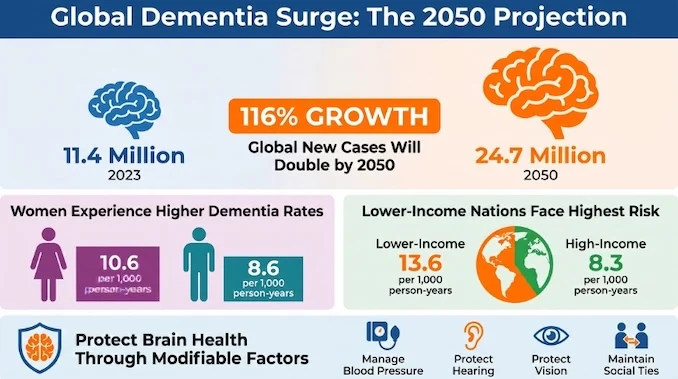
The comprehensive epidemiological report estimates that new global cases will surge by 116%, rising from an estimated 11.4 million cases in 2023 to 24.7 million new cases annually by 2050. While the sheer magnitude of these figures presents a daunting challenge, public health experts emphasize that the trajectory of the epidemic is not entirely unchangeable. Understanding the core drivers behind this surge—ranging from demographic shifts to disparities in cardiovascular health—provides a crucial roadmap for preventative intervention and systemic reform.
The Mechanics Behind the Surge: Aging and Demographics
At the heart of the projected doubling is a demographic phenomenon: the rapid and unprecedented aging of the global population. Chronological age remains the single most significant risk factor for developing dementia, including Alzheimer’s disease and related cognitive disorders. As life expectancy increases globally due to advancements in public health, sanitation, and acute medical care, a larger segment of the world’s population is reaching advanced ages where neurodegenerative conditions are most prevalent.
Dr. Emer MacSweeney, a prominent consultant neuroradiologist, characterized the findings as an urgent call to action rather than a fatalistic inevitability. According to Dr. MacSweeney and co-authors of the research, the data should serve as a wake-up call for governments and medical communities to accelerate investments in early detection, preventative care, and therapeutic treatments. Without decisive systemic intervention, the strain on global healthcare infrastructure threatens to overwhelm social safety nets.
Comparative Analysis of Global Dementia Incidence

To fully grasp the scope of the projected epidemic, researchers examined incidence rates across various demographics and geographic regions. The findings highlight stark disparities that point directly to underlying socioeconomic and biological risk factors.
Annual New Global Cases:
- 2023 Baseline: 11.4 million new cases
- 2050 Projected: 24.7 million new cases (representing a 116% increase)
Incidence Rates by Gender:
- Women: 10.6 new cases per 1,000 person-years
- Men: 8.6 new cases per 1,000 person-years
Geographic Disparities:
- Low- and Middle-Income Countries (LMICs): 13.6 cases per 1,000 person-years
- High-Income Nations: 8.3 cases per 1,000 person-years
The Gender Gap: Unpacking Biological and Social Vulnerabilities
One of the most notable revelations from the JAMA Neurology study is the pronounced gender gap in dementia incidence. Women consistently demonstrated a higher risk, recording 10.6 new cases per 1,000 person-years compared to 8.6 for men.
While women generally outlive men—and longevity is a primary driver of dementia risk—researchers note that lifespan alone does not fully account for the discrepancy. Emerging scientific consensus points toward sex-specific biological factors. Hormonal shifts during menopause, the lifelong neuroprotective role and subsequent withdrawal of estrogen, and distinct immune system responses all play critical roles in brain health. Consequently, medical professionals stress the importance of tailored preventative strategies for women that address cardiovascular and cognitive health decades before the onset of senior years.

The Heart-Brain Connection and Geographic Disparities
The geographical divide identified in the study underscores a vital public health lesson: the inextricable link between cardiovascular health and cognitive longevity. Low- and middle-income countries (LMICs) face a significantly heavier incidence burden at 13.6 cases per 1,000 person-years, contrasting sharply with the 8.3 cases recorded in high-income nations.
Over the past several decades, high-income countries have achieved notable successes in reducing smoking rates, improving the management of hypertension, and controlling hypercholesterolemia. These vascular improvements have yielded a secondary benefit: stabilizing or slightly reducing age-specific dementia rates in certain wealthy regions. Conversely, many LMICs are currently experiencing epidemiological transitions marked by rising rates of obesity, stroke, type 2 diabetes, and cardiovascular disease.
Because the brain relies on an extensive, healthy network of blood vessels to deliver oxygen and vital nutrients, conditions that compromise the cardiovascular system directly increase the risk of vascular dementia and accelerate the pathology of Alzheimer’s disease.
Actionable Mitigation and Modifiable Risk Factors
While individuals cannot alter their chronological age or genetic predisposition, public health agencies emphasize that a substantial proportion of dementia cases are linked to modifiable risk factors. Medical experts advocate for a concentrated focus on lifestyle and cardiovascular fundamentals to safeguard long-term cognitive function:
- Blood Pressure Management: Controlling hypertension is widely recognized as one of the most effective ways to preserve cerebral blood flow and prevent vascular damage.
- Metabolic Health: Maintaining healthy blood sugar levels and managing diabetes reduces systemic inflammation and neurovascular deterioration.
- Social and Cognitive Engagement: Remaining socially active and continuously challenging the brain helps build cognitive reserve, delaying the clinical manifestations of neurodegeneration.
- Sensory and Physical Health: Protecting hearing and vision, alongside maintaining a regular physical exercise regimen, strongly correlates with reduced cognitive decline.
Broader Implications for Global Healthcare Systems

The projection of 24.7 million annual cases by 2050 carries profound economic and societal implications. Beyond the emotional toll on patients and their families, the financial cost of long-term care, specialized medical infrastructure, and lost productivity will place unprecedented demands on national economies.
Healthcare economists and advocacy groups argue that current funding models are inadequate to meet the impending demand. Immediate policy adjustments are required, including subsidized training programs for professional and family caregivers, expanded access to diagnostic biomarkers, and robust funding for disease-modifying therapies currently navigating clinical pipelines.
Conclusion and Expert Consensus
The October 2026 JAMA Neurology report provides a sobering statistical outlook, yet experts maintain that the future remains malleable. Mitigating the global rise of dementia requires a dual approach: empowering individuals with practical, heart-healthy lifestyle guidance, and demanding coordinated, international leadership to address systemic health disparities. Without a unified global commitment to prevention, early diagnosis, and equitable care access, the human and societal costs of the coming decades will prove monumental.