IAPC Releases New Educational Infographic Focused on Palliative Care at Home as Part of Ongoing Care Continuum Series

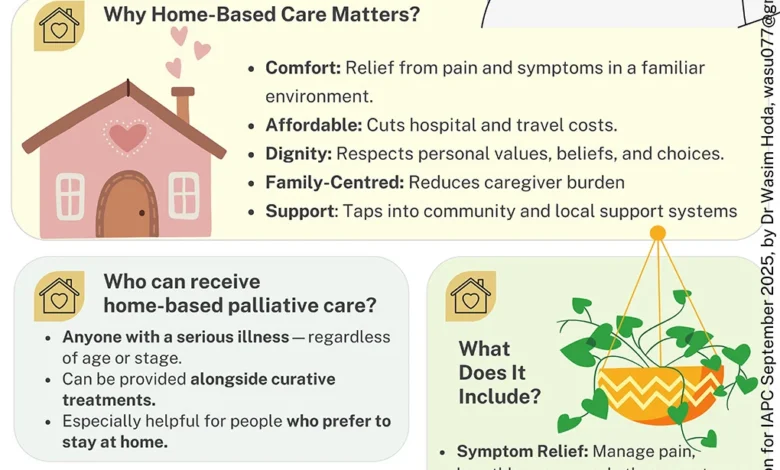
The Indian Association of Palliative Care (IAPC) has officially released the third installment of its "Care Continuum" infographic series, focusing specifically on the critical domain of Palliative Care at Home. This latest resource serves as a strategic educational tool designed to bridge the information gap regarding home-based supportive care, a segment of healthcare that remains vital yet often misunderstood in the broader medical landscape. The release, which follows the initial launch of the series in June 2025, underscores the organization’s commitment to standardizing palliative literacy across India.
Contextual Background of the Care Continuum Initiative
The "Care Continuum" initiative was conceptualized by the IAPC to address the fragmented nature of end-of-life and chronic illness management. Palliative care is often erroneously associated exclusively with terminal hospital settings; however, the IAPC’s recent series aims to dismantle this perception by illustrating that palliative support is a multi-faceted process that begins at diagnosis and extends into the patient’s home environment.
The first two installments of the series established the fundamental philosophy of the continuum, mapping the trajectory of care from initial symptom management to psychological and spiritual support. By introducing the third part—"Palliative Care at Home"—the IAPC is highlighting the shift toward community-based care models, which are increasingly seen as essential for improving patient quality of life and reducing the burden on overstretched tertiary healthcare facilities.
Chronology of the Educational Series
The timeline for this initiative reflects a deliberate, phased approach to public health communication:
- June 2025: The IAPC launched the "Care Continuum" series, providing an overarching framework for palliative services.
- July–August 2025: The organization utilized internal feedback and clinical data to refine the messaging for the subsequent modules, ensuring that the infographics could be easily interpreted by both medical practitioners and caregivers.
- September 2025: The official release of the "Palliative Care at Home" infographic, developed with technical input from clinical experts.
The Role of Home-Based Palliative Care: A Data-Driven Perspective
Home-based palliative care is not merely a preference for patients; it is a clinical necessity in many demographic contexts. Research in public health suggests that over 70% of patients with chronic, life-limiting illnesses prefer to spend their remaining time in the comfort of their homes rather than in institutionalized settings.
However, the implementation of home care faces significant hurdles. According to recent health metrics, the doctor-to-patient ratio in India necessitates a scalable model where community health workers and family caregivers are empowered to provide basic palliative support. The IAPC infographic addresses this by visualising the essential requirements for home care, including pain assessment, medication management, and the coordination of multi-disciplinary teams.
The integration of such care models is supported by evidence that home-based interventions can significantly reduce hospital readmission rates and lower the total cost of care for families. By demystifying the procedures involved—such as the administration of opioids for pain management or the utilization of supportive devices—the IAPC aims to alleviate the anxiety that often prevents families from opting for home-based support.
Technical Collaboration and Expert Contributions
The development of the September 2025 infographic was supported by Dr. Wasimul Hoda, a Fellow in Pain Medicine at the Department of Anaesthesia, Critical Care, and Pain Medicine at AIIMS New Delhi. His involvement indicates a high level of clinical rigor behind the infographic’s content.
In the medical community, the expertise of pain medicine fellows is considered paramount, as they bridge the gap between acute critical care and long-term symptom management. Dr. Hoda’s contribution highlights a growing trend within prestigious institutions like AIIMS to foster collaborative outreach, moving beyond hospital walls to educate the public on the management of chronic pain and complex symptom profiles within the domestic sphere.

Implications for the Indian Healthcare Ecosystem
The release of these infographics carries significant implications for the evolution of palliative care in India. By utilizing digital dissemination, the IAPC is effectively bypassing traditional, slow-moving educational channels. The strategy is to leverage social media and web-based platforms to ensure that information reaches both urban centers and rural areas where specialized palliative clinics may be sparse.
The broader impact of this initiative includes:
- Standardization of Care: Providing a uniform set of guidelines that families can follow ensures that the quality of care remains consistent, regardless of geographical location.
- Empowerment of Caregivers: By providing clear, visual, and concise information, the IAPC reduces the psychological burden on family members who are often thrust into the role of primary caregivers without formal training.
- Policy Influence: As organizations like the IAPC continue to produce professional-grade resources, they build the case for more robust government policy regarding home-based healthcare subsidies and the training of community health workers.
Addressing the Gap in Specialized Training
One of the primary challenges in Indian palliative care is the scarcity of trained professionals. While the IAPC is a leader in advocacy, the "Care Continuum" series acts as a stop-gap measure to provide actionable intelligence to the public. Analysis of current medical education trends suggests that while palliative care is being integrated into undergraduate curricula, there is still a massive deficit in the workforce.
The infographic series helps bridge this by translating complex medical protocols into accessible information. For instance, the emphasis on home care requires a deep understanding of symptom management—a core competency for pain medicine specialists. By simplifying these concepts, the IAPC is effectively democratizing access to high-level clinical knowledge.
Future Directions for the IAPC Campaign
The IAPC has signaled that this series is part of a larger, long-term endeavor to elevate the profile of palliative medicine. Following the success of the September infographic, stakeholders anticipate that the upcoming installments will address more specialized areas, such as pediatric palliative care and geriatric symptom management.
For healthcare providers and the general public, the IAPC’s website remains the primary repository for these documents. The association has explicitly encouraged the dissemination of these materials, recognizing that the efficacy of palliative care is directly proportional to the public’s awareness of its existence. By encouraging sharing across professional and personal networks, the IAPC is creating a decentralized network of information that empowers individuals to demand higher standards of care during their most vulnerable moments.
Conclusion and Call to Action
As the healthcare landscape in India continues to grapple with the rising prevalence of non-communicable diseases and an aging population, the importance of palliative care has never been more pronounced. The IAPC’s "Palliative Care at Home" infographic is a timely, evidence-based contribution that offers a clear roadmap for families and practitioners alike.
The initiative serves as a reminder that the "Care Continuum" is not just a clinical concept but a social imperative. By supporting home-based care, the healthcare system can provide a more compassionate and dignified experience for patients. The IAPC continues to invite medical professionals, students, and caregivers to utilize these resources, which are available for download through their official web portal, to foster a more informed and capable society in the management of chronic and terminal health conditions.
For those seeking to implement these guidelines, the IAPC remains the primary body for consultation and further education, maintaining its role as the authoritative voice in the promotion of palliative care across the nation. The success of this series will ultimately be measured by the increased utilization of home-based support services and the improved quality of life for the countless patients served by these models.