IAPC Releases New Infographic on Palliative Care at Home to Expand Community Health Awareness

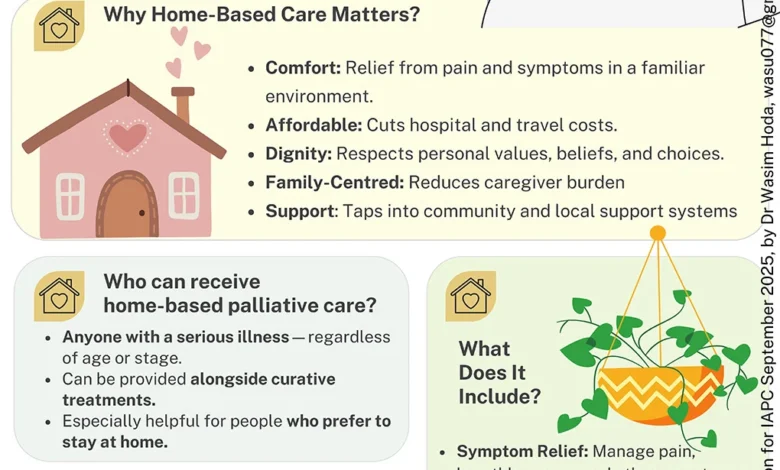
The Indian Association of Palliative Care (IAPC) has officially released the third installment of its ongoing "Care Continuum" educational series, focusing this month on the critical domain of Palliative Care at Home. This strategic initiative serves as a cornerstone in the organization’s long-term mission to decentralize end-of-life and chronic symptom management, moving the focus from overburdened clinical settings into the comfort and accessibility of the patient’s domestic environment. By leveraging visual communication tools, the IAPC aims to bridge the information gap for patients, families, and healthcare providers, providing a roadmap for integrating home-based care into the broader national healthcare framework.
The Evolution of the Care Continuum Series
The "Care Continuum" series was launched by the IAPC in June 2025 with the primary objective of demystifying the patient journey through various stages of life-limiting illnesses. The inaugural segment of the series established a baseline understanding of how care should transition seamlessly between primary, secondary, and tertiary health facilities. By August, the series moved into its second phase, focusing on the integration of palliative principles into acute care settings.
The decision to dedicate the third installment to home-based palliative care reflects a growing consensus among public health experts that the home is the most preferred location for patients facing terminal or chronic conditions. The transition from institutionalized care to home-based support is not merely a preference but a functional necessity in a country where the patient-to-hospital-bed ratio remains a significant challenge. This latest infographic, developed with technical oversight from Dr. Wasimul Hoda, a Fellow in Pain Medicine at the All India Institute of Medical Sciences (AIIMS) in New Delhi, provides actionable guidelines on how to establish a home environment that supports both the physical and psychological needs of the patient.
The Growing Necessity for Home-Based Palliative Care
Global and national health data consistently indicate that the demand for palliative care is rising, driven by an aging population and an increase in the prevalence of non-communicable diseases (NCDs) such as cancer, cardiovascular disorders, and chronic respiratory diseases. According to data from the World Health Organization (WHO), only a small fraction of those in need of palliative care currently receive it, with the vast majority of patients dying in pain or distress due to a lack of community-based resources.
In India, the challenges are multifaceted. Socio-economic barriers, geographic isolation, and a shortage of specialized personnel make it difficult for families to access hospital-based palliative units. Home-based palliative care models serve as a vital intervention, allowing for the management of pain, dyspnea, and psychological distress without requiring a hospital admission. By bringing these services to the doorstep, the IAPC’s initiative seeks to reduce the financial burden on families—who are often pushed into poverty by high out-of-pocket medical expenses—and alleviate the pressure on tertiary care centers.
Chronology of the Initiative
The IAPC’s commitment to this public awareness drive follows a structured timeline of development:
- June 2025: The IAPC launches the "Care Continuum" series to standardize the understanding of palliative care as an ongoing process rather than a final-stage intervention.
- July 2025: Initial feedback from healthcare professionals indicates a high demand for visual, non-technical educational materials that can be easily shared with patients’ families.
- August 2025: The second infographic is released, focusing on the synergy between palliative care and acute clinical management.
- September 2025: The IAPC publishes the third infographic, "Palliative Care at Home," highlighting the specific protocols, equipment needs, and communication strategies required for home-based management.
This methodical rollout ensures that the organization remains responsive to the needs of the medical community while ensuring that the information provided remains evidence-based and professionally vetted.
Expert Perspectives and Clinical Integration
Dr. Wasimul Hoda’s involvement in this project brings a clinical rigor to the infographic that is essential for its application in real-world settings. As a representative from the Department of Anaesthesia, Critical Care, and Pain Medicine at AIIMS, Dr. Hoda’s input ensures that the advice provided—ranging from medication administration to symptom monitoring—aligns with the latest pain management protocols.

The IAPC has emphasized that this infographic is not intended to replace professional medical advice but to act as a supplement. It provides a foundational understanding for caregivers, who are often the primary line of defense in home-based settings. By empowering families with information, the IAPC aims to improve the quality of life for patients, enabling them to spend their time in familiar surroundings while receiving high-quality clinical support.
Analysis of Implications for Public Health
The long-term implications of this initiative are substantial. By moving the conversation about palliative care into the home, the IAPC is advocating for a paradigm shift in the Indian healthcare system. If adopted at a systemic level, home-based care could significantly reduce hospital readmission rates for chronic patients, who often find themselves returning to emergency departments due to unmanaged symptoms.
Furthermore, the integration of home-based palliative care into the primary health sector has the potential to address the ethical imperative of "dignity in care." Many patients express a strong desire to be at home during the final stages of life; however, without the necessary support structures, this is often impossible. The IAPC’s infographic series provides a tangible tool to educate policymakers, hospital administrators, and the public on the viability and benefits of this model.
The educational impact is also noteworthy. Palliative care is frequently misunderstood as "giving up" or limited only to oncology patients. By continuously circulating clear, concise, and scientifically accurate infographics, the IAPC is working to destigmatize the field, framing palliative care as a fundamental human right that should be integrated into all stages of chronic illness management.
Accessing and Utilizing Resources
The IAPC has made these resources widely available, encouraging members of the public, medical practitioners, and community health volunteers to download and share the materials through their respective networks. The organization maintains a centralized repository on its official website, where the full history of the infographic series is preserved.
In addition to the website, the IAPC is utilizing its social media channels to reach a younger, more tech-savvy demographic of caregivers and junior medical professionals. This multi-channel dissemination strategy is designed to ensure that the information penetrates various levels of the health ecosystem—from top-tier hospitals in metropolitan areas to remote clinics in rural districts.
Conclusion
The release of the "Palliative Care at Home" infographic marks a significant milestone in the IAPC’s 2025 advocacy agenda. As the country continues to grapple with the rising burden of chronic disease, the need for community-integrated care models has never been greater. By providing clear, actionable, and professionally verified information, the IAPC is not only enhancing the quality of care for individual patients but is also contributing to the structural strengthening of the national health continuum.
As the series moves forward, the IAPC intends to continue its efforts to provide educational content that simplifies complex clinical concepts for the general population. Stakeholders are encouraged to monitor the IAPC’s digital platforms for future installments, which are expected to cover other critical aspects of the care continuum, including psychosocial support, spiritual care, and legal/ethical considerations in end-of-life decision-making. Through these consistent efforts, the organization remains at the forefront of the movement to ensure that quality palliative care is accessible to all, regardless of the patient’s location or socio-economic status.