Bridging the Divide: Addressing the Intersection of Disability and LGBTQ+ Identity in Faith Communities

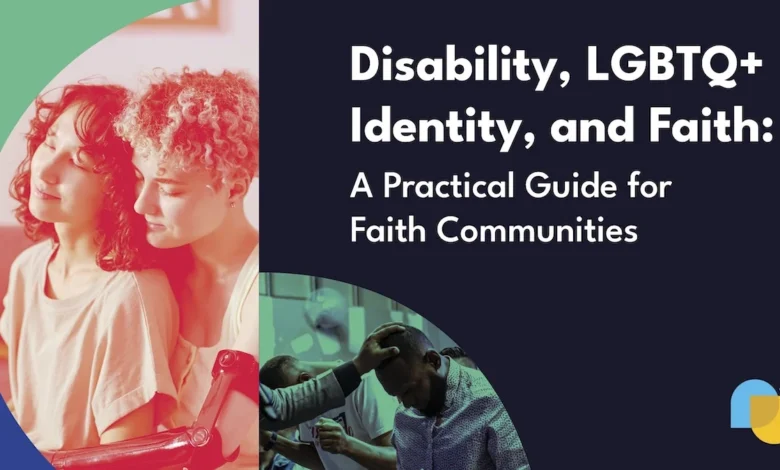
For decades, religious and spiritual institutions have served as cornerstones of social connection, ethical formation, and communal support. However, for a significant segment of the population—those who identify as both disabled and LGBTQ+—these spaces have frequently functioned as sites of exclusion, silence, and profound invisibility. A new comprehensive framework released by the organization Disability Belongs now offers faith leaders, educators, and lay organizers a roadmap to address these systemic barriers, aiming to transform houses of worship into environments that truly honor the dignity and full participation of every individual.
The initiative emerges from a growing awareness that inclusion efforts often suffer from "siloing," where disability advocacy and LGBTQ+ advocacy operate as distinct, non-overlapping movements. This oversight leaves those living at the intersection of these identities—individuals who face unique, compounded challenges—without adequate support or representation. By providing actionable policies and pedagogical tools, the new resource seeks to shift the culture of faith communities from passive acceptance to proactive, informed inclusion.
Data-Driven Realities and Compounded Barriers
The necessity for this focus is underscored by recent data from the Center for American Progress and the NORC at the University of Chicago. Their 2024 LGBTQI+ Community Survey revealed a striking demographic overlap: 48% of LGBTQI+ people in the United States identify as having a disability. Within this group, the most common conditions reported include mental health disabilities at 24%, emotional or behavioral disabilities at 14%, and chronic illnesses at 13%. Perhaps most notably, the data indicates that 70% of transgender individuals in the United States identify as having a disability.
These statistics represent more than just numbers; they depict a reality where a substantial portion of the congregational population is navigating life with overlapping, marginalized identities. Further research, including studies published in the National Center for Biotechnology Information, indicates a statistically significant association between individuals with long-term service and support (LTSS) needs and LGBTQ+ identification. This suggests that the intersection of disability and sexual or gender identity is a widespread demographic phenomenon, not an outlier.
The Evolution of Advocacy in Religious Spaces
Historically, the movement toward inclusivity in religious settings has been fragmented. In the late 20th century, many faith denominations began the slow process of addressing LGBTQ+ inclusion, primarily through debates over marriage and ordination. Simultaneously, disability rights movements within faith spaces—often termed "disability ministry"—focused primarily on physical architecture, such as the installation of ramps and the provision of large-print bulletins.
It was not until the early 21st century that these two movements began to cross-pollinate. The "Nothing About Us Without Us" principle, a core tenet of the disability rights movement, has increasingly been adopted by progressive religious circles to argue that inclusion is a matter of fundamental justice rather than mere charity. This shift in discourse represents a move away from the medical model of disability, which seeks to "fix" individuals, toward a social model, which seeks to identify and dismantle the environmental and attitudinal barriers that prevent participation.
Foundational Principles for Inclusive Practice
The framework proposed by Disability Belongs is built upon three pillars: inherent human dignity, justice-based accessibility, and participatory governance.
The first principle posits that disability and LGBTQ+ identities are natural expressions of human diversity, not flaws to be corrected. This perspective challenges traditional theological frameworks that may have historically pathologized these identities.
The second pillar redefines accessibility. In many faith settings, accessibility is treated as a "specialized" task for a volunteer committee. The new guidance argues that accessibility is a foundational requirement for equity. When a sanctuary lacks hearing loops, when a social hall is inaccessible to wheelchair users, or when a prayer service is sensory-overwhelming, the community is effectively issuing a mandate of exclusion.
Finally, the third pillar requires that disabled LGBTQ+ individuals be central to decision-making processes. Inclusion is not a top-down mandate; it is a collaborative effort that requires the expertise of those with lived experience.
Mapping the Barriers to Participation
The obstacles faced by disabled LGBTQ+ individuals in faith communities are categorized into four distinct areas: physical, sensory, communication, and cultural barriers.
Physical barriers, such as stairs in historic buildings or narrow doorways, are the most recognizable. However, sensory barriers are often more insidious. For neurodivergent individuals or those with chronic pain, the traditional environment—characterized by loud music, flashing lights, and intense olfactory stimuli—can be physically painful or neurologically overwhelming.
Communication barriers are equally significant. The lack of American Sign Language (ASL) interpretation or the failure to provide digital alternatives to spoken sermons excludes Deaf and hard-of-hearing members. Furthermore, cultural barriers—such as gender-normative language in liturgy or the stigmatization of mental health conditions—create an environment where disclosure of one’s identity or access needs feels like a social risk.
Implementing Policy and Institutional Change
To move from theory to practice, the framework outlines concrete policy recommendations for religious institutions. The primary suggestion is the adoption of formal, written non-discrimination policies that explicitly name both disability and LGBTQ+ identities. These documents must be paired with clear, transparent complaint procedures that are trauma-informed and accessible.
Accessibility audits serve as the primary tool for institutional growth. These audits should be comprehensive, covering everything from the parking lot to the digital presence of the organization. Crucially, these audits should be conducted in partnership with community members who possess the relevant lived experience, and they should be backed by a dedicated line item in the organizational budget.
Leadership representation remains the ultimate benchmark for success. The document urges faith communities to prioritize the hiring and appointment of disabled LGBTQ+ individuals to boards, committees, and ministerial roles. This is not only a matter of fairness but a strategic necessity to ensure that the community remains reflective of the diverse population it serves.
Implications and Future Outlook
The implications of this framework are significant for the future of religious life in America. As faith communities struggle with declining attendance and a changing demographic landscape, the ability to foster genuine, inclusive belonging will likely become a primary determinant of institutional health.
By addressing the intersection of disability and LGBTQ+ identity, religious institutions have the potential to reclaim their role as centers of social justice and communal healing. However, this transition requires a departure from traditional models of "charity" toward a more rigorous, audit-based approach to equity.
Experts in the field note that the process is inherently non-linear. It requires constant feedback loops, a willingness to apologize for past failures, and a commitment to ongoing education. As these guidelines become more widely adopted, the hope is that the "invisible" members of faith communities will finally be able to participate fully, authentically, and without the constant burden of having to navigate an inaccessible, and often unwelcoming, landscape.
Ultimately, the transformation of faith spaces depends on a shared acknowledgment: that the spiritual life is not intended for a select few, but for all, and that the richness of a community is directly proportional to the diversity of the bodies and minds it welcomes into its fold. Whether through the installation of a ramp, the adoption of gender-neutral liturgy, or the inclusion of neurodivergent perspectives in leadership, the path forward is one of intentional, continuous, and systemic change.