New Federal Medicaid Guidance Deepens Anxiety for Individuals with Developmental Disabilities Amid Stricter Work Requirements

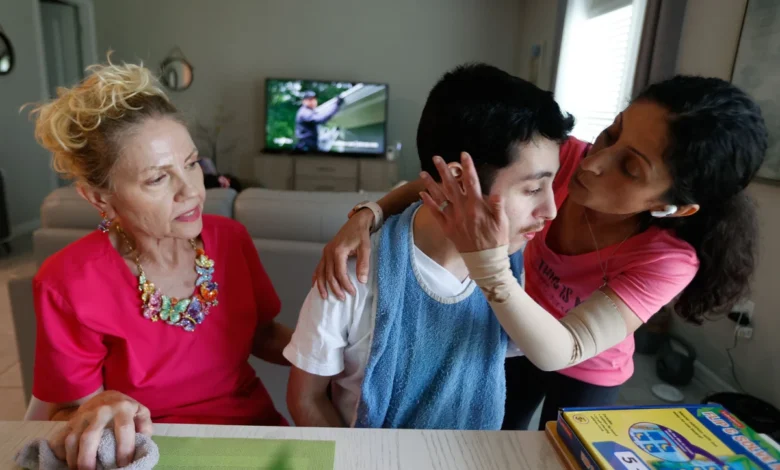
The landscape of healthcare coverage for millions of Americans with disabilities is undergoing a period of profound uncertainty. Newly released federal directives from the Centers for Medicare and Medicaid Services (CMS) have provided operational details on how states must administer stringent eligibility rules, yet the instructions have done little to alleviate widespread anxiety among advocates, caregivers, and policy experts. At the center of the controversy is how states will evaluate and apply exemptions to incoming Medicaid work requirements for individuals deemed medically frail, a designation that directly impacts vulnerable populations, including those with profound intellectual, physical, and developmental disabilities.
The 33-page federal document arrives as states prepare for a major policy shift. Beginning early next year, most jurisdictions must enforce community engagement mandates as a condition of Medicaid eligibility. Under these mandates, non-exempt beneficiaries are legally required to log a minimum of 80 hours per month in approved activities—such as employment, volunteer work, or educational programs—to maintain their healthcare coverage. This sweeping transformation stems from federal legislation enacted last year, colloquially known as the One Big Beautiful Bill Act, which implemented nearly $1 trillion in systemic cuts to the nation’s Medicaid program.
While the statutory language of the 2025 law carves out explicit protections—exempting individuals categorized as medically frail or possessing special medical needs, alongside their parents, legal guardians, and family caregivers—subsequent rulemakings have dramatically tightened the parameters of these exemptions. According to regulations issued by CMS earlier this year, qualifying as medically frail under the new standards requires a physical, intellectual, or developmental condition to "significantly impair" an individual’s ability to perform at least one Activities of Daily Living (ADL). These foundational metrics include basic daily tasks such as bathing, dressing, eating, walking, using the restroom, or transferring independently between a bed and a chair.
The newly published guidance doubles down on this narrow definition, explicitly stating that a qualifying condition must directly compromise an individual’s capacity to fulfill the 80-hour monthly community engagement requirement. This restrictive interpretation has drawn sharp criticism from the disability advocacy community, who argue that the administration is leveraging sub-regulatory guidance to circumvent legislative intent and narrow protections originally designed by Congress to safeguard vulnerable populations.
Legislative Intent Versus Administrative Implementation
The divergence between congressional design and administrative execution has become a focal point of legal and political battles. Lawmakers originally crafted the medical frailty exemption with a broad, clinically grounded scope intended to shield individuals with chronic, severe conditions from administrative hurdles. However, critics assert that the current framework imposed by CMS effectively shifts an onerous administrative burden onto people who are least equipped to navigate complex bureaucratic channels.
Advocates argue that interpreting medical frailty strictly through the narrow lens of ADL impairment and direct work-capacity obstruction fails to capture the holistic realities of living with a lifelong disability. Many individuals with intellectual or developmental disabilities experience significant daily challenges that require continuous support, yet their conditions may not neatly align with narrow statutory checkpoints or acute medical interventions.
Implementation Frameworks and Data Verification Challenges
To assist states in navigating the complex transition, the CMS guidance outlines several potential evaluation pathways. The federal agency recommends that states first attempt to verify medical frailty automatically, utilizing existing administrative data gathered over the previous 12 months of claims history. Should state databases prove insufficient, agencies are permitted to offer beneficiaries a one-time self-declaration option. Following this initial assessment, states are mandated to re-verify an individual’s medically frail status annually through what the guidance terms "reliable information or documentation."
To operationalize these evaluations, CMS suggested a tiered implementation model. Under this tiered approach, states could initially cross-reference administrative data against a definitive list of pre-approved conditions that automatically qualify for an exemption. A secondary tier would encompass conditions that "may indicate an individual is medically frail," prompting requests for supplementary information. Finally, cases lacking sufficient data across the first two tiers would trigger a comprehensive manual review by state caseworkers. While these options offer a structured path forward, CMS has chosen to make the tiered framework entirely optional, leaving individual states with wide latitude to formulate their own localized methodologies and qualifying condition lists.
Policy analysts have raised immediate concerns regarding this decentralized approach. Allowing each state to design its own verification protocols threatens to create a fragmented healthcare landscape where a beneficiary’s right to an exemption could depend entirely on their geographic location. A person residing in one state might secure an exemption effortlessly, while an individual with the identical diagnosis in a neighboring state could face exhaustive administrative hurdles and potential coverage termination.
Furthermore, reliance on historical claims data introduces significant systemic flaws. Healthcare policy experts point out that a medical claims record inherently documents treatments, hospitalizations, and physician visits, but it frequently fails to capture the functional realities of a person’s day-to-day existence. For many individuals with lifelong developmental disabilities, stability means avoiding frequent acute medical interventions, paradoxically resulting in sparse recent medical claims despite profound, ongoing care needs.
"A claims record doesn’t always show how a disability affects someone’s daily life," noted policy representatives from major advocacy organizations. When state databases fall short, the procedural burden inevitably shifts back to the individual or their family caregivers. Tracking down historical medical records, securing specialized provider documentation, and submitting formal appeals within strict deadlines can present insurmountable barriers for households already managing severe daily care responsibilities.
Broad Opposition and Legal Challenges
The mounting apprehensions surrounding the narrowing of the medical frailty exemption have catalyzed unprecedented coalition-building among legal advocacy groups, healthcare providers, and state officials. The controversy has spilled over into the federal court system, where a multi-state coalition comprising officials from 25 states and Washington, D.C., has filed a formal lawsuit challenging the legality of the CMS rules.
Amplifying these legal arguments, more than 70 prominent healthcare, civil rights, and disability advocacy organizations filed a comprehensive amicus brief supporting the state-led litigation. Signatories to the brief include the National Health Law Program, the American Association of People with Disabilities, the Autistic Self Advocacy Network, and Easterseals, among others.
Legal strategists representing these groups emphasize that Congress established clear statutory boundaries when it exempted medically frail populations from work mandates. Forcing vulnerable individuals to repeatedly justify their exemptions through complex administrative processes directly undermines the protective intent of the governing legislation.
Beyond Individual Coverage: The Threat to Community-Based Providers
The implications of the new Medicaid rules extend far beyond the immediate risk of individual coverage loss. Industry leaders warn that systemic reductions in Medicaid enrollment will inevitably destabilize the broader infrastructure of community-based long-term services and supports (LTSS).
Providers of residential, vocational, and personal care services operate within an already fragile financial ecosystem heavily reliant on Medicaid reimbursement. When coverage losses force individuals off the rolls, community providers face mounting uncompensated care costs. Organizations must frequently continue delivering essential daily support to preserve the health and safety of their clients, even as revenue streams dry up due to administrative churn or lost eligibility.
Industry coalitions, including the American Network of Community Options and Resources (ANCOR), have sounded the alarm regarding this impending cascading failure. Leadership from ANCOR underscores that diminishing the scope of the medical frailty exemption will inevitably choke off access to community-based care, forcing individuals out of integrated community settings and threatening the survival of provider organizations that form the bedrock of the American disability support network.
The Road Ahead
As the deadline for implementing community engagement requirements approaches, states face monumental administrative pressures to establish compliant, equitable, and legally sound verification procedures. Meanwhile, advocacy groups and legal coalitions continue their aggressive pushback through both judicial channels and public awareness campaigns, demanding greater transparency and adherence to original legislative protections from federal regulators.
With millions of lives and the stability of the nation’s care infrastructure hanging in the balance, the coming months will prove critical in determining whether federal oversight and state-level administration can balance fiscal mandates with the fundamental imperative to protect society’s most vulnerable populations.
Related posts: