Historic Milestone for Disability Rights: ILI Jurist Mari Siilsalu Appointed to Sweden’s National Human Rights Council


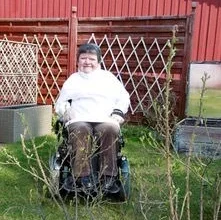
In a landmark development for the disability rights movement in Sweden, Mari Siilsalu, a prominent jurist representing the Independent Living Institute (ILI), has been officially appointed as a member of the Council for Human Rights. This appointment marks the very first time that the distinct philosophy and perspective of the Independent Living movement will have a direct voice within this high-level advisory body. The selection took place just days before the midsummer celebrations, setting the stage for a new era of inclusivity and intersectional human rights advocacy in Sweden.
The Council for Human Rights serves as a crucial advisory committee to the Swedish Institute for Human Rights. Comprising twenty distinguished members from diverse professional and civic backgrounds, the council is designed to bridge the gap between grassroots civil society organizations and institutional policymaking. Its primary mandate is to supply the Institute with deep, practical knowledge, lived experiences, and specialized insights from various societal sectors. Crucially, the council’s institutional framework mandates the inclusion of representatives from organizations dedicated to defending and advancing the rights of persons with disabilities.
Expanding the Scope of Human Rights Discourse
While previous iterations of the council have included representation focused on general disability issues and migration, legal experts and advocates note that the inclusion of the Independent Living Institute introduces a radically progressive and autonomous framework. ILI has long been at the forefront of pioneering projects that address the complex overlap between multiple marginalized identities.
Mari Siilsalu, stepping into her new role with a robust background in law and human rights advocacy, emphasizes that her appointment brings a vital intersectional dimension to the table. During her tenure, she intends to draw heavily upon the groundbreaking insights generated through ILI’s specialized initiatives, such as "Disabled Refugees Welcome," the "Disabled Refugees Support Center," and "Disabled Refugees Stories."
"Now, ILI has the unique opportunity to contribute to the council’s knowledge base directly from the foundation of the Independent Living philosophy and its core principles," stated Siilsalu following her appointment. "Drawing from what we have learned through our targeted projects for individuals with disabilities who also possess a migrant background, we can share our critical experiences regarding the intersection between migration status and disability."
The Selection Process and Structural Timeline
The appointment process for the Council for Human Rights is rigorous and transparent, allowing both formal organizations and individual citizens to nominate candidates who demonstrate exceptional commitment and expertise in human rights. The final selection of the twenty council members is conducted and authorized by the board of the Swedish Institute for Human Rights.
The newly constituted council is stepping into a four-year mandate, scheduled to remain in active service until the spring of 2028. This extended timeline provides the council with the stability required to develop long-term strategies, monitor systemic rights violations, and issue robust policy recommendations. The newly appointed members will convene for their inaugural official meeting in September in Lund, where they will begin establishing their working groups and setting the agenda for the upcoming term.
Background and Context: The Evolution of the Independent Living Movement
To fully understand the significance of Siilsalu’s appointment, it is essential to examine the historical trajectory of the Independent Living movement, both globally and within the Swedish context. Originating in the United States during the late 1960s and early 1970s—largely spearheaded by activists such as Ed Roberts at the University of California, Berkeley—the movement fundamentally challenged the traditional medical model of disability.
Under the medical model, individuals with disabilities were viewed as patients requiring institutional care, medical treatment, and passive charity. The Independent Living philosophy shattered this paradigm by reframing disability as a political and social issue. It asserted that individuals with disabilities are the ultimate experts on their own lives, possessing the inherent right to self-determination, control over their personal assistance, and full, unhindered participation in all areas of society.
In Sweden, the movement found a fierce champion in Adolf Ratzka, who founded the Independent Living Institute in Stockholm in the early 1990s. ILI became a crucible for innovation, playing a pivotal role in the development of Sweden’s landmark personal assistance legislation (LSS – Lagen om stöd och service till vissa funktionshindrade), which served as a global gold standard for disability policy. However, in recent years, advocates have warned that the foundational rights secured decades ago are facing incremental erosion due to bureaucratic tightening, economic pressures, and a shifting political landscape. The inclusion of an ILI jurist on the national human rights council is therefore seen by civil society as a timely and necessary countermeasure to ensure that systemic rights protections are rigorously maintained and modernized.
Intersectionality: Bridging Disability and Migration
One of the most pressing challenges in contemporary human rights work is addressing intersectionality—the ways in which multiple forms of discrimination overlap and compound one another. By highlighting ILI’s ongoing work with refugees and migrants with disabilities, Siilsalu’s appointment brings critical attention to a demographic that has historically fallen through the cracks of both immigration policy and disability welfare systems.
Data compiled by civil rights watchdogs consistently demonstrates that migrants and refugees with disabilities face exponentially higher barriers to integration, healthcare access, language acquisition, and employment than their non-disabled peers or native-born individuals with disabilities. Administrative hurdles, linguistic isolation, a lack of culturally competent support services, and precarious legal statuses often trap vulnerable individuals in cycles of severe marginalization.
Through projects like "Disabled Refugees Welcome," ILI has spent years documenting these systemic failures and developing practical models for empowerment and community inclusion. By integrating these specific, ground-level insights into the deliberations of the Swedish Institute for Human Rights, Siilsalu aims to influence national policy guidelines, ensuring that future human rights strategies are fully inclusive of intersectional realities.
Institutional Implications and Future Outlook
The inclusion of an Independent Living representative on the Council for Human Rights carries profound implications for the trajectory of human rights monitoring in Sweden. The Swedish Institute for Human Rights, established relatively recently to independently promote and protect human rights in accordance with the United Nations Paris Principles, relies heavily on the credibility and reach of its advisory bodies.
Observers note that having a dedicated legal voice rooted in the philosophy of autonomy and self-determination will likely sharpen the council’s focus on key systemic issues. These may include the ongoing implementation of the UN Convention on the Rights of Persons with Disabilities (CRPD) within Swedish domestic law, accessibility in digital and physical public infrastructure, the safeguarding of personal autonomy within institutional and community-based care settings, and the harmonization of asylum processes with disability rights standards.
Furthermore, as Sweden continues to navigate complex socio-political debates surrounding welfare distribution, integration, and civil liberties, the council’s independent evaluations will serve as an essential barometer for the nation’s human rights health.
As the council prepares for its first formal gathering in Lund this coming September, expectations among civil society organizations are high. The appointment of Mari Siilsalu is not merely a symbolic victory for the Independent Living movement, but a strategic strengthening of Sweden’s institutional architecture—ensuring that the voices of those who have fought hardest for autonomy are present at the highest levels of national human rights governance.
Reporting by Sara Shamloo Ekblad
Photography by Erik Tillander