Simplifying Opioid Conversions: A Call for a New Paradigm in Pain Management

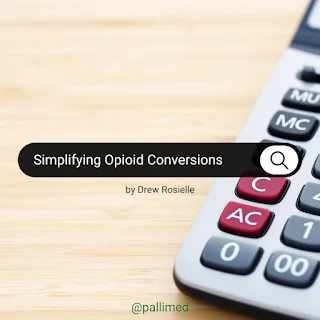
The complex and often opaque process of switching opioid medications, a critical maneuver in managing chronic pain and palliative care, is facing a significant re-evaluation within the medical community. For decades, healthcare providers have relied on equianalgesic tables (EATs) to guide these conversions, a method that is now being challenged as fundamentally flawed and potentially unsafe. Dr. Drew Rosielle, a palliative care physician and founder of Pallimed, has spearheaded a movement to dismantle the reliance on EATs, advocating for a more straightforward, practical, and ultimately safer approach to opioid switching. This shift in perspective is not merely semantic; it represents a profound conceptual recalibration of how clinicians approach a common and vital aspect of patient care.
The Core Issue: The Brokenness of Equianalgesic Tables
At the heart of Dr. Rosielle’s argument is the inherent unreliability of equianalgesic tables. These tables are based on the premise that different opioids possess equivalent pain-relieving power at specific milligram dosages. For example, an EAT might suggest that 50 mg of oral morphine is equivalent in analgesic effect to 10 mg of oral hydromorphone. However, Dr. Rosielle contends that this notion of precise "equianalgesia" is a theoretical construct that rarely, if ever, holds true in clinical practice across diverse patient populations.
"The idea that, say, 50 mg of oral morphine has the same analgesic power as 10 mg of hydromorphone is the bedrock of these tables," explains Dr. Rosielle in a satirical monologue that highlights the absurdity of the current system. "So, 50 mg of oral morphine is equivalent to 10 mg of oral hydromorphone. But then we look at the table, and every entry on this grid is equianalgesic, meaning that 30 mg here of oral morphine has the same analgesic power as 1.5 mg of IV hydromorphone. This mathematical gymnastics, which often involves cross-multiplication and then further adjustments, is supposed to lead us to a precise equivalent dose."
The problem, as Dr. Rosielle elaborates, lies in the oversimplification and lack of individualization inherent in EATs. The complex calculations and the subsequent adjustment for "incomplete cross-tolerance" – a concept itself riddled with ambiguity and questionable physiological basis – create a system that is both cumbersome and prone to error.
The Myth of Incomplete Cross-Tolerance
The concept of "incomplete cross-tolerance" is particularly scrutinized. It attempts to account for the fact that a patient who has developed tolerance to one opioid may not develop the same degree of tolerance to another opioid agonist. While seemingly logical, Dr. Rosielle argues that its physiological underpinnings are uncertain, and its practical application is nebulous.
"Incomplete cross-tolerance is the idea that our patient on 100 mg of morphine is somewhat tolerant to the morphine. They are therefore also presumably somewhat tolerant to any other opioid agonist like hydromorphone. The problem is that the tolerance they have to morphine may not fully apply to the tolerance they have to the hydromorphone," Dr. Rosielle articulates. "The morphine tolerance ‘incompletely’ transfers, so to speak, to the patient’s hydromorphone tolerance. So, what that means is that even though this table says 100 mg of PO morphine is equal to 5 mg IV hydromorphone, for safety’s sake we need to reduce that 5 mg somewhat."
He questions the scientific validity of this phenomenon at a cellular level, suggesting it has become a convenient, albeit confusing, placeholder for acknowledging individual variability in opioid response. "In fact, the idea of ‘incomplete cross-tolerance’ only makes sense if you think there actually is a firm ‘equianalgesic’ potency relationship between morphine and hydromorphone that applies to most patients," he observes. "In fact, no one actually believes that, and the broad consensus is that there is a pretty significant range of ‘equianalgesia’ between any 2 opioids in different patients. I.e., in one patient, 100 mg of oral morphine may end up providing equal analgesia to 12 mg IV hydromorphone, in another patient, 4 mg of IV hydromorphone, etc. It’s a little bit of a crap-shoot."
The Call for Conversion Tables (CTs)
Dr. Rosielle proposes a radical but logical alternative: the widespread adoption of "Conversion Tables" (CTs) instead of EATs. CTs, as he envisions them, would present simpler, more direct ratios for switching between specific opioid pairs. This approach would streamline calculations and allow for more intuitive adjustments based on emerging clinical data.
"In my last post, I outlined why I think equianalgesic tables (EATs) are broken and proposed we collectively move instead to using Conversion Tables (CTs) when teaching others how to switch opioids," Dr. Rosielle states. "Briefly, this is because CTs engender much simpler and clearer math; and we can easily adjust the conversion factors in CTs based on emerging data, without having to rejigger every ‘equianalgesic’ relationship which EATs force us to do."
He emphasizes that this is not a solitary endeavor but a collective need for the medical community. He has extended an offer to collaborate on developing a consensus CT that can be broadly adopted by professional organizations. This initiative aims to move away from the reliance on individual, often disparate, EATs towards a standardized, evidence-based approach.

Key Pillars of the Proposed Paradigm Shift
Dr. Rosielle’s proposal rests on three fundamental pillars:
-
Abandoning the Term "Incomplete Cross-Tolerance": This phrase, he argues, is unnecessarily jargonistic, difficult to explain, and may not reflect a true physiological phenomenon. It can be replaced with more transparent explanations like "dose reductions for safety" or "dose reductions due to individual variability in responding to opioids." This shift promotes clarity and accessibility in clinical communication.
-
Focusing on "Methods for Safe Opioid Switching" over Equianalgesia: The primary clinical goal is not to find a mathematically precise "equianalgesic" dose, but to ensure the patient transitions safely between medications. This means avoiding significant sedation or a worsening of pain. Dr. Rosielle contends that the concept of equianalgesia promotes the illusion of a single "right answer," when in reality, safe switching relies on a robust clinical framework and careful patient monitoring. The focus should be on the practical task of safely managing the switch, acknowledging the inherent variability in patient responses.
-
Emphasizing the Impact of Absolute Opioid Dose: A critical oversight in current opioid conversion practices, according to Dr. Rosielle, is the failure to adequately address the nuances of switching at higher opioid dose ranges. While the difference between conversion ratios might be negligible for patients on low doses (e.g., 40 mg of oral morphine), it can become profoundly significant for patients on high doses (e.g., 400 mg of oral morphine). Current EATs tend to apply the same ratios across all dose levels, a practice Dr. Rosielle deems "shocking, and profoundly unsafe." He advocates for a more conservative approach when switching higher doses, a clinical reality already practiced by many experienced clinicians but not formally taught or codified.
The Data Landscape and the Need for Consensus
The debate around opioid conversion is not new, but it has gained new urgency with evolving understanding of opioid pharmacokinetics and pharmacodynamics. While robust, large-scale clinical trials specifically designed to compare different opioid conversion strategies are scarce, the existing body of evidence, including retrospective studies and expert consensus, points towards the limitations of rigid EATs. The recent data from institutions like MD Anderson, which influenced changes in the "Demystifying Opioid Conversions 2 Ed" (DOC2) table, underscore the field’s ongoing efforts to refine best practices.
Dr. Rosielle’s proposal for a consensus CT is driven by the absence of definitive clinical data for precise equianalgesic ratios. "Ideally, this is best decided by consensus and committee (in the absence of good clinical data for which there are zero)," he notes. His initiative has garnered interest from organizations like CAPC (Center to Advance Palliative Care) and potentially AAHPM (American Academy of Hospice and Palliative Medicine), signaling a growing recognition of the need for a unified approach.
A New Framework for Generalists and Specialists
The proposed shift aims to create a more accessible and safer system, particularly for generalist physicians who may not have the specialized expertise of palliative or pain management specialists. Dr. Rosielle envisions a "generalist conversion table" that is straightforward enough for a first-month medical intern to use confidently, with built-in safety parameters for a broad range of patients. This table would be accompanied by explicit teaching that emphasizes the crucial role of a structured care framework and close patient follow-up.
"The idea being that most of the conversions happening out there are for patients like that or more physiologically robust, so the table would be built-in safety for a broad range of patients," Dr. Rosielle explains. This approach contrasts sharply with the current reliance on complex EATs and the often hand-waving explanations regarding incomplete cross-tolerance, which can leave less experienced clinicians feeling lost.
The Importance of Close Follow-Up
Regardless of the conversion method employed, Dr. Rosielle unequivocally stresses that the cornerstone of safe opioid switching is diligent patient monitoring. "Don’t switch and walk away, switch and follow up!" he urges. The nuances of dose adjustments and the management of potential side effects are best navigated through consistent and attentive clinical oversight.
The path forward, as envisioned by Dr. Rosielle and a growing number of his colleagues, involves a move towards simplicity, clarity, and patient-centered safety. By dismantling the arcane complexities of equianalgesic tables and the nebulous concept of incomplete cross-tolerance, the medical community can forge a more effective and reliable approach to opioid conversions, ultimately benefiting the countless patients who rely on these medications for pain relief and improved quality of life. The ongoing dialogue and potential for consensus-building offer a promising horizon for a more rational and humane approach to pain management.
Related posts: