
As healthcare expenditures continue to consume a staggering portion of the American economy, political leaders on both sides of the aisle increasingly point the finger at health insurance companies. From soaring monthly premiums and high out-of-pocket deductibles to frustrating administrative hurdles, insurers are frequently cast as the primary villains in a dysfunctional medical landscape. However, the reality behind rising healthcare costs and patient dissatisfaction is far more complex than a simple political narrative suggests. To untangle these intricate dynamics, the independent health policy organization KFF has released a comprehensive, three-part video series designed to examine the true extent of the blame health insurers deserve for the structural flaws plaguing the United States healthcare system.
Building upon rigorous KFF analysis, public opinion polling, and a foundational JAMA Forum article authored by Larry Levitt, KFF’s Executive Vice President for Health Policy, the new multimedia project dives deep into the economics, value proposition, and regulatory challenges defining modern health coverage. The series addresses three central questions that weigh heavily on millions of American families: What is driving the relentless upward spiral of insurance premiums? Do health insurance companies actually provide tangible value for the cuts they take? And who do consumers trust—or distrust—to make critical decisions regarding what medical care gets covered and at what price?
The Anatomy of Rising Premiums: Decoding Health Care Costs
The first installment of KFF’s video series tackles the question most familiar to American consumers: Why does health insurance cost so much? To understand the trajectory of health insurance premiums, analysts emphasize that insurers are largely financial intermediaries. While corporations collect monthly premiums from employers and individuals, the vast majority of those funds flow right back out to pay for medical services, prescription drugs, and hospital stays.
Over the past several decades, healthcare spending in the United States has outpaced general inflation, driven by several compounding factors. Technological advancements, while life-saving and transformative, often come with exorbitant price tags. Pharmaceuticals, particularly specialized biologic drugs and emerging gene therapies, represent an increasingly large share of overall spending. Furthermore, hospital consolidation across local and regional markets has given large health systems immense pricing power, allowing them to demand higher reimbursement rates from insurers.
When healthcare providers raise their prices, insurance companies must inevitably adjust their premiums to cover those escalating costs. Yet, while insurers pass these expenses along to consumers through higher premiums and cost-sharing mechanisms, they are also frequently criticized for failing to rein in the underlying drivers of medical inflation. This creates a contentious cycle where patients feel squeezed from all sides—facing stagnant wage growth on one hand and rapidly appreciating healthcare costs on the other.

Value and Overhead: Are Insurers Pulling Their Weight?
The second part of the KFF series shifts focus to the fundamental value proposition offered by private health insurers. Critics often argue that health insurance companies extract a substantial financial cut from the healthcare system without delivering commensurate clinical value. Administrative expenses, executive compensation, and corporate profits consume a notable share of healthcare dollars, leading many to question what policyholders truly receive in exchange for these overhead costs.
Under the Affordable Care Act (ACA), the federal "Medical Loss Ratio" (MLR) rule establishes guardrails, requiring insurers to spend a minimum percentage of their premium revenues—typically 80% for individual and small group plans, and 85% for large group plans—on direct medical care and quality improvement activities. The remaining percentage, known as the administrative allowance, covers operational costs, agent commissions, and profits.
Proponents of the insurance industry argue that these administrative costs support essential functions: managing provider networks, processing millions of complex medical claims accurately, preventing fraud, and offering customer service support. Furthermore, large insurers leverage their scale to negotiate discounted rates with healthcare providers, theoretically saving consumers money compared to what they would pay out of pocket on a cash basis.
However, skeptics counter that the proliferation of administrative complexity is largely a problem of the industry’s own making. The friction caused by fragmented coverage tiers, intricate billing codes, and administrative bureaucracy places a heavy burden not only on patients but also on physicians and clinical staff, who must dedicate substantial time and resources simply to navigate insurance requirements.
Prior Authorization: Blessing, Curse, or Bureaucratic Obstacle?
The final installment of the KFF series examines one of the most controversial mechanisms in modern health administration: prior authorization. Designed originally as a cost-containment and quality-control tool, prior authorization requires physicians and healthcare providers to obtain approval from an insurance company before a specific medical procedure, test, or prescription drug will be covered.
Insurers defend prior authorization as a vital safeguard against unnecessary, low-value, or potentially harmful medical interventions. By establishing evidence-based guidelines, companies aim to ensure that patients receive treatments that are medically appropriate while simultaneously protecting the broader risk pool from runaway expenditures. Proponents argue that without such checks, overall healthcare costs would escalate even faster, ultimately pricing more people out of adequate coverage.

Conversely, patients and healthcare providers frequently view prior authorization as an intrusive bureaucratic barrier that delays critical care, causes administrative burnout, and erodes trust. Physicians report spending countless hours navigating appeals processes and paperwork, sometimes at the expense of direct patient care. In severe cases, delayed approvals for specialized treatments or diagnostic tests can lead to compromised health outcomes, fueling widespread public anger toward insurance administrators.
The KFF series questions who society should ultimately trust to make these high-stakes determinations: profit-motivated private insurers, government bureaucrats, or independent medical professionals guided solely by clinical judgment.
Broader Implications and Industry Context
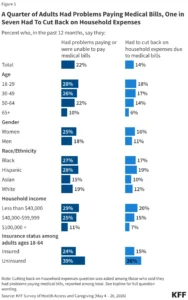
The release of KFF’s educational video series comes at a time of heightened political scrutiny and public discontent regarding the state of American healthcare. According to ongoing KFF health tracking polls, affordability remains a top-of-mind concern for voters across the political spectrum, with a significant majority expressing anxiety about their ability to afford unexpected medical bills or rising insurance deductibles.
Policymakers at both the federal and state levels have increasingly targeted insurance practices through legislative proposals. Recent regulatory efforts have focused on increasing price transparency, cracking down on surprise medical billing, and reforming prior authorization processes within Medicare Advantage and commercial plans. However, legislative solutions remain deeply polarized, with debate centered on whether to expand government intervention and public option programs or to rely on market-based reforms and increased competition among private carriers.
By synthesizing complex data into accessible formats—including vertical and horizontal video packages, social media carousels, and detailed policy briefs—KFF aims to elevate public discourse around these systemic issues. The initiative seeks to move beyond partisan finger-pointing, providing consumers, policymakers, and healthcare stakeholders with an objective foundation to evaluate where structural reforms are most urgently needed.
As the debate over the future of American healthcare continues to evolve, understanding the complex interplay between rising medical costs, insurance overhead, and clinical decision-making will remain paramount. Whether through legislative mandates, regulatory tightening, or market-driven innovations, addressing the root causes of patient frustration will require a clear-eyed assessment of all actors within the healthcare ecosystem, from hospitals and pharmaceutical manufacturers to the insurance companies caught in the middle.