The Lady on Wheels: Gisèle Caumont’s Journey from Wartime France to Independent Living in Sweden

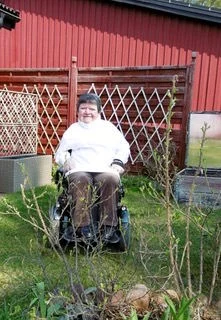
At 87 years old, Gisèle Caumont has released her autobiography, "La Dame aux Roulettes," a compelling narrative that traces her life from the Second World War in France to her current residence in rural Sweden. This profound work, now translated into Swedish as "Kvinnan på hjul" (The Woman on Wheels), offers a unique perspective on disability rights, personal autonomy, and the transformative power of self-determination. Caumont’s story is not merely a personal memoir; it is a testament to the evolution of societal attitudes towards disability, from a framework of segregation and medicalized deficit to one grounded in human rights and full societal integration.
A Life Shaped by Adversity and Resilience
Born in France during a period of immense global upheaval, Gisèle Caumont’s early life was marked by the challenges of war and the inherent difficulties of navigating a world not designed for individuals with disabilities. The autobiography delves into her formative years, highlighting the unwavering support of her parents and the crucial role of like-minded friends who helped her shift her perception of disability. She recounts the medical establishment’s historical approach, often characterized by segregation and discrimination, and contrasts it with the more empowering human rights model that champions the inclusion of all individuals. Caumont’s journey exemplifies this transition, as she carved out a fulfilling life as a speech therapist, artist, and musician, demonstrating that disability need not be a barrier to professional and creative pursuits.
Caumont’s physical stature presented immediate logistical hurdles in a world with limited accessibility. However, this perceived limitation also fostered an ingenuity and determination that became hallmarks of her life. Her desire to express herself through art and to immerse herself in the natural beauty of Sweden fueled her adventurous spirit. The book vividly describes instances where she, with the assistance of her personal attendants, overcame seemingly insurmountable obstacles. For example, when faced with inaccessible public restrooms, she and her attendants ingeniously constructed a functional solution using a camping chair. Similarly, while her hands may not have appeared conventionally suited for playing instruments like the piano or organ, Caumont’s sheer will and innovative spirit found a way to connect with music, underscoring her refusal to be defined by perceived limitations.
The Independent Living Movement and Personal Assistance
"La Dame aux Roulettes" meticulously details Caumont’s life and her integral role in the Independent Living movement, a global advocacy effort that has fundamentally reshaped the lives of people with disabilities. A cornerstone of this movement, particularly in Sweden, is the concept of personal assistance. Caumont’s personal assistants are not mere caregivers; they are instrumental in enabling her to live a life of her choosing, facilitating her daily routines from waking to sleeping. This state-funded system, chosen and managed by Caumont herself, empowers her to navigate the complexities of life with dignity and autonomy. It is through this personalized support that she has been able to achieve a profound sense of life satisfaction and the strength to confront and overcome the myriad challenges she has encountered.
A Journey of Courage and Advocacy
Caumont’s bold decision to emigrate from France to Sweden alone, with no pre-arranged support, speaks volumes about her courage and her unwavering belief in a better future. Upon arrival, she faced the immediate necessity of securing the support systems that would allow her to survive and thrive. Her narrative is a powerful tapestry woven with threads of warmth and indignation. She expresses deep gratitude towards those who provided her with indispensable support, enabling her to succeed. Concurrently, she articulates a profound anger towards the French state for its perceived slowness in enacting legislation that would guarantee full participation and self-determination for individuals with disabilities.
A particularly poignant anecdote shared by a friend of Caumont’s, who also relies on personal assistance, vividly illustrates the emotional resonance of the book. This friend recounts experiencing both laughter and tears while reading Caumont’s account, highlighting the shared understanding and empathy between individuals who have navigated similar life paths. The friend vividly imagines Caumont’s brother rushing through the streets of Paris, pushing her wheelchair to ensure she reached her graduation on time, especially when public transportation strikes threatened to derail her plans. This graduation was a pivotal moment, a gateway to her chosen profession as a speech therapist, a goal she had fought tirelessly to achieve. The image of her brother flagging down an accessible radio station vehicle, with Caumont’s wheelchair precariously balanced on the roof, elicits laughter, a testament to their resourcefulness and the inherent humor found in overcoming adversity. The friend’s personal knowledge of Paris’s challenging accessibility and Caumont’s relentless determination further underscore the significance of these moments. The Swedish adage, "it can be fixed," has, as the friend notes, made life considerably easier.
The friend also recounts a tearful reflection on Caumont’s early aspirations to play the piano. The memory of a young Gisèle, eager to learn, being met with the dismissive pronouncement of an unyielding instructor who declared her fingers incapable of playing the piano, is deeply moving. This anecdote serves as a powerful counterpoint to Caumont’s eventual triumph, illustrating the profound impact of both prejudice and perseverance.
Activism Across Borders
Gisèle Caumont was an active proponent of disability rights in France during her youth and continued this vital work upon settling in Sweden. Her involvement with STIL (The Independent Living Cooperative) has been instrumental in establishing the Independent Living philosophy in Sweden. Caumont remains vocal in her criticism of France’s lagging progress in ensuring full participation and self-determination for individuals with disabilities. Her choice to relocate to Sweden was a deliberate one, driven by the certainty that she could achieve a more comprehensive and fulfilling life through the framework of Independent Living and the availability of personal assistance. Despite her current residence, she has not abandoned her advocacy for change in France, and the publication of "La Dame aux Roulettes" in her native country is seen as a significant step towards achieving this long-held objective.
A Beacon of Hope and Empowerment
The author of this review, a friend of Caumont’s who shares a similar reliance on personal assistance to live a full life as a person with a disability, expresses profound hope that the book will soon be translated into numerous other languages, making its inspiring message accessible to a wider audience. The reviewer, fortunate to read the book in French, finds solace and inspiration in Caumont’s narrative, envisioning a future where she, too, will live to 87 and lead a life as rich and meaningful as Caumont’s. Caumont’s story serves as a powerful affirmation for those who champion disability rights through the Independent Living model. It demonstrates that their vision—one of hope and empowerment for individuals with disabilities—is indeed attainable.
The book’s publication also arrives at a time when discussions around disability inclusion and rights are gaining global momentum. International bodies like the United Nations, through the Convention on the Rights of Persons with Disabilities (CRPD), advocate for principles of full inclusion, accessibility, and independent living. Caumont’s lived experience and her articulate advocacy provide a tangible, human dimension to these abstract principles, offering a compelling case study for policymakers and the public alike.
Broader Implications and Future Outlook
The implications of Gisèle Caumont’s story extend far beyond her personal journey. Her autobiography serves as a vital educational tool, illuminating the historical context of disability rights movements and the ongoing struggle for equality. It highlights the critical role of personal assistance in enabling individuals with disabilities to exercise their fundamental human rights, including the right to live independently, participate in the community, and pursue their chosen vocations and passions.
Caumont’s critique of the French state’s legislative pace, juxtaposed with Sweden’s more developed Independent Living infrastructure, offers valuable insights for national policy development. It underscores the importance of a rights-based approach, where disability is understood not as an individual medical problem but as a societal challenge rooted in inaccessible environments and discriminatory attitudes. The success of the Independent Living model in Sweden, facilitated by strong governmental support for personal assistance, provides a blueprint for other nations seeking to foster greater inclusion and autonomy for their citizens with disabilities.
Furthermore, Caumont’s artistic and professional achievements, despite facing significant societal barriers, serve as a powerful counter-narrative to the often-pitying or patronizing portrayals of individuals with disabilities. Her life demonstrates that with the right support and opportunities, individuals with disabilities can contribute significantly to society and lead lives of profound meaning and purpose.
As "La Dame aux Roulettes" gains wider readership, it is poised to inspire a new generation of activists and to foster greater understanding and empathy among the general public. Gisèle Caumont’s enduring spirit and her commitment to advocating for a more just and inclusive world offer a profound message of hope, demonstrating that even in the face of formidable challenges, the pursuit of self-determination and a life of dignity is not only possible but achievable. Her story is a vital contribution to the ongoing global conversation about human rights and the imperative of creating societies where everyone, regardless of ability, can thrive.
Related posts: