The Jimothy Phenomenon: Exploring the Psychological and Ecophilosophical Impact of Seattles Viral Raccoon

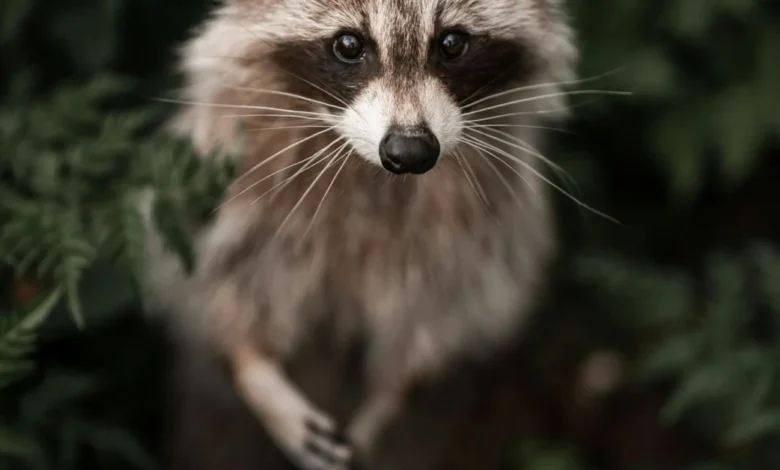
In the suburban landscapes of the Seattle metropolitan area, an unusual resident has captured the collective attention of the global digital community. Jimothy, a raccoon characterized by a rare shortened spine, has transitioned from a local backyard visitor to an international social media sensation. Footage documenting Jimothy’s unique gait—a distinctive waddle necessitated by his compact physiology—has amassed millions of views across various platforms. While the initial draw of these videos is often rooted in the animal’s unconventional appearance and endearing movements, the "Jimothy phenomenon" provides a profound window into the evolving relationship between urban humanity and the natural world. This surge in popularity serves as a case study for environmental psychologists and ecophilosophers who argue that our fascination with such creatures is a symptom of a deeper, systemic longing for connection with what is termed "wild otherness."
The Emergence of an Urban Icon: Chronology and Context
The rise of Jimothy began in late 2023 when residents in the Seattle area started sharing clips of a raccoon that looked remarkably different from its peers. Unlike the standard elongated frame of the North American raccoon (Procyon lotor), Jimothy possesses a truncated torso, a condition likely resulting from a congenital spinal deformity or an early developmental anomaly. Despite this physical divergence, Jimothy has demonstrated remarkable resilience, navigating backyard fences, climbing trees, and foraging with the same dexterity as his biologically typical counterparts.
As the videos migrated from private neighborhood forums to mainstream platforms like TikTok and Instagram, the narrative surrounding Jimothy shifted. He was no longer just a biological curiosity; he became a symbol of persistence. The timeline of his viral ascent mirrors a broader trend in digital media where "unconventional" animals—those with disabilities or unique physical traits—foster high levels of engagement. By early 2024, Jimothy had become a staple of nature-oriented social media, prompting discussions that ranged from wildlife biology to deep philosophy.
Biological Underpinnings and Urban Adaptation
From a biological perspective, Jimothy’s survival in an urban environment is a testament to the adaptability of the species. Raccoons are highly intelligent mesopredators that have thrived in the Anthropocene by exploiting human-altered landscapes. While a shortened spine might prove fatal in a more predatory-dense wilderness, the relatively protected corridors of Seattle’s suburbs offer a unique niche.
Wildlife biologists note that while physical deformities can hinder an animal’s ability to hunt or escape predators, the abundance of high-calorie human refuse and the relative lack of apex predators in suburban zones allow individuals like Jimothy to reach adulthood. His ability to balance on narrow fences despite a shifted center of gravity suggests a high degree of neuroplasticity and motor adaptation. This biological resilience forms the foundation of the public’s emotional investment; viewers are not just watching a raccoon, they are witnessing an underdog thrive against the odds.
The Ecophilosophical Perspective: Reclaiming Wild Otherness
The psychological pull of Jimothy can be analyzed through the lens of ecophilosophy, specifically the work of David Abram. In his seminal texts, The Spell of the Sensuous and Becoming Animal, Abram argues that modern human existence has become dangerously "human-centric." We reside in "built environments"—cities, climate-controlled rooms, and digital interfaces—that act as a hall of mirrors, reflecting only human intentions and designs back to us.
Abram posits that the human psyche requires interaction with "wild otherness" to remain healthy. Wild otherness refers to the presence of non-human entities whose lives are entirely independent of human utility or oversight. When a viewer watches Jimothy navigate a fence, they are momentarily pulled out of the human-centric "bubble." Jimothy does not care about digital metrics, political cycles, or economic trends. His existence is a raw, unmediated expression of life. This encounter de-centers the human observer, providing a sense of relief from the pressures of self-consciousness and reminding the individual that they are part of a much larger, more-than-human world.
Environmental Psychology and Ecological Identity
Beyond philosophy, the Jimothy phenomenon resonates with the principles of environmental psychology. Dr. Susan Clayton and other researchers in the field have developed the concept of "ecological identity." This term describes the portion of our self-concept that is derived from our relationship with the natural world, including landscapes, plants, and animals.
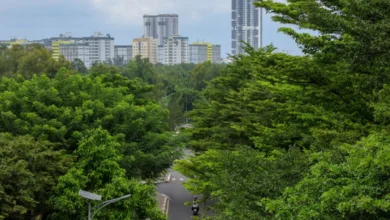
In the digital age, many individuals suffer from a diminished ecological identity. The "extinction of experience"—a term used to describe the loss of direct contact with nature—has been linked to increased rates of anxiety and a sense of alienation. For many, Jimothy represents a bridge back to a more grounded version of themselves. Seeing a wild animal navigate a familiar suburban setting helps urban dwellers re-categorize their neighborhoods not just as a collection of real estate, but as an active ecosystem.
Data from psychological studies suggests that even indirect contact with nature through digital media can provide a "restorative effect," though it is less potent than physical interaction. Jimothy functions as a gateway, prompting viewers to look at the trees and shadows in their own backyards with renewed curiosity. He reawakens the "inner child" who views the world with wonder rather than utility.
Collective Effervescence in the Digital Age
The social aspect of Jimothy’s fame can be explained by the sociological concept of "collective effervescence." Coined by Émile Durkheim and further explored by modern psychologists like Bernard Rimé, collective effervescence refers to the synchronized emotion and sense of belonging that occurs when a group of people focuses on the same event or object.
In a world characterized by hyper-connectivity but also profound loneliness, shared moments of wonder are rare. Jimothy provides a neutral ground for collective joy. Unlike political or social news, which often divides, the image of a uniquely shaped raccoon navigating his nightly routine offers a unifying experience. The comments sections of Jimothy’s videos are often devoid of the typical vitriol found online, replaced instead by shared humor, concern, and awe. This shared emotional state strengthens social bonds and provides a temporary reprieve from "climate anxiety"—the chronic fear of environmental doom. By focusing on the survival and vitality of a single, resilient animal, the public finds a manageable way to process their love for the natural world.
Broader Implications for Wildlife Conservation and Urban Planning
The popularity of Jimothy has implications that extend into the realms of conservation and urban policy. Public interest in "charismatic microfauna" like Jimothy can be leveraged to promote biodiversity in urban planning. When people feel an emotional connection to local wildlife, they are more likely to support initiatives such as:
- Wildlife Corridors: Ensuring that green spaces are connected so that animals can move safely through urban areas.
- Coexistence Education: Reducing human-wildlife conflict by educating the public on how to live alongside species like raccoons without resorting to lethal control.
- Habitat Preservation: Protecting the "pockets of wild" that exist within city limits.
However, experts also warn of the "Disneyfication" of wild animals. It is crucial to maintain a factual understanding that Jimothy, despite his fame, remains a wild animal with specific needs and behaviors. Professional journalistic and scientific discourse emphasizes that "loving" Jimothy means respecting his wildness—viewing him from a distance and ensuring he is not habituated to human feeding, which could ultimately lead to his downfall.
Conclusion: What the Raccoon Taught the City
Jimothy is more than a viral video subject; he is a mirror reflecting the current state of the human spirit. His presence in the digital zeitgeist highlights a society that is increasingly aware of its own isolation from the natural world and is actively seeking ways to reintegrate. Through the lens of David Abram’s "wild otherness" and Susan Clayton’s "ecological identity," we see that Jimothy fulfills a psychological necessity. He reminds us that we are fellow creatures in a complex web of life, and that our identity is not confined to our screens or our professional roles.
As Jimothy continues his nightly rounds through the suburbs of Seattle, he carries with him the curiosity and affection of millions. He stands as a reminder that even in the heart of the modern, human-centric world, the wild persists—sometimes in the most unexpected of shapes. The lesson of Jimothy is one of belonging: a reminder that humans have not merely moved into nature, but have belonged to it all along. By pausing to wonder at a raccoon with a shortened spine, we are, in a sense, finding our way back home.