
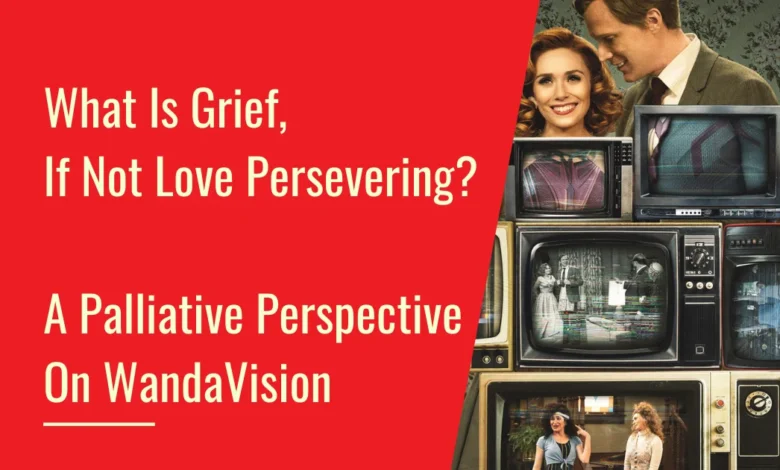
The Disney+ series WandaVision, which premiered in January 2021, has captivated audiences not only with its innovative narrative structure and its exploration of beloved Marvel Cinematic Universe (MCU) characters but also with its profound and nuanced portrayal of grief, loss, and mourning. What began as a seemingly whimsical journey into classic sitcom tropes quickly evolved into a deeply resonant examination of human emotional processing, drawing parallels between fictional experiences and real-world palliative care. This analysis delves into the show’s thematic depth, its connection to the broader MCU narrative, and its implications for understanding complex emotional responses to trauma.
The Genesis of a Grief-Stricken Reality
WandaVision, starring Elizabeth Olsen as Wanda Maximoff (Scarlet Witch) and Paul Bettany as Vision, presented a stark departure from typical superhero fare. The initial episodes, steeped in the aesthetics of mid-20th century American television, left audiences and critics alike grappling with its central mystery. The stark contrast between the show’s vintage facade and the known tragic fate of Vision—who was demonstrably killed in Avengers: Infinity War—served as a primary catalyst for fan speculation. This juxtaposition immediately signaled that WandaVision was not merely an extension of the MCU’s action-oriented plotlines but a deeper, more introspective exploration.
The series’ creators, led by executive producer and head writer Jac Schaeffer, intentionally designed Wanda’s character arc around the established stages of grief: denial, anger, bargaining, depression, and acceptance. This deliberate framework allowed for a layered unfolding of Wanda’s psychological state, mirroring the often chaotic and non-linear process individuals experience when confronting profound loss. The early episodes, characterized by Wanda’s cheerful denial and the seemingly lighthearted sitcom scenarios, effectively established her initial coping mechanism. As the narrative progressed, the facade began to crack, revealing the raw pain and overwhelming despair that underpinned her constructed reality.
The Echoes of the Snap: A Universe in Mourning
Beyond Wanda’s personal trauma, WandaVision served as a poignant reflection of the collective grief experienced by the inhabitants of the MCU following Thanos’s devastating "Snap" in Avengers: Infinity War. This cataclysmic event, which eradicated half of all life in the universe, left behind a wake of immeasurable loss and fractured families. The subsequent "blip," or the return of the vanished five years later in Avengers: Endgame, introduced a new layer of trauma: the jarring re-emergence into a world irrevocably altered by absence.
The series provided glimpses into the chaotic aftermath of the blip, particularly in Episode 4, "We Interrupt This Program." This episode offered a window into the palpable anxiety and confusion as individuals reintegrated into society. The scene of a man desperately trying to reach his wife, his urgent search tinged with the uncertainty of whether she had returned or remained lost, underscored the pervasive sense of disorientation and lingering fear. Crucially, the episode highlighted the personal tragedy of Monica Rambeau, who reappeared in the hospital room where she had been with her mother five years prior, only to discover that her mother had died during her absence. This personal loss, amplified by the circumstances of her disintegration and subsequent re-emergence, underscored the profound isolation and unfulfilled need for closure experienced by many.
This aspect of the narrative resonates deeply with real-world experiences, particularly in the context of recent global events. The COVID-19 pandemic, with its stringent visitation restrictions in healthcare settings, has tragically mirrored Monica’s inability to be present for her mother’s final moments. For countless families, the inability to hold a loved one’s hand or offer comfort during their last hours has created a profound sense of helplessness and a protracted grieving process, lacking the solace of direct goodbyes. WandaVision thus offered a fictionalized yet emotionally resonant parallel to these real-world challenges, underscoring the universal need for connection and presence during times of immense vulnerability.
Complicated Grief: A Superhero Manifestation
The author’s observation that WandaVision is a study in "complicated grief" provides a critical lens through which to interpret Wanda’s actions. Complicated grief, a clinical term, describes a state where the symptoms of loss and mourning do not subside over time but instead intensify, hindering the normal healing process. Individuals experiencing complicated grief may become trapped in their emotional turmoil, seeking out tangible reminders or sensory experiences that evoke a sense of proximity to the deceased.
In the context of WandaVision, this translates to Wanda’s creation of an alternate reality—a "grief bubble"—to live out a perfect, albeit simulated, life with Vision. This "superhero complicated grief" manifests as the ultimate act of denial and bargaining, where Wanda manipulates spacetime and traps an entire town of innocent individuals within her idealized sitcom existence to assuage her pain. This extraordinary act, while fantastical, serves as a powerful metaphor for the extreme measures individuals might take, consciously or unconsciously, to avoid confronting unbearable loss.

The show also subtly acknowledges the grief experienced by other characters. Hayward, a key antagonist, exhibits his own pain and resentment, stemming from the perceived ease of those who vanished compared to the suffering of those left behind. While his outburst directed at Monica might be construed as callous, it also hints at his own unprocessed trauma and anger. The series thus suggests that grief is not a monolithic experience but a multifaceted emotion that can manifest in diverse and sometimes destructive ways.
Vision’s Advance Directives and Ethical Considerations
A particularly insightful element of WandaVision that speaks to palliative care principles is the reference to Vision’s advance directives. The narrative frames the violation of his stated wishes—not to be re-animated or used as a weapon—as a significant transgression. This introduces a compelling ethical dimension to the story, prompting reflection on the importance of respecting an individual’s autonomy and end-of-life preferences.
The inclusion of Vision’s advance directives raises intriguing questions about their potential implications within the MCU. Would Avengers, given their extraordinary circumstances and frequent brushes with mortality, have standardized forms for their end-of-life wishes? Would these directives include provisions for resurrection, and under what specific conditions would such measures be deemed acceptable? These questions, while speculative, highlight the underlying ethical considerations surrounding life, death, and the potential for intervention in the face of profound loss, even within a fictional universe.
The Healing Power of Love, Persevering
The emotional climax of WandaVision arrives with Vision’s poignant question: "What is grief, if not love persevering?" This statement encapsulates the series’ central thesis, suggesting that grief is not merely the absence of a loved one but the enduring testament to the love that was shared. Losing someone does not diminish the love felt; rather, it transforms the object of that love into something that can no longer be physically reached, leaving behind a void that grief endeavors to navigate. Grief, in this sense, becomes the active work of continuing to love someone who is no longer present.
This philosophical underpinning is powerfully illustrated in the series’ final moments, particularly in the farewell between Wanda and Vision as they say goodbye to their sons. The scene, imbued with genuine sweetness and tenderness, avoids melodrama, offering a poignant depiction of parting. It mirrors the complex emotional landscape often observed in deeply religious families within palliative care settings. Here, a profound faith in eventual reunion is blended with the immediate sadness of separation and the uncertainty of when or how that reunion might occur. It is a farewell characterized by both profound sorrow for the present parting and an unwavering trust in a future reunion.
Broader Implications and Cultural Impact
WandaVision‘s success lies not only in its narrative innovation but also in its ability to spark meaningful conversations about grief, loss, and trauma. By grounding its fantastical premise in relatable human emotions, the series has transcended the typical boundaries of superhero storytelling, offering a cathartic and thought-provoking experience for a broad audience. The show’s ability to integrate complex psychological themes with a popular cultural phenomenon like the MCU demonstrates the increasing maturity and depth of contemporary serialized storytelling.
The series’ exploration of grief and its impact on individuals and communities offers valuable insights that can inform discussions within palliative care and mental health fields. It highlights the universal nature of loss and the diverse ways in which individuals cope with it. As Marvel continues to expand its cinematic universe, the legacy of WandaVision suggests a potential for further exploration of these profound emotional themes, offering audiences not only entertainment but also opportunities for introspection and connection. The hope remains that future installments will continue to deliver the same level of thought-provoking engagement and emotional resonance that has made WandaVision such a significant cultural moment.
References:
- Shear MK. “Grief and mourning gone awry: pathway and course of complicated grief.” Dialogues Clin Neurosci. 2012 Jun;14(2):119-28.
- Schaeffer, J. (2021, March 12). WandaVision Series Finale Interview: Jac Schaeffer On Dr. Strange 2. Deadline. Retrieved from https://deadline.com/2021/03/wandavision-series-finale-interview-jac-schaeffer-dr-strange-2-1234709749/amp/