Mapping the Global Health Ecosystem: KFF Study Examines 14 Key International Institutions Amid Tightening Budgets


Over the past quarter-century, the global health architecture has expanded significantly to address persistent health challenges across low- and middle-income countries (LMICs). Today, a complex network of international organizations operates within this space, featuring divergent mandates, unique governance models, varying financing structures, and distinct operational approaches. However, because many of these entities support the same countries, target similar health conditions, and rely on the same narrow pool of revenue sources, international stakeholders have increasingly questioned whether the system suffers from operational duplication or presents untapped opportunities for synergy and coordination.
These concerns have grown more acute against a backdrop of tightening global fiscal environments, forcing numerous international institutions to scale back operations or re-evaluate their strategic footprints. In response, multiple high-profile reform initiatives—including the Lusaka Agenda, the Accra Reset, and the World Health Organization’s Joint Process on Reform of the Global Health Architecture—have been launched. To provide foundational data for these ongoing reform discussions, KFF has published a comprehensive descriptive mapping of 14 key global health and international institutions. The analysis evaluates organizations across a wide range of variables to inform debates surrounding coordination, comparative advantage, architectural reform, and shared systemic challenges.
The Institutional Landscape: Classification and Core Missions
The 14 international organizations evaluated in the KFF mapping represent a diverse cross-section of the global health ecosystem. They span United Nations member-based entities, independent and hosted public-private partnerships (PPPs), and multilateral development banks (MDBs).
Among the institutions evaluated are the Coalition for Epidemic Preparedness Innovations (CEPI), Gavi (the Vaccine Alliance), the Global Financing Facility (GFF), the Global Fund to Fight AIDS, Tuberculosis and Malaria, the Pandemic Fund, the RBM Partnership to End Malaria, the Stop TB Partnership, and Unitaid. The roster also includes specialized UN bodies and programs such as the Joint United Nations Programme on HIV/AIDS (UNAIDS), the United Nations Population Fund (UNFPA), the United Nations Children’s Fund (UNICEF), and the World Health Organization (WHO), alongside the World Bank’s International Bank for Reconstruction and Development (IBRD) and International Development Association (IDA).
The missions of these organizations vary considerably. Eight of the 14 entities—specifically the public-private partnerships—were established over the past two to three decades to tackle narrowly focused health challenges. For instance, CEPI focuses heavily on accelerating vaccine development against epidemic and pandemic threats, while the Stop TB Partnership and the RBM Partnership concentrate on eradicating specific infectious diseases. Conversely, UN entities and MDBs operate under broad mandates designed to promote overarching developmental goals, economic growth, and poverty reduction across all member states. UNAIDS serves as a notable exception among UN bodies, maintaining a specialized, narrow focus exclusively dedicated to addressing the global HIV/AIDS epidemic.
Furthermore, not all 14 institutions are health-specific. While eleven maintain health as their primary focus, organizations like UNICEF, IBRD, and IDA incorporate health investments as part of broader developmental strategies. UNICEF champions child protection, education, and social policy alongside health, whereas the World Bank channels health funding to support broader economic development and poverty alleviation.
Governance Structures and Stakeholder Representation
Governance frameworks across the 14 institutions generally bifurcate into two primary models: member-state governance and multi-stakeholder governance.
In member-state models—utilized by agencies such as the WHO, UNFPA, UNICEF, and the World Bank—governing boards consist exclusively of sovereign states. Within the World Bank’s IBRD and IDA, voting weights are apportioned to member states based partly on their financial contributions.
In contrast, multi-stakeholder boards integrate a diverse array of actors, including donor governments, implementer countries, private foundations, the private sector, civil society organizations (CSOs), and affected populations. Board sizes and compositions vary drastically. Gavi’s board features 27 members, whereas CEPI’s board comprises 12 members.
Civil society representation remains a notable differentiator across the ecosystem. All eight public-private organizations incorporate at least one civil society voting member on their governing bodies. Stop TB boasts the highest proportion of civil society representation at 27% (7 seats), followed by the Global Fund at 15% (3 seats). Conversely, UN and MDB governing bodies generally do not grant voting rights to civil society, though UNAIDS is unique in maintaining five non-voting civil society seats.
Decision-making procedures also reflect organizational priorities. Nine of the 14 entities explicitly strive for consensus-based decisions. When consensus fails, formal voting rules apply. Six organizations require a two-thirds supermajority, while another six rely on simple majorities. Notably, the Global Fund and the Pandemic Fund require a two-thirds supermajority within each of their separate voting blocs (donors and implementers), a rule that grants minority blocs significant leverage to block decisions.
Financing Models, Revenue Sources, and Replenishment Cycles
With the exception of the IBRD—which finances its operations by borrowing from international capital markets backed by member capital—every organization in the analysis relies heavily on voluntary contributions. These funds originate primarily from sovereign governments, supplemented by private philanthropic contributions.
Funding concentration is a prominent characteristic of these institutions. A small handful of major donors frequently underwrite the bulk of institutional budgets. For example, roughly 68% of the Global Fund’s contributions originate from just five governments (the United States, France, the UK, Germany, and Japan). Similarly, five key donors account for 74% of the GFF’s funding and 73% of the Pandemic Fund’s resources.
To secure predictable, multi-year funding streams, eight organizations utilize formal replenishment models and structured investment rounds. Cycles vary significantly: the Global Fund operates on a three-year replenishment cycle, while Gavi, CEPI, the Pandemic Fund, GFF, and Unitaid utilize five-year cycles. IDA and the WHO have recently adopted four-year funding and investment periods. Because these timelines rarely align across institutions, recipient countries and donor governments face persistent challenges in synchronizing national health strategies with external funding flows.
Health Focus Areas and Functional Modalities
An analysis of core health focus areas reveals that health systems strengthening (HSS) is the most widely shared priority, supported by 10 of the 14 institutions. Other primary areas include maternal and child health (MCH), supported by six organizations; global health security and pandemic preparedness and response (GHS/PPR), covered by six; malaria, addressed by five; HIV and tuberculosis, prioritized by four; and family planning and reproductive health (FP/RH), targeted by three. The WHO maintains a mandate covering all seven areas.
Operationally, organizations execute their missions through distinct functional modalities. Technical assistance (TA) is the most common service, provided by nine of the institutions. Country financing, normative technical guidance, and market shaping or pooled procurement are each utilized by six organizations. Research and development (R&D) is primarily spearheaded by CEPI, while global health surveillance is conducted by UN agencies and the WHO.
Among financing institutions, annual financial commitments vary widely. Based on recent data, the Global Fund disburses approximately $4.0 billion annually, making it the largest grant-making entity in the cohort, closely followed by IDA ($4.5 billion in commitments) and Gavi ($2.8 billion in disbursements). The GFF channels roughly $1.1 billion annually (including leveraged IDA/IBRD resources), while the Pandemic Fund averages about $462 million per year based on its initial funding rounds.
Country Eligibility, Overlap, and Graduation Policies
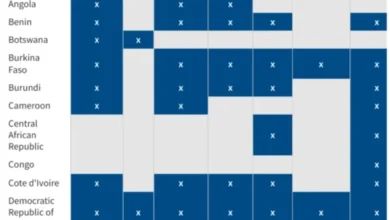
Financing institutions rely primarily on World Bank Atlas Method GNI per capita metrics to determine country eligibility, often combining income thresholds with disease burden indicators or fragility metrics. Across the six primary financing institutions (Gavi, GFF, the Global Fund, the Pandemic Fund, IBRD, and IDA), a total of 148 countries are currently eligible for support.
Significant operational overlap exists among these bodies. The Global Fund reaches the highest number of eligible countries (123), followed by IBRD (86) and IDA (78), while Gavi and GFF each cover 56 countries. Pairwise analysis demonstrates extensive overlap: all countries eligible for Gavi, the GFF, and the Pandemic Fund are also eligible for support from the Global Fund under at least one disease category.
As fiscal pressures mount, graduation policies have taken on heightened importance. Gavi, the Global Fund, and IDA enforce formal graduation frameworks that phase out financial support as countries surpass specific income thresholds. To prevent sudden funding cliffs, these transitions typically span several years and are frequently paired with mandatory co-financing requirements. Gavi and the Global Fund mandate country co-financing scaled to economic capacity, ensuring domestic ownership and preparing national health systems for eventual financial independence.
Implications for Architectural Reform
The KFF descriptive mapping underscores both the diversity and the fragmentation inherent in the modern global health architecture. While the proliferation of specialized institutions over the past 25 years has driven remarkable progress against specific diseases and health emergencies, it has simultaneously created administrative redundancies, reporting burdens for recipient governments, and administrative competition for scarce donor resources.
As international stakeholders continue pursuing structural reforms through frameworks like the Lusaka Agenda, empirical data mapping provided by analyses such as KFF’s serves as a critical baseline. By identifying precise operational overlaps, governance discrepancies, and funding misalignments, policymakers can better navigate negotiations to streamline global health governance, enhance country-level coordination, and maximize the impact of every health dollar spent in low- and middle-income nations.
Related posts: