
New Lancet Dementia Report Reveals 45% of Cognitive Decline Cases Can Be Prevented Through Lifestyle and Health Interventions

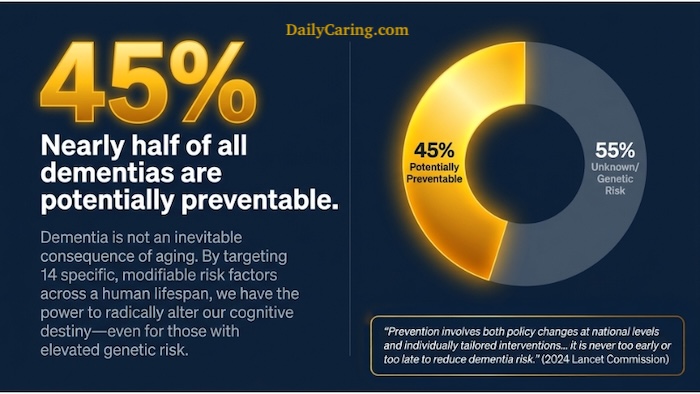
For millions of families and professional caregivers navigating the complexities of aging, the looming threat of cognitive decline often feels like an immutable certainty. The sleepless nights spent worrying about a parent’s failing memory or analyzing one’s own genetic family history can generate a profound sense of helplessness. For generations, a diagnosis of dementia was widely accepted as an inevitable consequence of advanced age—a predetermined path dictated largely by biological inheritance. However, a landmark scientific consensus is fundamentally altering this narrative. Recent findings from the updated Lancet Dementia Report indicate that a staggering 45 percent of all dementia cases worldwide could theoretically be prevented or delayed by systematically addressing specific, modifiable risk factors across the human lifespan.
This comprehensive epidemiological data marks a monumental turning point in neurology, gerontology, and public health policy. Rather than viewing neurodegenerative disorders as entirely untamable diseases of attrition, the medical community is increasingly recognizing dementia as a condition heavily influenced by cumulative lifestyle choices, environmental exposures, and the management of chronic health conditions. For caregivers and aging adults, this research offers a profound shift in perspective: genetic predisposition does not automatically equal a guaranteed medical destiny.
The Evolution of the Lancet Commission Findings
To understand the weight of the latest findings, it is essential to examine the historical framework of the Lancet Commission on Dementia Prevention, Intervention, and Care. The initiative first captured global attention with its landmark 2017 report, which initially identified 9 modifiable risk factors associated with cognitive decline. That foundational list included elements such as early-life education, hearing loss, midlife hypertension, obesity, smoking, depression, physical inactivity, diabetes, and social isolation.
In 2020, the Commission released a major update that expanded the list to 12 factors by incorporating excessive alcohol consumption in midlife and traumatic brain injury, alongside air pollution. The latest iteration of the report builds further upon rigorous longitudinal studies and meta-analyses, bringing the total number of modifiable risk factors to 14. This continuous evolution reflects the rapid acceleration of neurological research, proving that as epidemiological tools become more sophisticated, medical science uncovers more actionable entry points for preventative medicine.
Dissecting the Two New Additions: High LDL Cholesterol and Vision Loss
The most recent update to the Lancet Commission’s framework introduces two critical health variables that frequently catch patients and healthcare consumers by surprise: untreated vision loss and high low-density lipoprotein (LDL) cholesterol, typically measured during midlife.
High LDL cholesterol, long recognized as a primary driver of cardiovascular disease and stroke, is now formally acknowledged as a significant biological burden on the central nervous system. Vascular health and brain health are inextricably linked; chronic arterial damage and microvascular disease in the brain impair cerebral blood flow, thereby accelerating neurodegeneration and the accumulation of amyloid-beta plaques. According to the report, high LDL cholesterol carries a weighted Population Attributable Fraction (PAF) of 7 percent. This statistical metric demonstrates that aggressively managing cholesterol levels decades before old age sets in could theoretically eliminate a substantial fraction of global dementia cases.
Similarly, untreated vision loss has emerged as a major independent risk factor. Sensory deprivation plays a profoundly detrimental role in cognitive health. When older adults experience uncorrected visual impairments, their interaction with the environment drops precipitously. This environmental impoverishment starves the brain of the complex sensory stimulation it requires to maintain neural plasticity. Furthermore, vision loss frequently compounds social isolation, another established driver of cognitive decline, as individuals become increasingly reluctant to navigate public spaces or engage in community activities.

The Critical Impact of Hearing Loss and the ACHIEVE Study
Among all the modifiable risk factors identified in the report, auditory decline stands out due to its high prevalence and the remarkable efficacy of available interventions. Hearing loss carries a weighted Population Attributable Fraction (7 percent), placing it alongside cholesterol management as one of the most impactful targets for prevention.
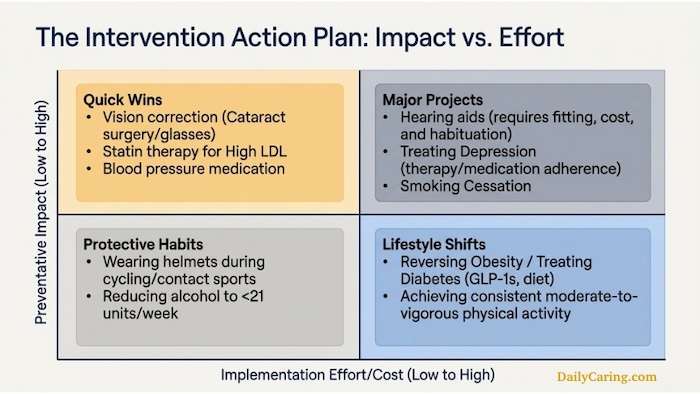
The inclusion of hearing loss in preventative guidelines has been powerfully reinforced by real-world clinical trials, most notably the landmark ACHIEVE (Aging and Cognitive Health Evaluation in Elders) study. This rigorous multi-center randomized controlled trial investigated whether treating mild-to-moderate hearing loss with hearing aids could slow cognitive decline in older adults. The results were striking: among high-risk populations, the consistent use of hearing aids reduced three-year global cognitive decline by an astonishing 48 percent.
Medical experts emphasize that treating hearing loss accomplishes far more than simply amplifying sound waves. By restoring a person’s ability to communicate effortlessly, hearing interventions preserve social connectedness, mitigate the incidence of late-life depression, and maintain the daily cognitive engagement necessary to keep neural pathways active. In essence, a pair of properly fitted hearing aids functions not just as an assistive listening device, but as a robust neuroprotective tool.
Debunking Genetic Determinism: APOE Status and Lifestyle
Perhaps the most reassuring revelation within the 2024 Lancet report is the explicit demotion of genetic fatalism. For decades, the presence of the APOE-e4 allele—the primary genetic risk factor associated with late-onset Alzheimer’s disease—has cast a long shadow over families with a history of the condition. Many individuals who witnessed a parent or sibling suffer from dementia harbored the quiet dread that their own genetic code carried an inevitable sentence.

The Commission’s analysis firmly debunks this fatalistic viewpoint. Researchers found that the benefits of managing modifiable risk factors apply across the board, irrespective of an individual’s APOE genetic status. Whether a person carries zero, one, or two copies of the high-risk gene, adhering to preventative protocols—such as controlling blood pressure, maintaining physical activity, managing metabolic health, and protecting sensory functions—yields tangible risk-reduction benefits.
As prominent geriatricians often summarize: genetics may load the gun, but lifestyle largely pulls the trigger. By actively targeting the 14 risk factors across different life stages, individuals can effectively engage safety mechanisms that delay or entirely prevent the onset of clinical symptoms.
A Life-Course Approach to Cognitive Longevity
Public health authorities stress that dementia prevention is not a task reserved exclusively for retirement age. Instead, it requires a lifelong strategy divided into distinct developmental windows:
- Early Life: Focusing on education and maximizing cognitive reserve during childhood and adolescence.
- Midlife (Ages 18 to 65): Aggressively managing conditions such as hypertension, high LDL cholesterol, traumatic brain injuries, hearing loss, obesity, diabetes, alcohol consumption, and depressive disorders, while addressing environmental factors like air pollution.
- Late Life (Over 65): Maintaining social engagement, treating vision loss, managing physical inactivity, and monitoring systemic health conditions.
The overarching goal of this life-course framework is the compression of morbidity. Even if an individual eventually develops neurodegenerative pathology late in life, successfully delaying the onset of symptoms by just a few years ensures that they spend the vast majority of their lifespan in a state of robust physical and cognitive health.
Pharmaceutical Advances Versus Lifestyle Interventions
The release of the Lancet report arrives at a time of intense public and medical discussion regarding newly developed pharmaceutical therapies. Over recent years, the medical community has witnessed the approval of novel amyloid-targeting monoclonal antibodies designed to clear pathological plaques from the brains of Alzheimer’s patients. While these medications represent legitimate scientific breakthroughs, the Lancet Commission offers a necessary and sobering reality check regarding their real-world utility.
Clinical data indicates that these new biologic therapies offer only modest clinical efficacy in slowing cognitive decline. Furthermore, they carry notable risks of serious adverse side effects—such as amyloid-related imaging abnormalities (ARIA)—and impose astronomical financial costs and logistical burdens on patients, families, and healthcare systems.
Conversely, traditional pharmacological agents, such as cholinesterase inhibitors and memantine, remain affordable and accessible mainstays for symptom management, though they likewise do not stop underlying disease progression. When weighed against the entire landscape of medical interventions, no single drug currently on the market matches the sweeping 45 percent prevention potential documented through comprehensive lifestyle and risk-factor modification.
Broader Implications for Healthcare Systems and Caregivers
The paradigm shift catalyzed by the Lancet report carries profound implications for global healthcare infrastructure. As populations age rapidly across developed and developing nations alike, the economic and emotional toll of dementia threatens to overwhelm medical systems. Public health experts argue that shifting capital and institutional focus toward population-wide prevention initiatives—such as improving air quality standards, subsidizing hearing and vision care, expanding access to nutritional education, and promoting cardiovascular health—will yield far greater societal returns than relying solely on late-stage drug treatments.
For family caregivers, who shoulder the daily physical and psychological labor of supporting loved ones with cognitive impairments, this research provides a renewed sense of agency. While caring for a dementia patient remains an exhausting endeavor, understanding the mechanisms of prevention empowers families to advocate proactively for their own long-term health and the health of younger generations.
Ultimately, the medical community is shedding the archaic view that cognitive decline is an unalterable facet of human aging. Armed with actionable data covering 14 distinct risk factors, modern medicine provides a clear roadmap. By systematically addressing these variables across the lifespan, society can fundamentally alter the trajectory of brain health, transforming dementia from an inevitable crisis into a manageable, and often preventable, public health challenge.