
Unlocking the Architecture of the Mind: The Science of Neuroplasticity and the Journey of Learning

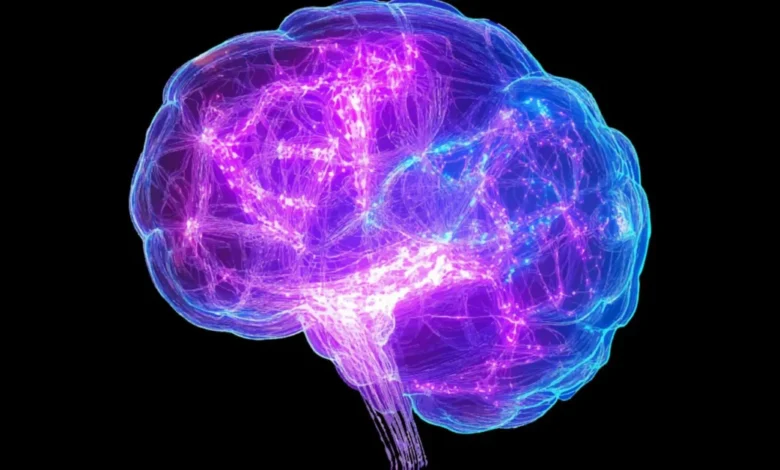
The human brain is a marvel of biological engineering, a dynamic landscape composed of knowledge—the synthesis of sensory perception and autobiographical memory—and the continuous flow of electrochemical energy. At its core, the mind operates through neural pathways that act as the physical infrastructure for every thought, movement, and emotion. Recent advancements in neuroscience have demystified how these pathways are formed, reinforced, and transformed, a process fundamentally defined by the concept of neuroplasticity. Much like the metaphorical journey through the Land of Oz, the development of the brain is an adventure into uncharted territory, where the map is drawn by our attention, intention, and lived experiences.
The Mechanism of Neural Adaptation
At the heart of brain development is the Hebbian principle: "Neurons that fire together, wire together." This concept, first articulated by neuropsychologist Donald Hebb in 1949, posits that the efficiency of synaptic connections increases with repeated co-activation. When a specific pattern of neural activity occurs frequently, the brain reinforces these connections, creating a stable circuit that facilitates memory and skill retention.
In practical terms, this is how we learn. When an individual focuses their attention on a new task, they are essentially signaling the brain to allocate metabolic resources to that specific neural circuit. However, the ease with which these circuits are established is not uniform. A groundbreaking study conducted at the California Institute of Technology (Caltech) by researchers Sofia Sakellaridi and Vassilios Christopoulos utilized brain-machine interface paradigms to observe individual neuron firing during skill acquisition. Their research revealed that the brain does not build every new skill from scratch. Instead, it relies on pre-existing neural "pavement."
For instance, a musician who has mastered the violin finds it significantly easier to learn the bass guitar than a complete novice. The neural patterns governing string manipulation, hand-eye coordination, and rhythmic timing are already established. The brain, an efficiency-seeking organ, prefers to repurpose existing architectures rather than construct entirely new ones, which explains why acquiring a skill that diverges from one’s existing expertise requires significantly more time, repetition, and cognitive effort.
Neuroindividuality and the Asynchronous Brain
The concept of "neuroindividuality" suggests that no two brains navigate the same landscape in the same way. This is particularly evident in the population of twice-exceptional (2e) individuals—those who possess both advanced intellectual capabilities and learning or developmental challenges. For these individuals, the "yellow brick road" of their neural architecture is rarely a straight line; it is characterized by unexpected detours, high-speed interchanges, and backcountry trails.
Brain development is inherently asynchronous. Different regions of the brain mature at different rates, and in 2e children, this disparity can be profound. A child might possess the spatial reasoning of a teenager while simultaneously lacking the executive function to adhere to classroom social norms, such as waiting for their turn to speak. This disconnect often leads to frustration, as their behavioral output does not align with their cognitive potential. When these individuals are forced into a rigid, one-size-fits-all educational framework, the resulting struggle can lead to diminished self-esteem and a negative feedback loop that further hinders cognitive growth.
The Role of Emotional Environment in Cognitive Development
The physical environment and the emotional climate in which learning occurs are perhaps the most significant factors in determining whether neural adaptation will be positive or maladaptive. Research by Dr. Pamela Cantor, founder of Turnaround for Children, emphasizes that emotional connection is the primary catalyst for deep learning. When a child feels safe, supported, and emotionally regulated at home and in the classroom, the brain remains in an "open" state, primed for neural expansion.
Conversely, when an individual is subjected to chronic stress, trauma, or constant negative reinforcement, the brain shifts into a survival-oriented state. In this mode, the amygdala—the brain’s alarm system—takes precedence, effectively shutting down the prefrontal cortex, the area responsible for complex thought and learning. As the old adage suggests, one cannot effectively "talk" or learn if the brain is stuck in a fight-or-flight response. The physiological reality of stress is that it inhibits the very neuroplasticity required for academic and personal growth.
The Integrative Power of the Arts
To bridge the gap between abstract concepts and long-term retention, educators are increasingly looking toward arts-integrated curricula. A notable study led by Dr. Mariale Hardiman at Johns Hopkins University demonstrated the efficacy of this approach in Baltimore public schools. Fifth-grade students who were taught environmental science and astronomy through the medium of music and dance outperformed their peers who received traditional instruction.
Ten weeks after the initial lessons, the arts-integrated group retained the scientific information with significantly higher accuracy. The implications of this are profound: when information is encoded through multiple sensory modalities—visual, auditory, and kinesthetic—the brain creates a more robust, multi-layered neural network. By engaging the emotional and creative centers of the brain alongside the analytical ones, instructors can build stronger, more resilient pathways that survive the passage of time.
A Chronology of Neuroplasticity Research
The journey to understanding the malleable brain has evolved significantly over the last century:
- 1949: Donald Hebb publishes The Organization of Behavior, introducing the "fire together, wire together" theory.
- 1960s-70s: Researchers like Marian Diamond provide the first empirical evidence that an enriched environment can increase the cortical thickness in rat brains, challenging the dogma that the adult brain is "fixed."
- 1998: Peter Eriksson and colleagues demonstrate that neurogenesis—the birth of new neurons—occurs in the adult human hippocampus, debunking the myth that humans do not grow new brain cells after childhood.
- 2010s-Present: Advanced neuroimaging (fMRI, DTI) allows researchers to map the real-time changes in human neural pathways as subjects acquire complex skills, confirming that intention and attention are the primary architects of brain structure.
Broader Implications and Future Directions
The implications of neuroplasticity research for public policy and education are substantial. If the brain is indeed an organ that changes throughout the lifespan, then the focus of educational and corporate training must shift from "content delivery" to "infrastructure building." This involves creating environments that prioritize emotional safety, offer diverse learning modalities, and account for the individual neurodiverse path of every student or employee.
Furthermore, the realization that we can intentionally influence our own neural development is empowering. While external support systems are vital, individuals possess a degree of agency in cultivating their own cognitive flexibility. By intentionally seeking out new experiences, maintaining an open mindset, and practicing new skills—even when the initial process is difficult—one can theoretically pave new roads within the brain.
As we continue to map the complexities of the human mind, the lesson remains clear: the brain is not a static object but a living, changing participant in our life’s journey. Whether it is through the arts, compassionate mentorship, or the disciplined pursuit of new knowledge, we are constantly engaged in the act of self-construction. The "gold bricks" on our yellow brick road are the experiences we choose to prioritize and the focus we dedicate to our personal development. In the final analysis, our capability to adapt is bounded only by the limits of our own curiosity and the quality of the environment we create for ourselves and others. As we navigate the storms of life, the ability to build new neural pathways remains our most valuable asset for growth, innovation, and long-term well-being.