Securing Your Digital Legacy: An Essential Guide for Caregivers in 2026


The landscape of personal assets has dramatically evolved, shifting from predominantly tangible holdings to an increasingly intricate web of digital footprints. While individuals and their families diligently ensure wills are signed and executors correctly chosen for physical estates, a critical, often overlooked component has emerged by 2026: the digital estate plan. This hidden realm of assets can become a labyrinth of locked doors, presenting significant legal, financial, and emotional challenges for grieving families if not addressed proactively.
For decades, estate planning focused on real estate, financial accounts, and personal belongings. However, the pervasive integration of technology into daily life has created a parallel universe of assets residing solely in the digital sphere. Family photographs, once physical albums, are now often stored exclusively in cloud services. Utility bills, bank statements, and medical records frequently arrive only via email. Social media profiles hold cherished memories, and subscription services, online marketplaces, and digital currencies represent real financial value. The absence of a clear digital estate plan can transform these conveniences into complex legal battles, potentially taking years and thousands of dollars in legal fees to resolve. As CPA and retirement planner Kurt Supe recently underscored, digital estate planning is no longer optional; it is the "missing piece" of modern financial freedom, essential for comprehensive end-of-life arrangements.
The Digital Footprint of the 21st Century: An Expanding Realm
The proliferation of internet-connected devices and online services has led to an exponential growth in individuals’ digital footprints. In 2026, the average person maintains dozens of online accounts, from banking and investment platforms to social media, streaming services, and e-commerce sites. This digital accumulation spans generations, with older adults increasingly adopting technology for communication, financial management, and entertainment. According to recent data, over 80% of individuals aged 65-74 are regular internet users, a figure that continues to climb. This widespread digital engagement means that virtually everyone, regardless of age, possesses a substantial digital estate.
The evolution of digital assets can be chronologically traced from the early days of email and rudimentary online forums in the 1990s to the sophisticated, interconnected digital lives of 2026. Initially, concerns were limited to email access. However, with the rise of social media platforms like Facebook in the mid-2000s, followed by cloud storage solutions, cryptocurrencies, and complex financial applications, the scope of what constitutes a "digital asset" broadened dramatically. The challenge for estate planners has been to adapt traditional legal frameworks to this rapidly changing technological landscape, a task made more urgent as the digital world becomes indistinguishable from the real one for many.

Defining the Modern Digital Estate in 2026
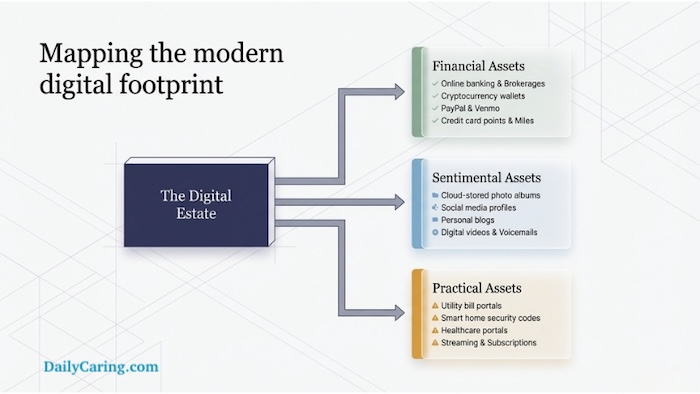
In 2026, a comprehensive digital estate plan extends far beyond merely listing a Gmail password. It encompasses a vast array of digital properties and information, each potentially holding sentimental, financial, or practical value. These include:
- Financial Accounts: Online banking portals, brokerage accounts, cryptocurrency wallets (e.g., Bitcoin, Ethereum), PayPal, Venmo, credit card accounts, and payment processing services. Access to these is crucial for settling debts, managing investments, and preventing fraud.
- Communication Accounts: Email accounts (Gmail, Outlook, Yahoo), messaging apps (WhatsApp, Telegram, Signal), and cloud storage services (Google Drive, iCloud, Dropbox) containing important documents, correspondence, and cherished memories.
- Social Media Profiles: Facebook, Instagram, X (formerly Twitter), LinkedIn, TikTok, and other platforms that hold personal narratives, photos, videos, and connections. These often require specific instructions regarding memorialization or deletion.
- Digital Content and Media: Photo and video libraries stored on cloud services or external hard drives, music libraries, e-books, online gaming accounts, and digital subscriptions (Netflix, Spotify, Amazon Prime, news subscriptions). These represent both entertainment and sometimes significant personal investment.
- Online Business Assets: Domain names, websites, blogs, e-commerce stores, intellectual property (digital art, written works), and associated advertising accounts. For entrepreneurs or those with side ventures, these can be significant income-generating assets.
- Personal Data and Documents: Digital copies of legal documents, tax records, medical histories, insurance policies, loyalty program points, and digital keys or access codes for smart home devices.
- Hardware Access: Passcodes for smartphones, tablets, computers, and external hard drives, which often serve as the gateway to all other digital assets.
Without proper planning, these assets don’t simply vanish; they become digital "ghosts" or, worse, inaccessible data that can lead to immense frustration and distress for surviving family members.
The Legal Landscape: RUFADAA and Fiduciary Access
The legal framework governing digital assets has evolved to address these modern challenges. A pivotal development has been the Revised Uniform Fiduciary Access to Digital Assets Act (RUFADAA). This legislation, first introduced in 2014 and widely adopted by states across the U.S. by 2026, provides a legal mechanism for fiduciaries—such as executors, agents under a power of attorney, or trustees—to access and manage an individual’s digital assets.
Before RUFADAA, privacy laws and the terms of service agreements of many online platforms often prevented anyone, even legally appointed fiduciaries, from accessing a deceased or incapacitated person’s digital accounts. This created a legal vacuum, trapping valuable data and causing immense difficulty for families attempting to settle estates or simply retrieve sentimental photos. RUFADAA essentially extends the traditional concept of fiduciary duty to the digital realm, allowing fiduciaries to step into the shoes of the account holder, but with a crucial caveat: explicit permission is often required.

The Act operates on a tiered system, prioritizing the account holder’s wishes. First, it respects any online tools provided by service providers (like Google’s Inactive Account Manager or Apple’s Legacy Contact). If no such tool is used, it defers to the user’s will, trust, or power of attorney. Only in the absence of these explicit instructions does it default to the service provider’s terms of service. This means that merely having a will or a power of attorney is often insufficient; these documents must specifically include "digital asset" language, explicitly granting fiduciaries the authority to access and manage electronic files and communications under RUFADAA laws. This legislative response acknowledges the unique nature of digital property, balancing privacy concerns with the practical needs of estate administration.
Industry Responses: Big Tech’s Role in Digital Legacy
Recognizing the growing need for digital legacy management, major technology companies have introduced tools to help users plan for their digital afterlife. These solutions, while valuable, typically address only their specific platforms and must be integrated into a broader digital estate plan.
- Google’s Inactive Account Manager: Launched over a decade ago, Google’s tool allows users to designate trusted contacts who will be notified and granted access to download data from Google services (Gmail, Drive, Photos, YouTube, etc.) after a specified period of inactivity. Users can choose what data to share and whether their account should be deleted. This provides a crucial mechanism for ensuring continuity and access to potentially vast amounts of personal information.
- Apple’s Legacy Contact: Introduced in 2021, Apple’s feature enables users to designate one or more individuals as Legacy Contacts. Upon the user’s death, with a death certificate and an access key generated during setup, these contacts can access the deceased’s iCloud data, including photos, videos, notes, documents, and app data. This is particularly vital given the central role iPhones and iCloud play in many people’s digital lives.
- Facebook’s Legacy Contact: Facebook offers users the option to designate a "Legacy Contact" who can manage their memorialized profile after their passing. This contact can accept friend requests, write a pinned post, update the profile picture, and respond to new event invitations. Alternatively, users can choose to have their account permanently deleted upon death. This feature helps manage the social and emotional aspects of a digital legacy.
While these tools are significant advancements, they represent only pieces of the larger digital estate puzzle. They do not cover every online account or provide a centralized solution for managing all digital assets. Therefore, integrating these platform-specific settings into a comprehensive legal document remains paramount.
The Caregiver’s Conundrum: Real-World Impacts
The absence of a digital estate plan places an enormous burden on caregivers, particularly those in the "Sandwich Generation" who are often juggling the needs of both their children and aging parents. The tweet by CPA Kurt Supe vividly illustrates this predicament: a 71-year-old man, diligent in his traditional estate planning—a will, a trust, beneficiaries named on every account—still left his family in a "nightmare scenario" because his entire life was locked behind his iPhone’s passcode. Banking apps, brokerage accounts, cryptocurrency wallets, PayPal, Venmo, credit cards, passwords, and years of financial records were all inaccessible.

This scenario is far from isolated. Caregivers frequently encounter situations where they cannot access critical information needed to pay bills, close accounts, or retrieve sentimental items like family photos. The emotional toll of grief is compounded by the practical stress of navigating digital barriers. Imagine a family unable to access cherished photographs stored in a cloud account, or an executor unable to pay a recurring utility bill because the login credentials are unknown. The financial implications can also be severe, ranging from missed payments leading to penalties, to the high costs of legal intervention required to gain access, often involving court orders and specialized digital forensic services.
A Proactive Approach: The 1-Hour Digital Legacy Action Plan
Securing a digital legacy does not require advanced technical expertise or an extensive time commitment. Caregivers can implement a robust digital safety net in approximately one hour by following three crucial steps:
Step 1: Appoint a "Digital Executor" (15 minutes)
While your primary estate executor may be well-versed in traditional asset management, they might not be the ideal person to handle your digital affairs. Appoint a separate "Digital Executor" or ensure your primary executor is technologically comfortable and capable. This individual’s role is to follow your explicit instructions for managing your digital life after you are gone or incapacitated. Their tasks could include:
- Closing or memorializing social media accounts according to your wishes.
- Retrieving and archiving digital photos and videos.
- Settling online-only bills and subscriptions.
- Managing or closing online financial accounts.
- Accessing and archiving important emails and documents.
- Ensuring the security and privacy of your digital data.
Crucially, communicate openly with your chosen Digital Executor about your expectations and where they can find the necessary information to fulfill their duties. This conversation is as important as the legal designation itself.
Step 2: Update Your Power of Attorney (20 minutes)
Do not assume that a standard Power of Attorney (POA) grants access to digital assets. Many general POAs predate the widespread reliance on digital platforms and lack the specific language required by RUFADAA. It is imperative to update your POA to explicitly include "digital asset" language. This grants your designated agent the legal authority to access, manage, and distribute your electronic files and communications, pay digital bills, and interact with online service providers on your behalf, in accordance with RUFADAA laws.
Consulting an estate planning attorney is vital here, as the specific wording required can vary by state. Ensure your updated POA clearly defines what constitutes a digital asset and explicitly empowers your agent to act as your fiduciary in the digital realm, covering financial, communicative, and data-related accounts. This proactive measure can prevent significant delays and legal hurdles during periods of incapacity or after death.
Step 3: The Password Hand-Off (25 minutes)
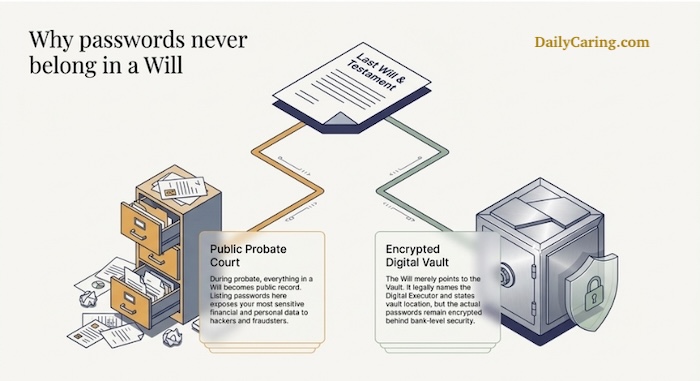
This is perhaps the most sensitive and critical step. Never write passwords directly into your will, as a will becomes a public document accessible to anyone once it enters probate, creating a severe security risk. Instead, implement a secure and confidential method for transferring access credentials to your trusted Digital Executor.
Recommended secure methods include:
- Password Managers: Utilize a reputable password manager (e.g., LastPass, 1Password, Dashlane) that offers an emergency access feature or a secure sharing option. You can grant your Digital Executor conditional access that activates after a specific period of inactivity or upon verification.
- Encrypted Document: Create an encrypted document containing a list of your digital accounts and corresponding usernames, and securely store the decryption key or master password in a physical, secure location, such as a fireproof safe deposit box, alongside instructions for your Digital Executor. This physical key should only be accessible to your trusted contact.
- Legacy Contacts (Platform-Specific): As discussed, utilize the legacy contact features provided by major platforms like Google, Apple, and Facebook. These are designed with security in mind and provide controlled access.
- Trusted Vault Services: Consider specialized digital legacy services that securely store access information and release it to designated individuals upon verification of death or incapacity, adhering to strict legal protocols.
Regardless of the method chosen, ensure that your Digital Executor knows where to find the master access key or instructions, but only after the appropriate trigger event. Regular review and updates of this information are also crucial, as online accounts and passwords change frequently.
Beyond the Basics: Advanced Considerations
As our digital lives become more complex, so do the considerations for digital estate planning. For individuals with significant online businesses, unique digital assets like Non-Fungible Tokens (NFTs), or substantial cryptocurrency holdings, specialized legal and financial advice is essential. These assets may require specific clauses in trusts or wills, and detailed instructions for their management and transfer. The legal framework around such emerging assets is continually evolving, necessitating ongoing review of your digital estate plan. Furthermore, maintaining robust cybersecurity practices throughout one’s life—using strong, unique passwords, two-factor authentication, and being wary of phishing—is a foundational aspect of protecting a digital legacy, preventing unauthorized access both before and after estate transition.
Conclusion: The Imperative of Clarity in a Digital Age
We meticulously build our digital footprints throughout our lives, often without considering their fate after we are gone. Leaving loved ones to navigate this complex digital landscape in the dark adds unnecessary burden to an already difficult time. By dedicating a mere hour today to appoint a Digital Executor, update your Power of Attorney with specific digital asset language, and establish a secure password hand-off mechanism, you are providing an invaluable gift of clarity and peace of mind.
For the "Sandwich Generation," who are acutely aware of the logistical and emotional challenges of caregiving, proactive digital estate planning is not just responsible—it is an act of profound love. It streamlines the administrative process, protects financial assets, preserves cherished memories, and ultimately removes a massive future burden from those you care about most. In 2026, a truly comprehensive estate plan is incomplete without a well-defined strategy for managing your digital legacy.
Disclaimer: This information is for educational and informational purposes only and does not constitute professional legal or financial advice. Digital estate laws (like RUFADAA) vary significantly by state and are subject to change. We strongly recommend consulting with a qualified estate planning attorney or digital legacy expert to ensure your plan meets current legal standards in your jurisdiction and addresses your specific needs.