Global COVID-19 Monitoring and Policy Framework: A Comprehensive Analysis of Pandemic Response and Statistical Trends

The global landscape of the COVID-19 pandemic has underwent a significant transition in data management and policy implementation, shifting from a state of acute emergency to a phase of long-term surveillance and institutionalized health monitoring. Central to this transition is the comprehensive tracking of epidemiological data and government policy actions, which provide the empirical foundation for understanding the virus’s trajectory and the efficacy of various interventions. As the international community moves further away from the initial shocks of 2020, the mechanisms for reporting cases, deaths, and policy shifts have been refined to reflect a more stable, albeit persistent, public health challenge. This analysis explores the evolution of these tracking mechanisms, the specific metrics used to evaluate global responses, and the methodological shifts that have defined the latter stages of the pandemic.
The Evolution of Epidemiological Surveillance
For much of the pandemic, the global community relied on a decentralized network of reporting, with the Johns Hopkins University (JHU) Coronavirus Resource Center serving as the primary clearinghouse for real-time data. However, as the pandemic matured, the infrastructure for data collection underwent a pivotal change. On March 7, 2023, the World Health Organization (WHO) assumed the primary role for consolidated reporting in many international trackers, following the conclusion of the JHU project on March 10, 2023.
This transition marked a shift toward official governmental and intergovernmental reporting channels. The current data framework, which draws from the WHO Coronavirus Dashboard, provides a weekly update on cumulative confirmed cases and deaths. This weekly cadence, rather than the daily updates seen during the height of the pandemic, reflects a broader trend in public health: the normalization of COVID-19 monitoring. By aggregating data at the country, income, and regional levels, health officials can identify long-term trends rather than reacting to daily fluctuations, which were often skewed by reporting delays or weekend lulls.
A critical refinement in this data occurred on March 18, 2024, when reporting protocols were clarified to distinguish between weekly totals and daily averages. This distinction is vital for researchers and policymakers who require precise figures to calculate transmission rates and mortality risks. The current tracker maintains a rolling 200-day window to ensure platform stability and speed, while historical datasets—essential for longitudinal studies—are preserved in comprehensive repositories such as GitHub.
Chronology of Global Policy Interventions
The timeline of policy responses to COVID-19 can be categorized into three distinct phases: the initial containment phase (2020), the mitigation and vaccination phase (2021), and the transition to endemicity (2022-present). Policy trackers, notably the Oxford COVID-19 Government Response Tracker (OxCGRT), meticulously documented these shifts until the end of 2022, providing a historical record of how nations balanced public health with economic and social stability.
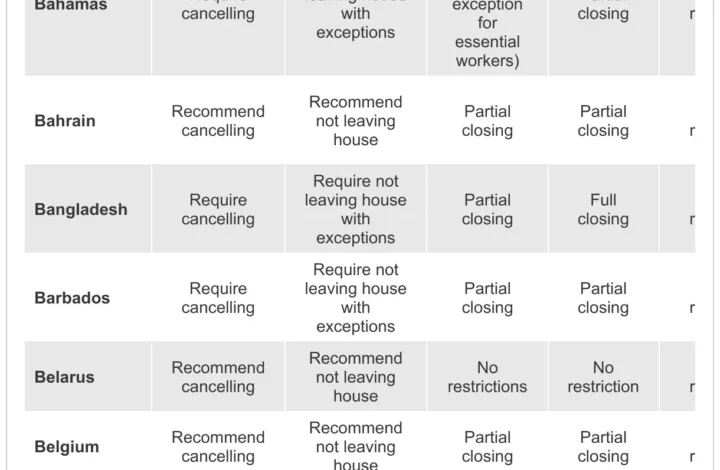
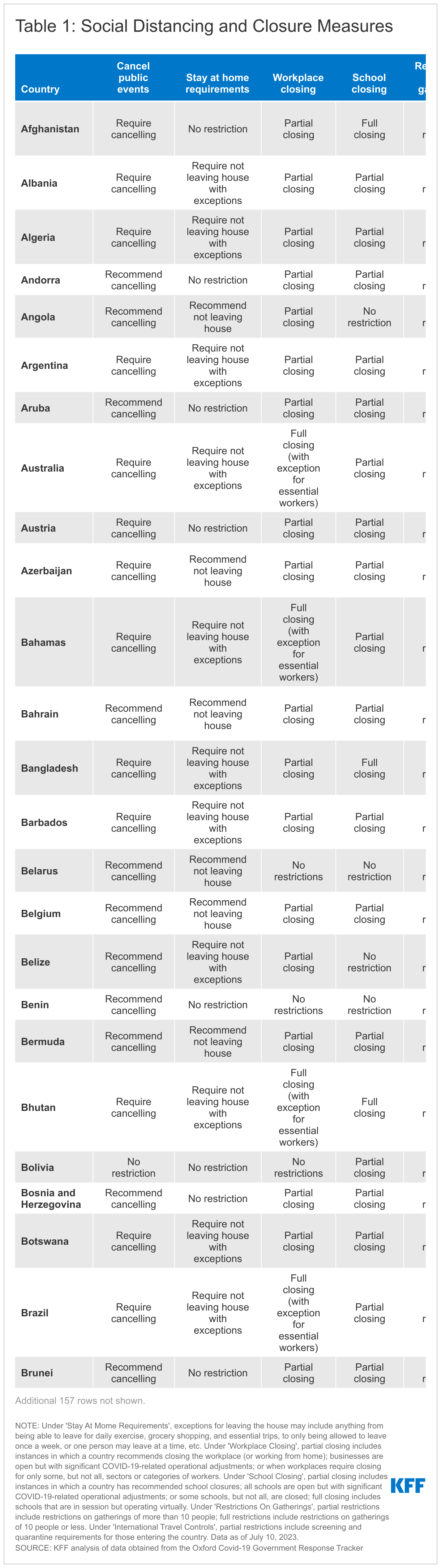
In the early stages, "Stay At Home" requirements and workplace closures were the primary tools used to blunt the virus’s spread. These measures evolved from total lockdowns to more nuanced "partial" closures, where essential sectors remained operational while high-risk environments were restricted. As of the final comprehensive policy updates in late 2022, the world saw a significant divergence in strategy, with some nations maintaining strict "Zero-COVID" protocols while others moved toward "Living with COVID" models, focusing on vaccination rather than restriction.
Social Distancing and Closure Measures: A Comparative Framework
The implementation of social distancing measures represented one of the most significant government interventions in modern history. These policies were categorized by their intensity and scope:
School and Workplace Closures
Governments faced the difficult task of weighing educational outcomes against viral transmission. "Full" school closures often transitioned into "partial" closures, which included hybrid learning models or the closure of specific grade levels. Similarly, workplace measures ranged from government-mandated remote work to "operational adjustments," such as mandatory masking and social distancing within offices.
Restrictions on Gatherings and Public Events
The threshold for "full" versus "partial" restrictions on gatherings was often defined by the number of participants. Full restrictions typically prohibited groups of ten or fewer, effectively banning all private and public social interactions. Partial restrictions allowed for larger groups but often required adherence to specific health protocols. The cancellation of public events—ranging from international sporting competitions to local festivals—served as a primary indicator of a country’s risk assessment.
International Travel Controls
Travel restrictions were among the first measures implemented and the last to be fully rescinded. These ranged from total border closures to "partial" restrictions involving mandatory testing, quarantine periods, and proof of vaccination. These controls were frequently adjusted in response to the emergence of new variants of concern, such as Delta and Omicron.
Economic Mitigation Strategies
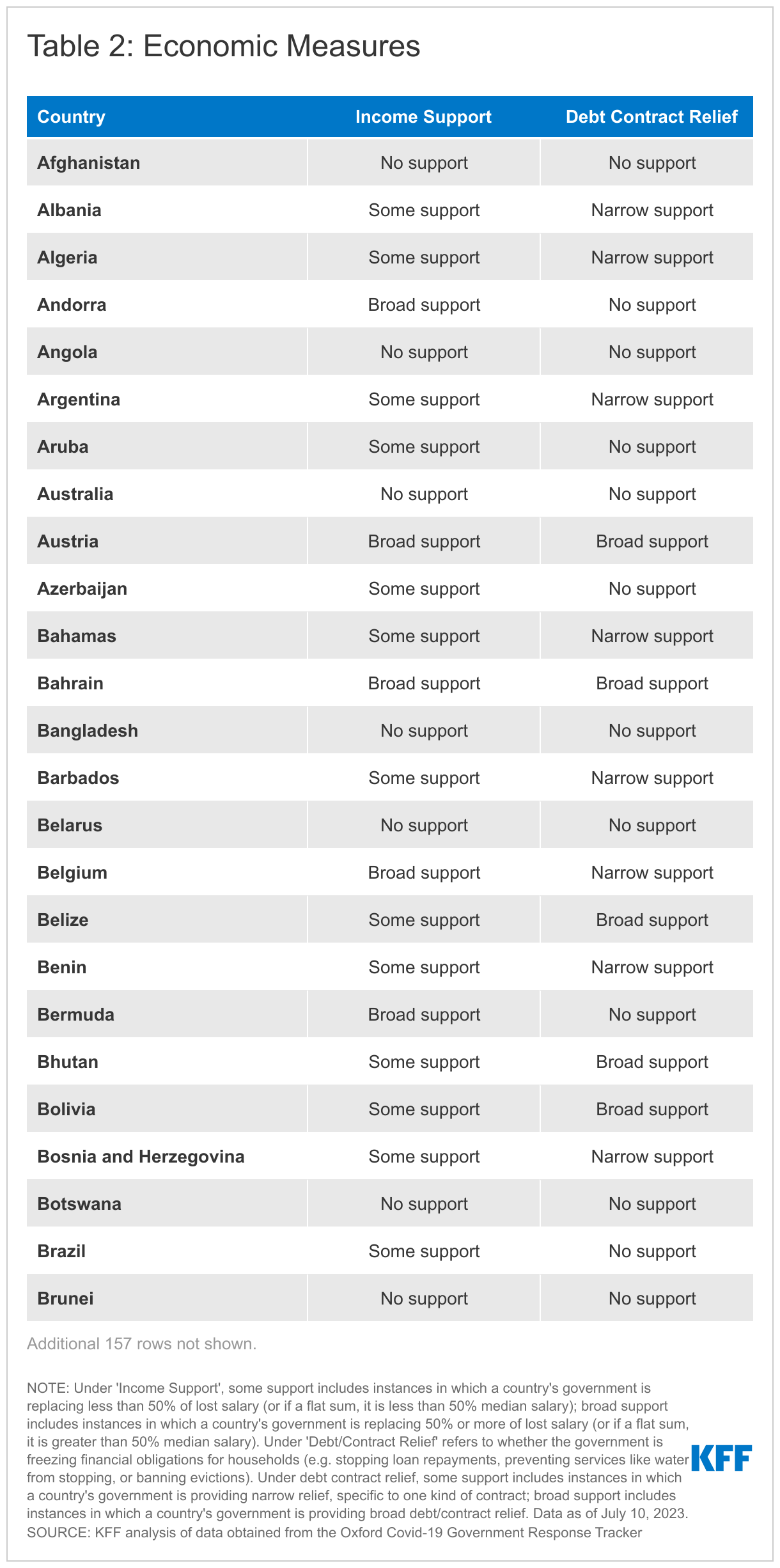
The pandemic’s economic toll necessitated unprecedented fiscal intervention. Data from the Oxford tracker highlights two primary forms of economic support: income support and debt relief.
Income Support Mechanisms
Nations were classified based on the "breadth" of their support. "Broad support" typically involved the government replacing 50% or more of a worker’s lost salary, a measure common in high-income economies with robust social safety nets. "Narrow support" replaced less than 50% of lost income and was often the only option for developing nations with limited fiscal space. This disparity underscored the "K-shaped" economic recovery, where wealthier nations could buffer their citizens against the worst effects of the pandemic while lower-income nations faced rising poverty and food insecurity.
Debt and Contract Relief
To prevent a total collapse of the financial system, many governments implemented debt relief measures. These included moratoria on mortgage payments, utility bills, and consumer loans. Narrow relief was often sector-specific, while broad relief provided a general safety net for all citizens facing financial hardship due to lockdowns.
Health Systems and Vaccination Protocols
The ultimate defense against COVID-19 has been the strengthening of health systems and the deployment of vaccines. Monitoring these efforts requires a focus on vaccine eligibility and public health mandates.
Vaccine Eligibility and Distribution
The rollout of vaccines followed a tiered approach in most jurisdictions. "Partial availability" focused on key workers, the elderly, and the clinically vulnerable. As supply increased, eligibility expanded to the general adult population and eventually to children. The tracking of these phases provided insight into the "vaccine equity" gap, as high-income countries reached high saturation levels while low-income countries struggled with supply chain logistics and "last-mile" delivery.
Facial Coverings and Mask Mandates
Masking policies remained one of the most visible and debated public health measures. Trackers categorized these as "recommended," "partial requirements" (specific to public transport or indoor settings), and "full requirements" (mandatory in all public spaces). These mandates were often the first to be reinstated during surges and the first to be relaxed as case numbers declined.
Methodological Rigor and Data Integration
The reliability of COVID-19 tracking depends on the integration of various high-quality data sources. Population data, essential for calculating per capita rates, are drawn from the United Nations World Population Prospects, specifically the 2021 total population estimates. This allows for a fair comparison between nations of different sizes.
Furthermore, income-level classifications provided by the World Bank (High, Upper-Middle, Lower-Middle, and Low Income) allow analysts to correlate pandemic outcomes with economic resources. Regional classifications from the WHO ensure that geographic trends—such as the surge of a particular variant in Europe or Southeast Asia—can be monitored with precision.
The cessation of active policy tracking by the Oxford Covid-19 Government Response Tracker at the end of 2022 represents a significant milestone. It indicates a shift in the global research community from real-time monitoring to retrospective analysis. While epidemiological data continues to flow through the WHO, the "policy era" of the pandemic has largely stabilized.
Analysis of Implications and Future Outlook
The data collected over the past four years provides a roadmap for future pandemic preparedness. One of the primary implications of this tracking effort is the realization that data transparency is a prerequisite for public trust. The move to open-source platforms like GitHub and the use of standardized reporting through the WHO have set a new benchmark for global health informatics.
However, the two-week lag in reporting and the transition to weekly updates serve as a reminder that the data is a "rear-view mirror" rather than a real-time radar. This lag requires policymakers to act on trends rather than isolated incidents. The economic data, in particular, reveals a long-term "debt overhang" that will affect global markets for years to come, as the relief measures implemented in 2020 and 2021 are eventually phased out.
As the world continues to monitor COVID-19, the focus has shifted toward the integration of these tracking systems into broader respiratory virus surveillance programs, including those for influenza and RSV. The infrastructure built for COVID-19—the dashboards, the policy trackers, and the international reporting standards—now serves as the backbone for the next generation of global health security. In conclusion, while the acute phase of the pandemic has passed, the rigorous documentation of its path and the global response to it remain essential tools for ensuring that the lessons of COVID-19 are not lost to history.
Related posts: