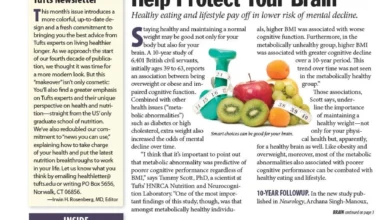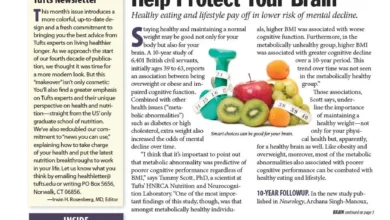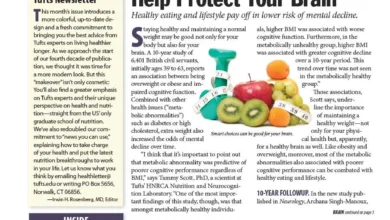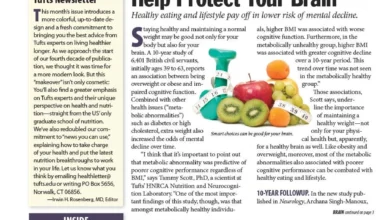
Navigating the Modern Landscape of Evidence-Based Nutrition: Insights from Tufts Health and Nutrition Letter

In an era saturated with conflicting dietary advice, rapid social media wellness trends, and heavily marketed superfoods, distinguishing scientifically validated nutritional guidance from fleeting fads has never been more challenging for the average consumer. The modern landscape of public health is continually reshaped by evolving clinical research, shifting federal dietary guidelines, and a growing public demand for transparent, peer-reviewed information. Publications that bridge the gap between academic laboratories and the dining table play an indispensable role in promoting long-term health outcomes and mitigating the rising tide of diet-related chronic illnesses. For decades, academic institutions like Tufts University have stood at the forefront of this educational mission, translating complex biochemical studies into actionable, everyday advice for the public. However, the business model of delivering this vital information is undergoing a profound transformation, reflecting broader economic pressures across digital journalism and specialized academic publishing. As readers increasingly encounter digital paywalls and subscription models designed to sustain rigorous investigative health reporting, understanding the value of evidence-based journalism is critical. This comprehensive analysis explores the intersection of nutritional science communication, the economic sustainability of specialized health publications, and the broader implications of how dietary guidance is disseminated, consumed, and monetized in the twenty-first century.
The Evolution of Nutritional Science Communication
The dissemination of nutritional science has experienced a dramatic evolution since the mid-twentieth century, transitioning from broad, population-wide dietary recommendations—such as the original basic food groups—to personalized, highly nuanced dietary patterns. In the early decades of public health messaging, the primary focus was on preventing overt nutrient-deficiency diseases, such as scurvy, rickets, and pellagra. As public health successes largely conquered these acute deficiencies in developed nations, the focus shifted toward the prevention of chronic, multi-factorial diseases, including cardiovascular disease, type 2 diabetes, obesity, and certain forms of cancer.
This shift demanded a more sophisticated approach to science communication. Research in metabolism, epidemiology, and randomized controlled trials began producing vast quantities of data that often appeared contradictory to the untrained eye. For instance, early observational studies linking specific dietary components to health outcomes frequently sparked sensationalized media headlines, leading to public confusion when subsequent, larger-scale trials challenged those initial findings. Navigating this noise required trusted academic institutions to step into the public sphere, offering objective interpretations free from commercial bias or industry sponsorship.
Publications dedicated to translating these complex findings emerged as vital lifelines for consumers seeking clarity. By breaking down peer-reviewed studies into digestible, actionable advice, these newsletters helped demystify topics ranging from the role of dietary fats and the impact of refined sugars to the complex interactions of the gut microbiome. Yet, maintaining the editorial independence required to deliver unbiased nutritional guidance demands robust financial models, bringing the economics of independent health journalism into sharp focus.
The Economic Realities of Specialized Health Publishing
The financial architecture of publishing specialized health and nutrition content has been radically altered by the digital revolution. Historically, academic institutions relied on print subscriptions, direct mail campaigns, and institutional partnerships to fund their outreach efforts. Today, digital platforms require substantial investments in cybersecurity, web infrastructure, search engine optimization, content management systems, and dedicated editorial staff to ensure that online content remains accessible, accurate, and secure.
To maintain editorial integrity and avoid the subtle biases that can accompany advertising-driven media models, many high-caliber health publications have adopted subscription-based frameworks, often utilizing digital paywalls. This revenue model ensures that the publication remains directly accountable to its readership rather than corporate advertisers or commercial food manufacturers. However, transitioning audiences from free, unverified online content to paid, subscription-based models presents a continuous logistical and marketing challenge.
Industry data from academic and specialized publishing sectors indicate that maintaining a sustainable subscriber base requires striking a delicate balance between affordable pricing tiers, seamless user authentication, and clear value propositions. Publications must constantly demonstrate the tangible benefits of their content—such as access to back-issue archives, expert-led webinars, and ad-free, peer-reviewed guidance—to justify subscription costs in an increasingly crowded digital marketplace. Furthermore, as online security standards tighten, initiatives such as simplified account activation, robust password recovery systems, and streamlined user management portals have become essential components of subscriber retention strategies.
Chronology of Dietary Guidance and Digital Media
To understand the current state of nutrition publishing, it is helpful to examine the parallel evolution of dietary standards and digital media delivery systems over the past several decades.
- 1980s: The introduction of the first official Dietary Guidelines for Americans by the U.S. Department of Agriculture (USDA) and the Department of Health and Human Services (HHS). Concurrently, academic medical centers began expanding their public outreach programs, utilizing print newsletters to distribute research-backed health tips directly to consumers.
- 1990s: The explosive growth of the internet transformed information sharing. Specialized health newsletters began digitizing their archives, allowing subscribers to access research summaries via early dial-up web interfaces and rudimentary email distribution lists.
- 2000s: The rise of search engines and digital content management systems prompted institutions to establish dedicated online portals. Publications faced their first major economic disruption as consumers came to expect free news and information across the web, forcing a reevaluation of traditional print subscription models.
- 2010s: The proliferation of social media platforms introduced both unprecedented opportunities for public engagement and significant challenges regarding misinformation. Viral health trends and unverified dietary advice frequently overshadowed rigorous scientific consensus. In response, academic publications reinforced their commitment to peer-reviewed accuracy behind digital subscription frameworks.
- 2020s and Beyond: The current era is defined by sophisticated paywall architectures, enhanced digital user accounts, mobile optimization, and interactive subscriber portals. Publications now offer flexible digital-print hybrid subscriptions, making decades of archived nutritional research instantaneously searchable and accessible to a global audience.
Evaluating the Broader Impact of Paywalled Health Information
The implementation of paywalls on specialized health and nutrition websites often sparks debate among public health advocates, science communicators, and consumers. On one hand, critics argue that restricting access to vital health information behind a financial barrier may limit its reach among lower-income populations who often bear a disproportionate burden of diet-related chronic diseases. Ensuring equitable access to accurate nutritional guidance remains an ongoing ethical challenge for academic institutions dedicated to public service.
On the other hand, proponents of subscription-based models emphasize that high-quality, evidence-based journalism requires significant financial investment to produce. Investigative reporting, rigorous fact-checking, expert consultations, and the synthesis of complex clinical research cannot be sustained without adequate funding. In an online ecosystem flooded with clickbait, unverified wellness blogs, and commercially driven dietary supplement marketing, paid subscriptions help insulate credible publications from economic pressures that might otherwise compromise editorial objectivity.
Moreover, many academic publishing models offer tiered pricing, institutional access programs, and subsidized rates to ensure that students, educators, and community health workers can access reliable data without undue financial strain. By investing in these platforms, subscribers directly support independent research communication that empowers individuals to make informed, health-conscious decisions for themselves and their families.
Analyzing Future Trends in Nutrition Communication
Looking ahead, the landscape of nutrition communication will likely be shaped by advancements in artificial intelligence, personalized medicine, and evolving digital platforms. As nutritional science increasingly moves toward personalized nutrition—tailoring dietary recommendations based on individual genetics, metabolic profiles, and microbiome composition—the demand for sophisticated, nuanced interpretation of research will only intensify.
Publications that successfully navigate this transition will be those that leverage secure, user-friendly digital architectures while steadfastly adhering to rigorous journalistic and scientific standards. Whether through intuitive online account management, seamless access to extensive historical archives, or continuous engagement through interactive reader forums and comment sections, the relationship between academic publishers and their audiences continues to redefine how health knowledge is shared. Ultimately, the ongoing commitment to evidence-based education remains a cornerstone of public health, empowering generations of readers to separate passing fads from enduring scientific truths.