Colleges Significantly Underestimate, Yet Serve Vast Numbers of Autistic Students, New Research Reveals

New research published in the journal Autism in Adulthood indicates that U.S. colleges and universities are serving a far greater number of students on the autism spectrum than previously estimated, with a significant portion of these students potentially not even being identified by their institutions. The study’s findings suggest that between 135,400 and 286,254 autistic students are currently enrolled in higher education across the United States, a figure that substantially revises earlier estimates which placed the number as low as 60,000.
This revelation underscores a critical shift in the landscape of higher education accessibility and support for autistic individuals. For years, educators and researchers have observed an increasing trend of autistic individuals pursuing post-secondary education, but the precise scale of this demographic has remained elusive. "For years, we’ve known more autistic students were going to college – we just didn’t know how many," stated Brad Cox, an associate professor at Michigan State University and lead author of the study. "What this shows is that this is not a small or niche population. These students are already part of our campuses."
The new estimates are the result of a comprehensive analysis that synthesized data from published research, surveys administered to college students, and official codebooks from federal datasets. This multi-faceted approach aimed to provide a more robust and current understanding of the autistic student population in higher education.
A Shifting Demographic in Higher Education
The journey of autistic individuals into higher education has been a gradual but discernible one. Historically, the pathways to college for individuals with autism were more limited, often constrained by societal perceptions, a lack of understanding of neurodiversity, and insufficient support structures within educational institutions. However, advancements in diagnostic practices, increased awareness surrounding autism, and a growing recognition of the potential and contributions of autistic individuals have paved the way for greater inclusion.
In recent decades, a growing number of autistic students have successfully navigated K-12 education, with many expressing aspirations for college. This aspiration is increasingly being realized, driven by a confluence of factors: improved educational strategies in earlier schooling, greater advocacy from families and disability organizations, and a growing number of specialized support programs emerging within colleges themselves. The study’s findings directly reflect this evolving reality, highlighting that the presence of autistic students on college campuses is not a nascent trend but a well-established and substantial demographic.
The Undercount Challenge and Disclosure Rates
Despite the significantly higher numbers revealed by the new research, the authors caution that these figures may still represent an undercount. A key factor contributing to this potential underestimation is the issue of disclosure and the voluntary nature of requesting accommodations. The study found that approximately 43% to 47% of high school students with autism transition to college. However, not all students who could benefit from disclosure choose to do so. This can be due to a variety of reasons, including a desire for privacy, concerns about stigma, or a lack of awareness about available support services.
This reticence to disclose or request accommodations presents a significant challenge for institutions attempting to accurately gauge their autistic student population and, consequently, to tailor their support services effectively. Colleges may be unaware of the needs of a substantial portion of their students, leading to missed opportunities for intervention and support that could significantly enhance academic success and overall college experience.
The Imperative for Institutional Change
The implications of these findings are profound and necessitate a re-evaluation of how colleges and universities identify, support, and integrate autistic students. Cox emphasizes that the current data clearly indicates a large and growing group that warrants increased attention from all stakeholders, including families, educators, policymakers, and researchers.
"Our numbers clearly show this is a large and growing group that deserves more attention – from families, educators, policymakers and researchers alike," Cox stated. He further articulated the critical next step: "The next step is turning that awareness into action so autistic individuals have the support they need to thrive in school, work and life."
This call to action suggests a need for proactive strategies rather than reactive ones. Institutions may need to move beyond relying solely on students to self-identify and request support. Instead, a more inclusive and accessible approach could involve:
- Enhanced Awareness and Training: Providing comprehensive training for faculty, staff, and administrators on autism spectrum disorder, neurodiversity, and effective communication and support strategies.
- Universal Design for Learning (UDL): Implementing UDL principles in course design and delivery to create more accessible learning environments for all students, regardless of neurotype. This can include providing multiple means of representation, engagement, and expression.
- Streamlined Accommodation Processes: Simplifying and destigmatizing the process for students to request accommodations and ensuring that these processes are well-communicated and easily accessible.
- Proactive Outreach and Support Services: Developing targeted outreach programs to connect with autistic students, inform them about available resources, and offer individualized support. This could include dedicated advisors, peer support groups, and specialized workshops.
- Data Collection and Analysis: Improving institutional data collection methods to better understand the prevalence and needs of autistic students, while respecting privacy and confidentiality.
The Role of Support Programs: A Case Study
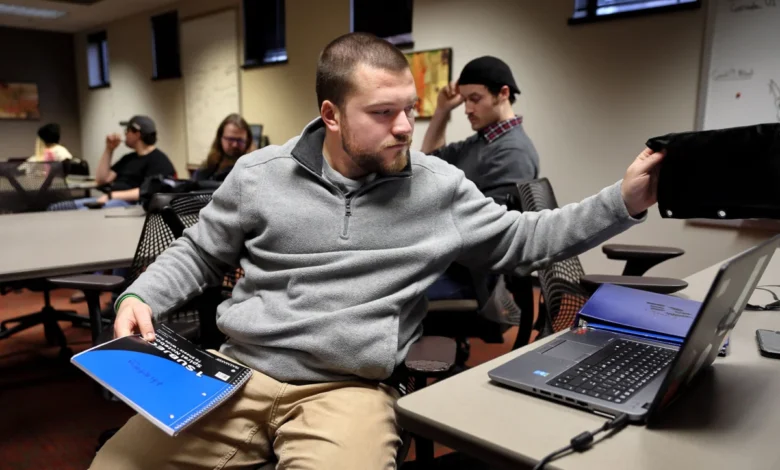
The importance of targeted support is highlighted by programs like "Link" at the University of Missouri-St. Louis (UMSL). This program exemplifies the kind of initiative that can make a tangible difference in the lives of autistic students. Conner Stewart, featured in an accompanying image, is preparing for his history class, a testament to his academic pursuit. His participation in UMSL’s Link program signifies the value of specialized support in navigating the complexities of higher education.
Programs like Link typically offer a multifaceted approach, addressing not only academic preparation but also crucial life and career skills. This holistic support can empower students to build confidence, develop essential executive functioning abilities, improve social communication, and gain practical experience that prepares them for post-graduation employment. Such programs are vital in bridging the gap between academic potential and successful integration into the broader societal landscape.
Broader Implications for Higher Education and Society
The increasing presence of autistic students in higher education has broader implications that extend beyond the campus walls. As more autistic individuals attain college degrees, they are better positioned to enter the workforce and contribute to society in diverse fields. This demographic shift challenges traditional notions of employment and productivity, emphasizing the value of diverse perspectives and cognitive styles.
Furthermore, the findings serve as a wake-up call for policymakers and funding bodies. Increased investment in research on autism in higher education, as well as in the development and scaling of effective support programs, is crucial. This includes ensuring that financial aid and other forms of support are accessible to all students, including those who may require specialized assistance.
The study’s emphasis on the need for better data collection is particularly pertinent. Previous estimates, often based on outdated information, failed to capture the true scope of the autistic student population. The reliance on data that is over 25 years old, as mentioned by Cox, underscores the urgent need for contemporary research and ongoing data analysis to inform effective policy and practice.
Looking Forward: From Awareness to Action
The research published in Autism in Adulthood represents a significant step forward in understanding the autistic student population in higher education. It moves beyond anecdotal evidence and provides a data-driven foundation for action. The challenge now lies in translating this heightened awareness into concrete, systemic changes within colleges and universities nationwide.
The ultimate goal, as articulated by Cox, is to ensure that autistic individuals have the necessary support to not only succeed academically but to thrive throughout their lives. This requires a collaborative effort from all sectors of society to foster an inclusive environment where neurodiversity is recognized, valued, and supported, enabling every student to reach their full potential. The increasing number of autistic students on campuses is not just a statistical trend; it is a reflection of evolving societal progress and a powerful indicator of the future of higher education and the workforce.