Empowering Independence: Quest Kids Academy Students Cook Up Life Skills and Confidence at Orlando Friendsgiving Feast

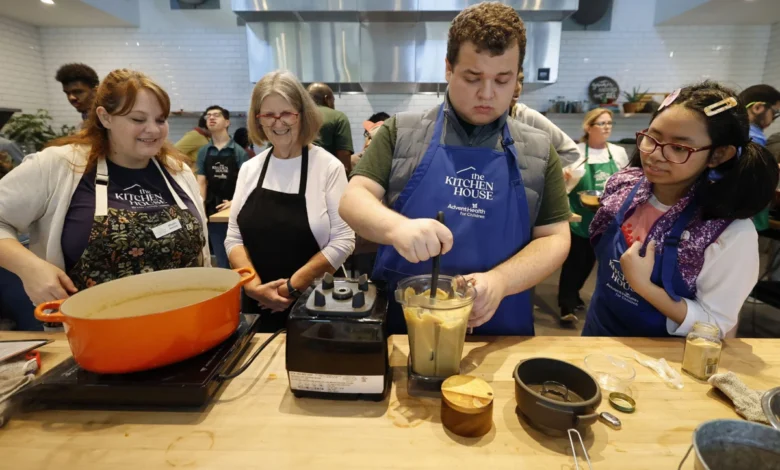
ORLANDO, Fla. — For most teenagers and young adults with intellectual and developmental disabilities, daily tasks such as meal preparation, budgeting, and grocery shopping typically require the consistent assistance of specialized caregivers. However, in a collaborative event designed to foster self-reliance and practical life skills, 16 students from Orlando’s Quest Kids Academy traded their routine support systems for chef’s knives, measuring cups, and mixing bowls. Gathering in a professional College Park kitchen on a Monday morning, the participants successfully prepared a nutritious, four-course holiday meal from scratch, culminating in a celebratory "Friendsgiving" feast that highlighted both personal achievement and the profound potential of targeted vocational and independent living education.
The event, hosted at the Kitchen House—a community culinary space and garden established by the Emeril Lagasse Foundation—showcased how immersive, hands-on learning can bridge the gap between classroom instruction and real-world independence. Funded by a $25,000 grant from the FAIRWINDS Foundation, an organization dedicated to advancing financial stability and education for local families, the program went far beyond culinary arts. It served as a comprehensive workshop on financial literacy, nutritional awareness, foundational employment readiness, and personal empowerment.
A Curriculum Rooted in Practical Life Skills
The road to Monday’s feast began weeks prior in the classrooms of Quest Kids Academy, a specialized educational institution catering to children and young adults with diverse intellectual and developmental profiles. Educators recognized that while academic learning is essential, transitioning into adulthood requires mastering daily living competencies that neurotypical peers often acquire informally.
To address this, culinary instructor Kristy Chadwich and youth employment specialists designed a multi-faceted curriculum centered on financial literacy and practical mathematics. In the days leading up to the event, students were introduced to the mechanics of budgeting. Armed with small amounts of cash, participants embarked on supervised shopping excursions and dining trips, where they were tasked with calculating costs, managing currency, and making purchasing decisions within strict financial parameters.
On the morning of the Friendsgiving event, the lesson plan seamlessly integrated applied mathematics. Confronted with a standard commercial recipe originally scaled to serve 100 people, the students collaborated under instructor guidance to scale down the measurements, proportions, and ingredient quantities to accommodate their smaller group. Following the math session, the participants took a guided tour of the Kitchen House garden, observing firsthand where many of the fresh, plant-forward ingredients they were about to utilize were cultivated.
Culinary Training Meets Workforce Development
The hands-on cooking phase of the program was meticulously organized to accommodate varying physical and cognitive abilities. Chadwich divided the 16 students into four distinct culinary groups, pairing each station with a dedicated Kitchen House staff member or volunteer to provide personalized oversight, safety instruction, and encouragement.
Tasks were strategically assigned based on individual student proficiencies and physical capabilities. More advanced students, or those demonstrating strong motor skills, were entrusted with stainless-steel chef’s knives to chop vegetables. Others engaged in vital kitchen duties that did not require cutting implements, such as measuring, mixing, stirring, and food assembly.
The menu itself emphasized health and wellness, aligning with the Kitchen House’s mission to promote balanced eating habits. Sara Elliott, co-executive director of the Kitchen House, noted the intentional focus of the menu. “We’re really trying to teach people to put more plants on their plate,” Elliott stated. The four-course menu featured an innovative twist on holiday classics, including macaroni and cheese prepared with cauliflower and squash, traditional stuffing, green bean casserole, and freshly baked pumpkin bars.
Throughout the kitchen, students encountered milestones that challenged their personal boundaries and physical endurance. Sebastian Baez, a 20-year-old student with autism, experienced a novel moment while preparing the vegetables. “I’ve never chopped celery before,” Baez remarked as he worked with a chef’s knife. “I love using the knife.”
Nearby, Madison Seminio, a 17-year-old also diagnosed with autism, smiled widely as she efficiently diced cauliflower for the macaroni and cheese dish. Erin Hennessy, a youth employment specialist at Quest, observed Seminio’s concentration and emphasized the deeper vocational implications of the exercise. According to Hennessy, the culinary environment replicates the strict professional expectations of the modern workforce.
“All the things that you and I do for employment every single day, sometimes these guys need that explicit training on how to start or when to wait,” Hennessy explained, pointing out that students were learning valuable lessons in following multi-step instructions, completing assigned tasks, and demonstrating workplace reliability. “Just the fact that they’re all listening to the instructor, and I’m not doing anything is big.”
For Luke Krantz, a 20-year-old student with autism who is typically reserved and communicates sparingly, the culinary class offered a tangible outlet for his passion. Krantz focused intently on chopping onions for the stuffing. When his freshly diced onions were introduced into a hot cooking pot containing carrots and celery, releasing a rich aroma across the room, Krantz spontaneously jumped up and down, clapping his hands in a moment of uncontained joy and validation.
Overcoming Physical Barriers: A Milestone Moment
Perhaps one of the most remarkable moments of the day centered on Jeremiah Feliciano, a 19-year-old student living with a physical disability that typically restricts his ability to stand for prolonged periods. Chadwich, his culinary instructor, routinely carries a portable lawn chair to ensure Feliciano always has immediate access to a seat.
However, determined to contribute meaningfully to the meal preparation, Feliciano spent an uninterrupted 30 minutes entirely on his feet, manually whipping fresh cream to create a topping for the event’s pumpkin bars. When he finally completed the task, his arms ached from the physical exertion, but his sense of accomplishment was palpable. “After I was done, I couldn’t feel my arm,” Feliciano said, reflecting on the experience with visible pride. “It makes me feel great.”
The achievement left instructors visibly moved. Chadwich literally jumped with joy upon realizing that Feliciano had sustained his standing position longer than she had ever observed previously. “Just knowing what he’s capable of, and that he is able to achieve that, and stand for long periods of time in the kitchen is so great,” Chadwich said.
Financial Support and Community Collaboration
The success of the Friendsgiving workshop underscores the vital role played by community partnerships and philanthropic investments in specialized education. The $25,000 grant provided by the FAIRWINDS Foundation was instrumental in underwriting the programmatic infrastructure required to deliver comprehensive financial literacy and independent living instruction to Quest Kids Academy students.
Lauren Nelson, Quest’s vice president of philanthropy, emphasized the core mission guiding the funding initiative. “We’re looking at, how do we get them to understand the value and benefit of money and what that means for them,” Nelson explained. By translating abstract economic concepts into tangible, real-world experiences—such as purchasing groceries and budgeting for meals—the program equips participants with foundational tools that directly enhance their long-term autonomy.
Similarly, the partnership with the Emeril Lagasse Foundation’s Kitchen House provided a professional-grade setting that elevated the learning experience. By immersing students in an industrial kitchen environment equipped with adjacent organic gardening spaces, participants gained exposure to professional standards of food safety, preparation, and nutritional science.
Broader Impact and Implications for Independent Living
As the cooking concluded, the 16 students, instructors, and volunteers gathered around an expansive, communal table set up directly in the Kitchen House garden to enjoy the fruits of their labor. The shared meal served as a powerful social exercise, reinforcing communication skills, peer bonding, and community integration.
In keeping with the traditional spirit of Thanksgiving and Friendsgiving, the meal opened with an interactive gratitude exercise. Each participant was invited to share a single aspect of their lives for which they felt thankful. Alongside the homemade feast, the students expressed appreciation for a diverse array of personal comforts and interests, including local dining establishments like Chipotle, educational attractions such as the Alligator Farm, technology and robotics, family members, swimming, and, crucially, the friendships forged within their school community.
Experts in developmental disability education note that holistic programs combining financial literacy, vocational training, and social engagement are critical in shaping the future of young adults with intellectual and developmental disabilities. As public and private sectors increasingly emphasize inclusive employment and community-based living models, initiatives like the Quest Kids Academy cooking workshop demonstrate that with structured support, specialized resources, and high expectations, individuals with diverse abilities can achieve meaningful milestones toward self-sufficiency.