The battle against terminal illness, particularly cancer, represents a profound challenge that extends far beyond the clinical objective of disease eradication. While the global medical community focuses heavily on curative therapies—chemotherapy, radiation, and surgical intervention—there remains a critical, often neglected pillar of healthcare: palliative care. This specialized medical approach seeks to improve the quality of life for patients and their families facing the problems associated with life-threatening illness. Through the prevention and relief of suffering by means of early identification, impeccable assessment, and the treatment of pain and other physical, psychosocial, and spiritual problems, palliative care serves as a vital bridge between aggressive treatment and the inevitable transition toward end-of-life care.
The Clinical Reality of Advanced Malignancy
Prostate cancer, a leading cause of oncological morbidity globally, presents complex challenges when detected at late stages. The trajectory of the disease often involves aggressive metastasis, which necessitates a multidisciplinary approach. In Pakistan, institutions such as the Shaukat Khanum Memorial Cancer Hospital and Research Centre (SKMCH&RC) have been at the forefront of providing comprehensive oncology services. However, as the medical burden of cancer increases, the limitation of resources—specifically the scarcity of palliative medicine consultants—has become a point of urgent concern for public health advocates.
The experience of patients undergoing terminal cancer treatment is multifaceted. Beyond the physiological degradation caused by aggressive radiotherapy and systemic chemotherapy, patients face immense emotional strain and financial depletion. Palliative care is not merely a service for the final hours of life; it is a holistic management strategy that begins at the point of diagnosis. When curative options diminish, the focus shifts to symptom management, dignity, and the preservation of human agency.
A Chronology of Care: The Patient Experience
In many clinical settings, the decline of a patient is marked by rapid physiological shifts. For the patient described in recent reports, the journey began with standard oncological protocols, but as the disease progressed, the necessity for a shift in care became apparent.
- Initial Diagnosis and Curative Phase: The patient underwent intensive systemic treatments, including chemotherapy and targeted radiotherapy, aimed at arresting the spread of the cancer.
- Transition to Palliative Focus: Upon the failure of curative interventions to stabilize the disease, the medical team transitioned to a palliative framework. This involved a coordinated team of specialized nurses and palliative medicine physicians.
- Symptom Management Phase: The team focused on the mitigation of pain, respiratory distress, and delirium, ensuring that the patient remained comfortable and responsive to their environment for as long as possible.
- End-of-Life Dignity: The final stage of care emphasized communication—even with unresponsive patients—ensuring that the physical environment remained hygienic and that the patient’s psychological state was supported by respectful, personalized interaction.
This clinical approach is predicated on the understanding that even when a disease cannot be cured, the personhood of the patient remains intact. The practice of speaking to an unresponsive patient during basic hygiene tasks is a hallmark of high-quality palliative care, ensuring that the patient is treated as an individual rather than a medical case file.
Supporting Data and Global Standards
The World Health Organization (WHO) identifies palliative care as an essential component of universal health coverage. Despite this, the Global Atlas of Palliative Care suggests that less than 14% of people who need palliative care worldwide currently receive it. In Pakistan, the gap is particularly stark.
According to various health indices, the ratio of palliative care specialists to the general population in Pakistan remains critically low. While tertiary care hospitals are increasingly incorporating palliative units, the demand far outstrips the supply. Statistics indicate that the prevalence of cancer in Pakistan is rising, with breast, oral, and prostate cancers being among the most frequent. As the demographic shifts and the population ages, the burden of non-communicable diseases will necessitate a more robust framework for end-of-life care.
Economically, palliative care is often misunderstood as an additional cost. However, evidence suggests that early integration of palliative care can actually reduce the total cost of care by preventing unnecessary hospital readmissions, reducing the use of intensive care units for patients who would prefer to be elsewhere, and streamlining medical interventions toward those that genuinely provide relief.
The Need for Institutional Reform and Medical Education
The current state of palliative medicine in Pakistan is largely reliant on the initiatives of individual hospitals rather than a systemic, government-led strategy. To address this, there is a growing consensus among medical professionals that several steps must be taken:
- Integration into Undergraduate Curricula: Palliative care should not be an elective or a postgraduate specialization exclusively. Basic competencies in symptom management and empathetic communication must be taught to all medical students.
- Specialization Incentives: The medical community must incentivize the pursuit of palliative medicine as a career path for young doctors. This includes creating specialized fellowship programs and career pathways within the public hospital system.
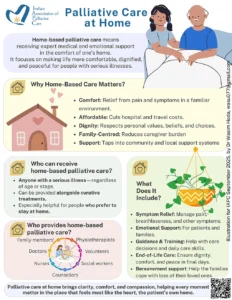
- Community-Based Outreach: While hospital-based care is essential, the majority of palliative care needs in a developing nation context may be better served through home-based hospice models, which reduce the burden on acute care facilities and allow patients to spend their final days in familiar surroundings.
Broader Implications for Public Health
The moral imperative of palliative care is rooted in the "right to die with dignity." As medical technology advances, the focus often remains on "fighting" death at all costs. This can occasionally lead to medical futility, where the patient is subjected to painful procedures that offer no meaningful benefit. Palliative care provides a necessary counter-balance, acknowledging the reality of mortality while striving to make the transition as peaceful as possible.
Furthermore, the emotional impact on the families of patients cannot be overstated. A death marked by managed symptoms and compassionate care allows families to process grief more effectively. Conversely, witnessing a loved one suffer from unmanaged pain leaves lasting psychological trauma. Thus, the implementation of palliative care is as much a service to the family and society as it is to the patient.
Conclusion: A Call to Action
The appeal to young physicians in Pakistan to enter the field of palliative medicine is not merely a request for more hands on deck; it is a call for a shift in the cultural and professional paradigm of the medical field. The goal is to move toward a system where dignity is not a luxury afforded to the few, but a standard component of medical practice for all.
As the healthcare infrastructure in Pakistan continues to modernize, the integration of palliative care must be treated with the same urgency as the development of oncology or cardiology units. The success of hospitals like Shaukat Khanum in providing dignified care serves as a template, but the scalability of this model requires systemic support, legislative backing, and a new generation of doctors who view the alleviation of suffering as the highest form of medical excellence.
In the final assessment, the measure of a healthcare system is not only its ability to extend life but also its commitment to ensuring that the quality of that life, in its final chapters, is defined by comfort, respect, and peace. Without a concerted effort to train more palliative specialists, the gap between the need for such services and the current availability will continue to widen, leaving a critical void in the nation’s healthcare landscape.