Breaking the Diagnostic Bottleneck: Groundbreaking Clinical Trial Seeks to Revolutionize Autism Detection Through Ocular Innovation

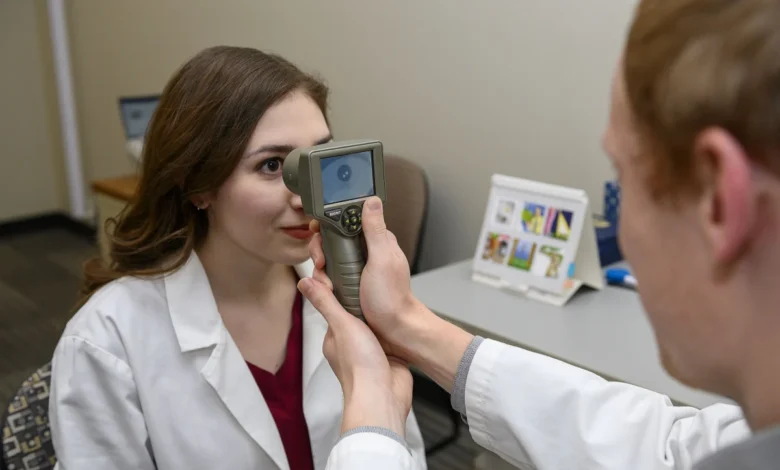
SPOKANE, Wash. — In a major milestone for pediatric healthcare and neurodevelopmental research, a multiyear endeavor to transform how autism is diagnosed has entered its next critical phase. Schweitzer Engineering Laboratories (SEL), a prominent technology firm based in Pullman, Washington, officially announced the launch of its inaugural clinical trial for an innovative medical device designed to accelerate and streamline autism spectrum disorder (ASD) detection in clinical settings nationwide.
The device, which measures atypical pupillary reactions to light, represents the culmination of more than a decade of dedicated scientific inquiry. Developed originally by Dr. Georgina Lynch during her tenure as an associate professor at Washington State University (WSU), the technology bridges the gap between advanced neurological research and everyday clinical practice. Now serving as a principal scientist in research and development at SEL following the company’s acquisition of the prototype in 2024, Lynch stands at the forefront of a potential paradigm shift in early childhood diagnostics.
As healthcare systems across the globe grapple with unprecedented diagnostic backlogs and extended waitlists for developmental evaluations, this technological leap offers a beacon of hope for families navigating the complex journey of autism identification.
The Science Behind the Light: Decoding Brainstem Function
To understand the significance of SEL’s newly launched clinical trial, one must examine the physiological mechanism at the heart of the device. The technology evaluates the pupillary light reflex—the automatic constriction and dilation of the pupil in response to changes in illumination. While this biological response might appear straightforward, it serves as a direct, non-invasive window into central nervous system activity.
According to Lynch, the efficiency of the nerves governing the pupillary light reflex allows clinicians to indirectly gauge the functional integrity of cranial nerves rooted within the brainstem. Decades of specialized neurological research have increasingly pointed toward distinct physiological variations in brainstem development and function among individuals on the autism spectrum compared to their neurotypical peers.
When Lynch and her team conducted foundational pilot studies—including initial evaluations utilizing a standard penlight on the WSU Spokane campus in 2015—they observed distinct response patterns in children with autism. Unlike traditional behavioral evaluations, which rely heavily on subjective observation, developmental milestones, and clinician interpretation, the pupillary light reflex offers an objective, physical biomarker.
By transforming a biological reaction into measurable data, the device aims to provide primary care physicians, pediatricians, and specialized clinics with a reliable screening instrument that can be administered in minutes rather than hours. This physiological approach does not replace comprehensive clinical evaluations, but it fundamentally enhances the preliminary screening process, allowing at-risk children to be flagged and prioritized much earlier in life.
A Chronology of Innovation: From University Lab to Corporate Enterprise
The journey toward this clinical trial spans well over a decade, marked by rigorous academic research, institutional collaboration, and a strategic corporate transition.
The timeline of development underscores the dedication required to bring a novel medical device from concept to commercial viability:
- 2015: Dr. Georgina Lynch conducts preliminary pilot studies at Washington State University Spokane, utilizing basic lighting instruments to explore correlations between pupillary light reflexes and autism spectrum disorder.
- 2015–2023: Years of expanded academic research, grant-funded studies, and data collection refine the understanding of brainstem functioning in neurodivergent populations, gradually shifting the focus from theoretical neurology to applied clinical diagnostics.
- 2024: Schweitzer Engineering Laboratories acquires the prototype technology alongside Dr. Lynch, integrating her research expertise with the firm’s world-class engineering, manufacturing, and regulatory capabilities to prepare the device for commercialization.
- 2025: Advanced clinical integration planning takes place, involving comprehensive training protocols for regional medical staff and preparation for regulatory submissions.
- 2026: SEL officially launches its multi-site clinical trial in collaboration with regional healthcare providers, paving the way for data collection intended for the United States Food and Drug Administration (FDA).
This strategic partnership between academia and private industry exemplifies how regional research hubs can scale localized discoveries into globally impactful health solutions. SEL, traditionally renowned for its power system protection and automation technology, has leveraged its precision engineering infrastructure to refine the device’s hardware and software, ensuring medical-grade reliability and ease of use in fast-paced clinical environments.
Inside the Clinical Trial: Methodology and Regional Collaboration
The newly initiated clinical trial is being conducted through a coordinated partnership between the SEL Health Clinic, Palouse Pediatrics, and various other pediatric and family medicine practices throughout the Inland Northwest.
Ahead of the launch, clinical teams underwent rigorous training regimens designed to familiarize them with the device’s operational parameters, administration protocols, and data-logging software. According to Lynch, the transition of the technology into active clinical workflows has been remarkably smooth, praising the adaptability and competence of the participating medical staff.
The trial’s architecture serves a dual purpose:
- Regulatory Clearance Data: The primary objective is to gather robust, statistically significant clinical data to submit to the U.S. Food and Drug Administration (FDA). This data will form the backbone of SEL’s application for regulatory clearance, a vital step toward commercial distribution across American healthcare facilities.
- Real-World Performance Evaluation: The study seeks to evaluate how effectively the device performs in diverse, high-volume clinical settings, ensuring that the technology remains intuitive, durable, and accurate under day-to-day medical conditions.
Crucially, the trial offers participating families an immediate, tangible benefit. Every child screened with the device is also cross-referenced with a comprehensive diagnostic panel for autism. In many rural or underserved regions of the Inland Northwest, accessing a full multidisciplinary diagnostic evaluation can be exceptionally difficult due to geographic isolation and specialist shortages. By embedding full diagnostic panels into the trial framework, the research initiative provides families with thorough evaluations that they might not otherwise have been able to secure in a timely manner.
Stakeholder Perspectives and Institutional Vision
The launch of the clinical trial has elicited strong emotional and professional responses from the leadership and scientific teams guiding the project. For Dr. Lynch, seeing years of academic theory manifest as a tangible medical tool is an extraordinary milestone.
"It’s really exciting to see this milestone being met," Lynch stated, emphasizing the emotional resonance of the achievement. "Words can’t describe. It’s an exciting time both for myself as a researcher who cares so much about children and families with autism, but also the engineering team."
She further highlighted the ultimate objective of the initiative: mitigating the devastating wait times that families routinely face when seeking answers about their child’s developmental trajectory. "If we can bolster this screening process through adding this physical marker and making it easier in the process, if we can help prevent the wait time and get kids in more quickly, that’s the ultimate goal," she said.
The project also holds deep personal significance for SEL founder Edmund Schweitzer, whose own family has been touched by autism. In a formal statement accompanying the trial announcement, Schweitzer emphasized the company’s commitment to leveraging its technical prowess for humanitarian and health-related advancements.
"Autism has touched my family and countless others. That is why this clinical trial is so important," Schweitzer remarked. "By combining scientific research with our expertise in engineering and manufacturing at SEL, we hope to provide clinicians with a practical tool that supports earlier identification and, ultimately, better outcomes for children."
By lending the weight of his established enterprise to neurodiversity research, Schweitzer underscores a growing corporate responsibility trend where high-tech engineering firms apply their capabilities to solve complex medical challenges.
Broader Socioeconomic Implications and Healthcare Impact
The societal implications of earlier, more objective autism screening cannot be overstated. Current public health data indicates that while reliable diagnoses can often be made by age two, the average age of identification in many developed nations remains significantly higher—frequently between four and five years old. This diagnostic delay creates a critical missed window during a child’s period of peak neural plasticity, when early behavioral, occupational, and speech interventions yield the most profound long-term benefits.
Long waitlists for developmental pediatricians and specialized psychologists exacerbate this delay. Families frequently endure months—or even years—of uncertainty, during which children miss out on targeted support services that could drastically improve communication, social integration, and academic readiness.
By introducing a device capable of identifying physiological markers during routine pediatric checkups, the healthcare landscape could shift dramatically:
- Democratization of Screening: Primary care providers in rural or medically underserved communities could conduct objective preliminary assessments without needing immediate access to a rare developmental specialist.
- Reduced Economic and Emotional Strain: Shortening the diagnostic odyssey reduces the immense psychological toll placed on parents and caregivers while lowering long-term educational and therapeutic costs through early intervention.
- Data-Driven Pediatric Care: Integrating objective neurological markers into electronic health records establishes a standardized metric that can track developmental trajectories over time with greater precision.
As the SEL clinical trial progresses through its phases in the Inland Northwest, the broader medical community will be watching closely. Should the device successfully secure FDA clearance and transition into widespread commercial adoption, it could redefine the standard of care for neurodevelopmental evaluations globally.
Through the intersection of rigorous physiological research, engineering excellence, and community-based healthcare partnerships, this Pullman-based initiative represents a transformative stride toward a future where every child receives the timely support and understanding they deserve.
Related posts: