Remembering Knut Flaaum: A Pioneering Force in the Global Independent Living Movement

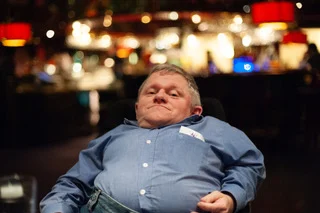
The international disability rights community is in mourning following the passing of Knut Flaaum, a foundational architect of the Independent Living movement in Norway and a towering figure in European disability advocacy. Flaaum, whose decades-long dedication fundamentally reshaped public policy and personal autonomy for disabled individuals, passed away on August 24, 2026. His death marks the loss of yet another visionary leader from the generation that transformed disability rights from a charitable medical model into a civil rights struggle.
Flaaum’s legacy is inextricably linked to the creation of ULOBA (Andelslag for User-Controlled Personal Assistance), Norway’s premier organization for user-controlled personal assistance (UPA). As one of the original five founders, Flaaum helped build an institution that would become a global benchmark for how societies can enable disabled citizens to live fully integrated, self-determined lives. His influence, however, extended far beyond Scandinavia, reaching into the halls of the European Network on Independent Living (ENIL) and international policy forums where human rights are debated and codified.
Main Facts and Historical Context
The passing of Knut Flaaum closes a significant chapter in the history of European disability activism. Born into an era when disabled people were routinely subjected to institutionalization, sheltered workshops, and pervasive paternalism, Flaaum belonged to a vanguard of activists who rejected the notion that impairment equated to helplessness.
In the late 20th century, the prevailing paradigm regarding disability was medical and welfare-oriented. Disabled individuals were viewed as passive recipients of care rather than active agents of their own lives. Flaaum and his contemporaries—including notable figures such as Vibeke Marøy Melstrøm and Bente Skansgård—challenged this status quo by introducing the philosophy of Independent Living to Norway. This philosophy posits that disabled people are the ultimate experts on their own needs and should hold administrative and financial control over the assistance they require to participate in society.
At the core of Flaaum’s life work was the promotion and institutionalization of User-Controlled Personal Assistance (BPA in Norwegian). Unlike traditional home-care services managed by municipalities and healthcare professionals, UPA empowers the disabled individual to act as an employer or director of their own assistants. This shift in power dynamics allows individuals to dictate when, how, and by whom they are assisted, unlocking opportunities for higher education, employment, family life, and civic engagement.
Chronology of a Movement: Flaaum’s Path in Activism
To understand the magnitude of Knut Flaaum’s contribution, it is necessary to examine the timeline of milestones that defined his life and the Norwegian Independent Living movement:
- Pre-1990s (The Era of Institutionalization): Prior to the organized Independent Living movement in Norway, assistance options for disabled adults were largely institutional or strictly managed by municipal health boards, severely limiting personal freedom and privacy.
- 1991 (The Founding of ULOBA): Recognizing the urgent need for systemic change, Knut Flaaum, alongside Vibeke Marøy Melstrøm and three other pioneering founders, established ULOBA. The organization was designed not merely as a service provider, but as a political cooperative driven by disabled people themselves.
- 1990s–2000s (National Expansion and Policy Reform): Through tireless lobbying, public awareness campaigns, and direct negotiations with lawmakers, Flaaum and his colleagues pressured the Norwegian government to recognize user-controlled personal assistance as a civil right rather than a discretionary welfare benefit, leading to landmark legislative trials and eventual statutory recognition.
- 2000s–2020s (European and International Engagement): Flaaum expanded his advocacy onto the continental stage, collaborating closely with ENIL, participating in the ENIL Foundation, and supporting the Bente Skansgård Independent Living Fund. He became a mentor to a new generation of activists across Europe, sharing strategies on how to challenge systemic ableism.
- August 24, 2026: Knut Flaaum passes away, leaving behind a robust organizational infrastructure and a transformed global discourse on disability rights.
Supporting Data and the Evolution of Personal Assistance
The impact of ULOBA and the broader Independent Living movement can be measured through the profound statistical and structural shifts in Scandinavian social policy over the past three decades. When Flaaum and his co-founders started their advocacy, independent living arrangements for severely disabled individuals were virtually non-existent outside of specialized care facilities.
Data compiled by European disability watchdogs indicate that the widespread implementation of user-controlled assistance models correlates directly with significant increases in employment rates, higher educational attainment, and reduced public expenditures on long-term institutional care. By enabling disabled individuals to manage their own assistance, societies effectively unleash economic potential, allowing former care recipients to become taxpayers, business owners, and active community members.
Furthermore, comparative studies across European Union member states and European Economic Area (EEA) countries show that nations with robust personal assistance frameworks—heavily influenced by the Nordic model that Flaaum helped pioneer—consistently rank higher in indices measuring human rights compliance, accessibility, and social inclusion. Flaaum’s technical expertise in structuring these systems provided activists in other countries with the empirical data and legal blueprints needed to lobby their respective governments.
Official Responses and Tributes from the Global Community
Following the announcement of his passing, tributes poured in from colleagues, organizations, and international networks that Flaaum helped shape. Leaders within the disability rights movement emphasized not only his strategic brilliance as a lobbyist and organizer, but also his personal warmth, mentorship, and steady demeanor during arduous political battles.
Jamie Bolling, a prominent leader within the Independent Living Institute (ILI) and a longtime collaborator of Flaaum, reflected on his legacy in a moving statement. Bolling highlighted Flaaum’s steadfast presence within ENIL and his willingness to share his deep institutional knowledge with younger activists.
"Knut was one of my colleagues in ENIL—the European Network on Independent Living and in the ENIL Foundation, Bente Skansgård’s Independent Living Fund and in general for raising the awareness of our life situations in this world," Bolling stated. "With a smile often on his face and a chuckle, he was one I turned to for answers to my questions."
Bolling also addressed the bittersweet reality facing aging activist networks, noting the anxiety that often accompanies the loss of foundational leaders. However, she emphasized that Flaaum’s legacy is safeguarded by the continuous influx of new generations carrying the torch.
"With each loss of our great leaders, I feel fear for the future, but then I turn and see the flow of new and younger persons carrying the spirit of Independent Living forward," Bolling remarked. "I am thankful for Knut and his commitment and engagement in Independent Living and for his friendship. May we keep Knut alive by saying his name and what he meant for our movement. Rest in peace and power, Knut."
Representatives from ENIL echoed these sentiments, releasing joint statements acknowledging Flaaum as a pillar of European advocacy whose strategic insights helped steer policy debates regarding the United Nations Convention on the Rights of Persons with Disabilities (UNCRPD), particularly Article 19, which guarantees the right to live independently and be included in the community.
Broader Impact and Future Implications for the Movement
The passing of pioneers like Knut Flaaum occurs at a critical juncture for the global Independent Living movement. While the structural victories of the late 20th and early 21st centuries—such as the legal codification of personal assistance in Norway and the adoption of the UNCRPD globally—fundamentally altered the landscape, contemporary challenges threaten to erode these hard-won rights.
Across Europe and beyond, disability organizations currently face mounting pressures from bureaucratic retrenchment, austerity measures, and attempts by municipal authorities to curtail or standardize user-controlled budgets. In this environment, the loss of experienced tacticians like Flaaum places a heavier burden on the current generation of advocates.
However, analysts note that the institutional frameworks Flaaum helped construct are remarkably resilient. ULOBA and ENIL operate as self-sustaining ecosystems of advocacy, equipped with research divisions, legal defense mechanisms, and leadership pipelines designed to withstand generational transitions. The methodologies championed by Flaaum—centering on peer-to-peer empowerment, uncompromising civil rights rhetoric, and direct political engagement—remain the gold standard for disability advocacy.
As the international community reflects on his contributions, the consensus among policy experts is clear: Knut Flaaum’s work transcended administrative reform; it redefined human dignity. By proving that freedom and autonomy are not privileges reserved for the able-bodied, Flaaum permanently altered the trajectory of modern society. His enduring spirit will continue to guide the global struggle for equality, ensuring that the principle of Independent Living remains a cornerstone of human rights for decades to come.