Redefining Boundaries: How Carlos Murillo is Transforming the Landscape of Adaptive Sports and Accessible Travel


The modern perception of disability is undergoing a profound shift, driven by individuals who refuse to let physical limitations dictate the scope of their engagement with the world. Among these pioneers is Carlos Murillo, a 32-year-old Illinois native who has spent the last decade systematically dismantling barriers to adventure. Born with spina bifida—a neural tube defect that affects the spinal cord and the nerves—Murillo has been a wheelchair user since the age of three. Rather than viewing this as a limitation, he has utilized his thirties as a platform to demonstrate that, with the right resources and a resilient mindset, the world of extreme sports and global travel is not only accessible but ripe for exploration.
A Chronology of Active Engagement
Murillo’s foray into the world of adaptive sports began in 2007, during a holiday gathering hosted by GLASA (Great Lakes Adaptive Sports Association). This initial exposure to adaptive basketball acted as a catalyst for a lifestyle defined by constant motion. Over the subsequent fifteen years, he has systematically checked off a diverse array of physical challenges that many, including some within the medical and disability advocacy communities, previously considered inaccessible.
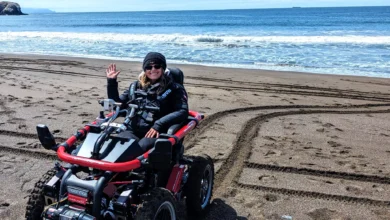
His resume of activities is extensive: zip-lining, scuba diving, rock climbing, sled hockey, wheelchair rugby, archery, horseback riding, and go-kart racing. Each activity has served as a milestone, marking a transition from a spectator of life to an active participant in high-intensity sports. This progression has not been linear, but rather a series of intentional efforts to seek out adaptive programs that bridge the gap between intent and execution.
The Strategic Evolution of a Bucket List
For Murillo, the transition from individual sporting events to a structured "bucket list" mentality occurred roughly two years ago. This evolution reflects a growing trend in the disability community: the movement from passive participation to active, goal-oriented travel and athletic achievement.
According to data from the Open Doors Organization, the economic impact of travelers with disabilities is significant, yet the industry has struggled to keep pace with demand. By formalizing his objectives—which now include high-adrenaline pursuits like NASCAR experiences, adaptive paragliding, and supercar driving—Murillo is not just checking boxes; he is providing a roadmap for others. He views these activities as a means to foster personal growth, stating that he views the obstacles he encounters not as failures, but as necessary lessons in navigating an often inaccessible world.
The Infrastructure of Adaptive Athletics
The success of Murillo’s endeavors is largely contingent upon the growth of specialized organizations. Programs such as the Shirley Ryan AbilityLab, H2O Adaptive Sports, and Diveheart represent the critical infrastructure of the modern adaptive movement. These organizations provide more than just equipment; they offer the specialized training and safety protocols necessary to make activities like scuba diving and whitewater rafting viable for individuals with varying levels of mobility.
From a technical standpoint, the learning curve for these sports is steep but manageable. Murillo notes that the primary challenge is often not the physical exertion itself, but the lack of centralized information regarding accessibility. When a newcomer enters a program like those offered by Wisconsin Adaptive Ski or other regional affiliates, the environment is designed to foster community. This peer-to-peer interaction is vital, as it allows participants to share knowledge regarding equipment modifications and logistical strategies that are not always available in standard instructional manuals.
The Economics of Stadium Accessibility
Beyond the realm of extreme sports, Murillo has undertaken a systematic "stadium tour," visiting professional, collegiate, and minor league venues across the United States. This endeavor highlights a critical aspect of urban planning and public accommodation: the variance in ADA (Americans with Disabilities Act) compliance across different tiers of sporting venues.
Minor league baseball stadiums, such as those in Schaumburg, Illinois, and South Bend, Indiana, have become focal points for his research. These venues often present a unique study in accessibility; while they may lack the massive budgets of major league stadiums, their design often allows for a more intimate and manageable experience for a solo wheelchair user. Murillo’s practice of communicating directly with front offices to secure accessible, cost-effective seating is a common strategy employed by advocates to ensure that stadiums remain inclusive. His positive assessment of the Schaumburg Boomers’ facility serves as a benchmark for what can be achieved with thoughtful architectural planning and inclusive management policies.
Navigating Global Accessibility
Travel, as Murillo has experienced, remains the most volatile variable in the equation of accessibility. His travels have spanned across North America, including trips to Mexico and Canada. His feedback highlights a stark reality: while countries like the United States and Canada have robust legal frameworks for accessibility, the actual experience can vary wildly based on local infrastructure.
He points to the historical architecture of cities in Mexico, specifically the prevalence of cobblestone streets, as a primary barrier to independent navigation. Such environments underscore the limitation of the "social model" of disability, which posits that a person is disabled not by their impairment, but by the barriers society places in their way. When a city’s infrastructure is incompatible with a wheelchair, the individual’s agency is curtailed, regardless of their personal determination.
Implications and Future Advocacy
The broader impact of Murillo’s journey lies in its potential to shift societal perceptions. By publicizing his experiences—from the adrenaline rush of a supercar ride to the logistical hurdles of international air travel—he is effectively expanding the public’s understanding of what is possible for a person with a disability.
Experts in the field of disability rights argue that such visibility is crucial for policy change. When individuals like Murillo demonstrate a demand for accessible adventure, it creates a market signal that encourages tourism boards, sports facilities, and travel agencies to invest in the necessary infrastructure. His message to those newly navigating life as a wheelchair user is rooted in pragmatism: “Don’t be afraid to try new things. Just send it.”
As he looks toward his next cycle of challenges, which includes a multi-country cruise and continued efforts in adaptive paragliding, the focus remains on the synthesis of preparation and spontaneity. His approach suggests that while the landscape of accessibility is far from perfect, the pursuit of adventure is an effective tool for demanding that the world accommodate all its citizens.
Conclusion: A Path Forward
The narrative of Carlos Murillo is not merely one of personal triumph, but a testament to the importance of institutional support and individual advocacy. As the population of individuals with disabilities continues to seek greater autonomy in their leisure and athletic pursuits, the lessons learned from those currently on the front lines will be invaluable.
The integration of adaptive sports into mainstream culture is no longer a fringe movement; it is a burgeoning sector that prioritizes inclusivity as a core component of the human experience. Whether through the professionalization of adaptive equipment or the increased transparency in travel logistics, the work begun by pioneers like Murillo is laying the foundation for a more accessible future. As of October 2026, the progress made in these fields suggests that while there is much work to be done, the path forward is clearer than ever, driven by a simple but powerful premise: that adventure is a human right, not a privilege reserved for the able-bodied.
Related posts: