States Prepare to Implement New Federal Medicaid Work Mandates Following 2025 Reconciliation Law

Under the newly enacted 2025 federal budget reconciliation law, states nationwide are facing a major structural shift in how they administer healthcare coverage for low-income populations. The legislation mandates that states condition Medicaid eligibility for adults falling under the Affordable Care Act (ACA) expansion group on meeting specific work or community engagement requirements. While the official nationwide deadline for full compliance is set for January 1, 2027, several states are moving swiftly to adopt the measures ahead of schedule. Utilizing a mechanism known as a state plan amendment (SPA), these early adopters are preparing to roll out work mandates months or even years before the federal deadline.
The transition marks a pivotal turning point in the ongoing national debate surrounding social safety net programs, work incentives, and healthcare access. As state health departments grapple with the administrative realities of tracking employment, education, and community service hours for millions of beneficiaries, policy experts and advocacy groups are closely monitoring the unfolding landscape. The interplay between federal statutory mandates and state-level implementation strategies is expected to set the tone for healthcare delivery and welfare administration for years to come.
Understanding the Legislative Background and Federal Mandates
To fully comprehend the gravity of the 2025 reconciliation law’s provisions, it is necessary to examine the evolution of Medicaid policy over the past decade and a half. The ACA, signed into law in 2010, gave states the option to expand Medicaid eligibility to non-elderly adults with incomes up to 138% of the federal poverty level. Over subsequent years, a vast majority of states chose to adopt the expansion, providing health insurance coverage to millions of previously uninsured Americans.
Throughout the history of the ACA expansion, eligibility was primarily tied to income rather than employment status. However, conservative policymakers have long argued that tying government-funded healthcare benefits to work, job training, or community service encourages self-sufficiency, reduces dependency, and aligns healthcare programs with traditional welfare reform models. During the first Trump administration, the Centers for Medicare & Medicaid Services (CMS) actively encouraged states to pursue section 1115 demonstration waivers to test work requirements. These efforts faced significant legal hurdles, administrative reversals under the Biden administration, and protracted court battles.
The passage of the 2025 budget reconciliation law fundamentally reshaped this dynamic. By embedding work requirements directly into federal statute for the ACA expansion population, the legislation removed much of the administrative discretion and legal ambiguity that previously characterized waiver-based initiatives. States no longer need to navigate the lengthy and unpredictable Section 1115 demonstration waiver process to establish work requirements; instead, the federal framework provides a clear, albeit complex, pathway for enforcement.
Chronology of Early Implementation Plans
While the federal baseline requires full compliance by January 1, 2027, the statute allows states to enforce the rules earlier through SPAs. This flexibility has prompted a wave of proactive planning among state legislatures and executive agencies seeking to align their programs with federal intent ahead of schedule.
Nebraska has emerged as the frontrunner in this movement, becoming the first state to officially announce that it will begin enforcing federal work requirements early through an approved state plan amendment. State health officials in Nebraska have scheduled the enforcement date to begin on May 1, 2026. This timeline gives the state a roughly eight-month head start on the national mandate, serving as a critical testing ground for administrative systems designed to verify employment hours, process exemptions, and communicate changes to beneficiaries.
Following Nebraska’s lead, Montana and Iowa have also outlined aggressive early implementation schedules. Montana has targeted July 1, 2026, for the rollout of its work requirement provisions via an SPA. Meanwhile, Iowa has set its implementation date for December 1, 2026, positioning its rollout just one month prior to the mandatory federal deadline.
Arkansas has adopted a distinct, phased approach to the transition. State officials announced plans to launch a soft implementation of work requirements on July 1, 2026. Under Arkansas’s model, the state will utilize the intervening months to test administrative tracking systems, notify affected enrollees, and help beneficiaries navigate reporting protocols. Crucially, however, Arkansas has committed to withholding disenrollments until the mandatory federal deadline of January 1, 2027. This grace period is designed to prevent sudden coverage losses while allowing the state to identify operational bottlenecks and provide educational outreach to vulnerable populations.
The Status of Section 1115 Waivers in the Post-Legislation Era
Prior to the passage of the 2025 reconciliation law, Section 1115 demonstration waivers were the primary vehicle for states attempting to implement Medicaid work requirements. Following the inauguration of the second Trump administration, several states submitted new waiver proposals or sought to revive stalled initiatives.
However, policy analysts note that the legislative action has rendered the 1115 waiver route largely obsolete for this specific purpose. Because the statutory requirements established by the reconciliation bill apply uniformly to the ACA expansion population, states pursuing work mandates are unlikely to continue pushing through proposed 1115 waivers at this time. Instead, the streamlined SPA mechanism provides a direct and legally secure route to early implementation.
An important exception to this trend is Georgia, which remains a unique case study in the realm of Medicaid work requirements. Georgia is currently the only state with an active Medicaid work requirement waiver in place, a status secured after surviving extensive litigation challenging the Biden administration’s efforts to block it. Georgia’s waiver operates under specific terms that predate the broader federal statutory changes.
However, the legal landscape surrounding Georgia’s program is approaching a definitive crossroads. Georgia’s current 1115 waiver is scheduled to expire on December 31, 2026. Upon its expiration, the state will not be able to renew the waiver under its previous terms; rather, Georgia is legally required to transition its program and come into full compliance with the new federal requirements effective January 1, 2027. This synchronization will effectively fold Georgia’s pioneering framework into the overarching national standard established by the 2025 reconciliation law.
Analyzing the Supporting Data and Administrative Scope
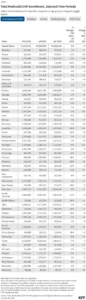
The scale of the populations affected by these impending work requirements is vast. Millions of low-income adults currently enrolled in the ACA Medicaid expansion group across participating states will be subject to the new verification mandates. To maintain eligibility, non-exempt adults will typically need to demonstrate a minimum number of monthly hours spent working, participating in job search activities, engaging in education or vocational training, or participating in community service.
State health departments are currently undertaking massive logistical overhauls to manage the influx of data required to verify these activities. Administrative costs are projected to rise significantly as agencies build or upgrade digital portals, train customer service representatives, and establish robust auditing mechanisms. Historically, data from previous attempts to implement work requirements—most notably in Arkansas—demonstrated that a substantial percentage of individuals who complied with work rules or qualified for exemptions still lost coverage due to administrative hurdles, confusing notification procedures, and complex reporting requirements.
Exemptions built into the federal statute typically protect vulnerable populations, including pregnant women, individuals with medically certified physical or mental disabilities, full-time students, and primary caregivers of dependent children or incapacitated adults. Defining, documenting, and verifying these exemptions represents one of the most formidable administrative challenges facing state Medicaid directors as they prepare for the 2026 and 2027 deadlines.
Stakeholder Perspectives and Official Reactions
The rollout of mandatory Medicaid work requirements has elicited sharply divided responses from stakeholders across the healthcare, political, and advocacy spectrum. Supporters of the policy argue that tying government assistance to labor force participation is a matter of fundamental fairness and fiscal responsibility. Proponents maintain that work requirements encourage upward economic mobility, connect low-income individuals to the broader economy, and preserve public resources for those who are genuinely unable to work due to severe health issues or personal circumstances.
Business organizations and conservative policy groups have largely welcomed the early implementation announcements by states like Nebraska, Montana, and Iowa. From this perspective, transitioning individuals into the workforce helps address persistent labor shortages across various sectors while reinforcing personal accountability within public assistance programs.
Conversely, healthcare providers, patient advocacy organizations, and poverty alleviation groups have voiced deep concerns regarding the potential negative impacts of the new mandates. Critics argue that work requirements do little to actually foster long-term employment and instead serve primarily as a bureaucratic barrier that strips health insurance from eligible, low-income individuals. Opponents point to administrative complexity as a primary driver of coverage loss, noting that low-wage workers often experience fluctuating hours, lack reliable internet access for monthly reporting, or struggle to navigate confusing state bureaucracy.
Medical associations, including groups representing primary care physicians and safety-net hospitals, have cautioned that losing Medicaid coverage directly translates to deferred medical care, worsening chronic conditions, and increased uncompensated care burdens on local healthcare facilities. The debate underscores a fundamental philosophical divide over the primary purpose of public health insurance programs: whether they should function as an unconditional safety net ensuring health equity, or as a conditional support system integrated with workforce development goals.
Broader Impact and Systemic Implications
As the implementation dates draw closer, the broader implications of the 2025 reconciliation law’s work requirement provisions will become increasingly apparent. The decisions made by early-adopting states will serve as a bellwether for the rest of the nation, providing valuable empirical data on the administrative feasibility, cost implications, and human toll of conditioning healthcare on employment verification.
Federal oversight agencies, independent researchers, and state legislators will closely track key performance metrics, including changes in total enrollment numbers, the volume of approved exemptions, administrative error rates, and shifts in employment rates among the target population. The experiences of Nebraska, Montana, Iowa, and Arkansas during their respective 2026 rollouts will likely inform policy adjustments and operational refinements in the remaining states as they prepare for the ultimate January 1, 2027 deadline.
Ultimately, the intersection of federal statutory mandates and state-level administrative execution represents a transformative moment for the American healthcare system. How states balance the statutory obligation to enforce work requirements with their ongoing commitment to providing health coverage for vulnerable populations will shape the future of the social safety net for years to come.
Related posts: