Remembering Knut Flaaum: A Pioneer Who Transformed the Independent Living Movement in Norway and Across Europe

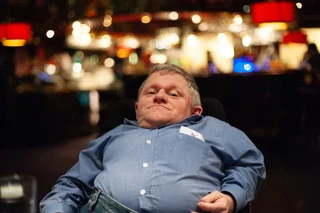
The global disability rights community is mourning the loss of Knut Flaaum, a towering figure in the Independent Living movement and one of the pioneering co-founders of ULOBA – Independent Living Norway. Flaaum passed away on August 24, 2026, leaving behind a legacy that fundamentally reshaped the legal, social, and practical landscapes of disability rights across Norway, Europe, and the wider international stage. His decades of tireless advocacy for personal assistance, self-determination, and human rights transformed the lives of countless individuals with disabilities, shifting the paradigm from institutional care and paternalistic charity to autonomy, civil rights, and inclusion.
As a foundational architect of ULOBA and a vital contributor to organizations such as the European Network on Independent Living (ENIL) and Bente Skangård’s Independent Living Fund, Flaaum’s influence extended far beyond Scandinavian borders. His passing marks the end of an era for the generation of activists who laid the structural groundwork for modern disability policy, prompting both reflection on his monumental achievements and a critical examination of the future of the movement he helped build.
Main Facts and the Passing of an Icon
Knut Flaaum drew his last breath on August 24, 2026, after a lifetime dedicated to social justice and disability rights. His death was officially announced by the Independent Living Institute (ILI), with tributes pouring in from colleagues, international organizations, and grassroots activists alike. Jamie Bolling, a prominent leader within the movement, expressed deep sorrow over the loss, highlighting Flaaum’s instrumental role not only as a strategist and lobbyist but as a trusted mentor, colleague, and friend.
Flaaum was best known internationally as one of the original five visionaries who founded ULOBA in Norway. Established in 1991, ULOBA became the standard-bearer for user-controlled personal assistance (BPA) in the Nordic region, demonstrating that disabled people could—and should—act as employers and directors of their own daily lives. Working alongside fellow luminaries such as Vibeke Marøy Melstrøm, Flaaum helped build an organizational model that proved disabled individuals possess the expertise required to manage their own support systems more effectively than municipal welfare bureaucracies.
Chronology of a Movement: Flaaum’s Lifelong Commitment
To understand the magnitude of Knut Flaaum’s impact, it is necessary to examine the historical trajectory of the Independent Living movement in Norway and Europe, a timeline in which Flaaum played a central role.
In the mid-20th century, disabled people across Europe faced systemic marginalization, largely confined to segregated residential institutions or subjected to restrictive, family-dependent care models. Inspired by the American Independent Living movement pioneered by Ed Roberts and the Berkeley school of activism in the 1970s, European activists began demanding radical reform.
By the late 1980s and early 1990s, Norwegian activists recognized the urgent need for structural change. In 1991, Flaaum joined forces with four other dedicated advocates to found ULOBA. This milestone moment challenged the traditional Norwegian welfare state model, which, despite its progressive social democratic principles, often suffered from paternalistic approaches to disability. ULOBA introduced the concept of User-Controlled Personal Assistance, asserting that personal assistants should facilitate the lifestyle chosen by the disabled person rather than executing standardized care routines dictated by health authorities.
Throughout the 1990s and 2000s, Flaaum expanded his scope to the European and international levels. He became actively involved with the European Network on Independent Living (ENIL), serving as a bridge between Nordic reform efforts and broader pan-European advocacy. His diplomatic skill, strategic vision, and steady demeanor made him a sought-after advisor on policy reform, legislative drafting, and human rights implementation. He also lent his expertise to the ENIL Foundation and Bente Skangård’s Independent Living Fund, helping secure financial resources and institutional support for activists operating in regions with less developed welfare infrastructures.
Supporting Data: The Evolution of Personal Assistance in Norway
The structural changes championed by Flaaum and his peers yielded measurable statistical and legislative shifts in Norway over the subsequent decades. Prior to the establishment of ULOBA and the subsequent legislative victories, state-provided care was overwhelmingly institutional or home-nursing oriented, offering recipients virtually no control over who entered their homes, when they woke up, what they ate, or how they participated in society.
By proving that personal assistance could be delivered cost-effectively while drastically improving quality of life, ULOBA’s advocacy paved the way for the Norwegian Parliament to enshrine the right to user-controlled personal assistance into law. In 2015, amendments to the Patients’ and Users’ Rights Act gave individuals under the age of 67 with a long-term and heavy assistance need a legal right to BPA.
However, data from disability rights monitors and advocacy organizations indicate that implementation has remained uneven across Norwegian municipalities. Budget constraints, bureaucratic resistance, and varying interpretations of "assistance needs" continue to create disparities in access. It was precisely these ongoing systemic battles that kept veterans like Flaaum active well into later life, fighting to ensure that legislative victories translated into daily, lived realities for all disabled citizens.
Official Responses and International Tributes
The global disability community responded to Flaaum’s passing with an outpouring of formal statements and personal tributes, underscoring his extensive network and profound influence.
Jamie Bolling, writing on behalf of the Independent Living Institute, captured the emotional and political weight of the loss: “ILI with great sorrow spreads the news of yet another loss of a great friend and colleague in our lobby for Independent Living… Knut was a long time committed Independent Living activist working for personal assistance and the strengthening of Independent Living. His work alongside Vibeke Marøy Melstrøm and the other founders of ULOBA in Norway made a difference for disabled people. This not only in Norway but out in Europe and in the world.”
Colleagues from ENIL emphasized Flaaum’s unique leadership style. Unlike figures prone to aggressive rhetoric, Flaaum was frequently described as a steady anchor within the movement—analytical, patient, and approachable. Bolling noted, “With a smile often on his face and a chuckle, he was one I turned to for answers to my questions.” This combination of institutional memory, strategic clarity, and interpersonal warmth made him an invaluable resource during times of political uncertainty or organizational transition.
Broader Impact and Implications for the Future
The passing of Knut Flaaum occurs against a complex backdrop for the European disability rights movement. While the ratification of the United Nations Convention on the Rights of Persons with Disabilities (CRPD) by numerous European nations has established a strong international legal standard, implementation across the continent remains sluggish. Governments increasingly face economic pressures, leading to austerity measures that threaten funding for community-based support systems, personal assistance budgets, and deinstitutionalization initiatives.
Furthermore, the Independent Living movement faces a generational transition. The pioneering figures who conceptualized and fought for self-determination in the 1970s, 80s, and 90s are passing away, creating a leadership void. This reality was explicitly acknowledged in tributes to Flaaum. As Bolling reflected: “With each loss of our great leaders, I feel fear for the future, but then I turn and see the flow of new and younger persons carrying the spirit of Independent Living forward.”
The implications of this generational shift are profound. Younger activists are tasked with defending existing hard-won rights against retrenchment while expanding the scope of Independent Living to address intersectional issues, such as the compounding discrimination faced by disabled women, racial minorities, migrants, and individuals with intellectual or psychosocial disabilities.
Conclusion: Preserving a Legacy of Autonomy
Knut Flaaum’s life’s work demonstrates that systemic oppression can be challenged and dismantled through collective organization, solidarity, and an uncompromising demand for human rights. By helping to establish ULOBA, shaping ENIL’s European agenda, and mentoring generations of advocates, Flaaum ensured that the principle of self-determination became a cornerstone of modern social policy.
As the international disability community bids farewell to one of its foundational architects, the imperative moving forward is clear. Honoring Knut Flaaum requires more than passive remembrance; it demands the active defense and expansion of Independent Living principles against contemporary political and economic threats. By keeping his name alive, sharing the history of his contributions, and supporting the new wave of leaders stepping into the movement, the global struggle for autonomy and dignity will continue to advance, ensuring that Flaaum’s vision remains a living reality. Rest in peace and power, Knut Flaaum.
Related posts: