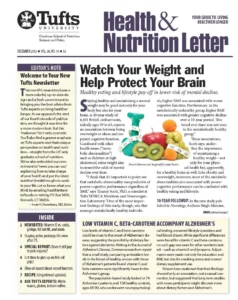
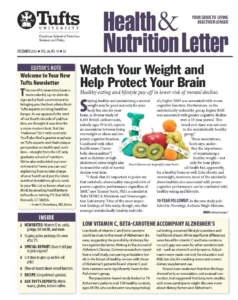
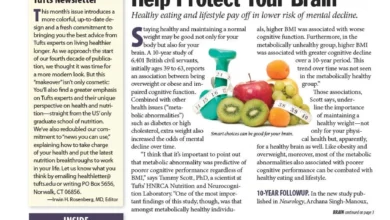
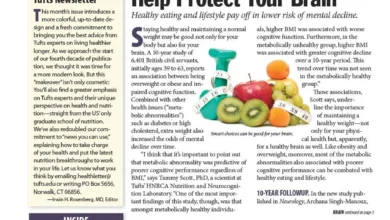
Tufts Health & Nutrition Letter Announces Exclusive Subscription Offer and Digital Archive Access for Readers Seeking Evidence-Based Guidance

Navigating the modern landscape of health and wellness reporting requires a steadfast commitment to scientific rigor, verifiable data, and unbiased medical journalism. Amid an era defined by a constant influx of dietary fads, conflicting nutritional studies, and unregulated wellness advice, established academic publications play a critical role in delivering credible information to the public. The Tufts Health & Nutrition Letter, a widely respected publication produced in affiliation with the Friedman School of Nutrition Science and Policy at Tufts University, has announced a specialized promotional campaign designed to expand its readership and grant broader access to decades of peer-reviewed health insights, archival research, and practical dietary guidance.
The initiative introduces a discounted annual subscription model starting at $18, offering readers a 36% savings off the standard rate. Alongside the discounted yearly rate, subscribers receive unrestricted digital access to an extensive archive of back issues, comprehensive online guides, and evidence-based reports covering topics ranging from metabolic health and cardiovascular disease prevention to sustainable dietary patterns and micronutrient science. As health literacy becomes increasingly vital for addressing chronic illnesses worldwide, academic institutions are doubling down on efforts to translate complex scientific literature into actionable, consumer-friendly insights.
The Evolution of Nutritional Science Communication
Founded on the principle that the general public deserves direct access to unbiased scientific research free from commercial bias, the Tufts Health & Nutrition Letter has long operated as a bridge between laboratory findings and kitchen tables. Over the past several decades, the field of nutritional science has undergone a profound transformation. In the mid-to-late 20th century, dietary guidelines frequently focused on isolated macronutrients—often villainizing fats while inadvertently promoting processed carbohydrates loaded with added sugars.
As methodologies advanced and large-scale epidemiological studies, randomized controlled trials, and meta-analyses became the gold standard of medical research, our understanding of human metabolism evolved significantly. Modern nutritional science emphasizes dietary patterns over individual nutrients, recognizing the complex synergies found in whole foods, the critical role of the gut microbiome, and the distinct physiological impacts of chronic low-grade inflammation. However, translating these nuanced academic findings into accessible guidance remains a persistent challenge. Media outlets frequently sensationalize preliminary study results, leading to whiplash-inducing headlines that declare specific foods either miraculous cures or immediate health hazards.
Academic newsletters like those published through Tufts University seek to counter this trend by offering measured, context-driven analysis. By breaking down newly published research from reputable journals—such as the New England Journal of Medicine, the Journal of the American Medical Association, and the American Journal of Clinical Nutrition—these publications provide consumers with the critical thinking tools necessary to evaluate health claims independently.
Detailed Breakdown of the Subscription Initiative
The newly announced subscription structure is designed to lower financial barriers to entry for individuals seeking dependable health resources. Priced at $18 for the initial year, the package includes:
- Full digital access to the current year’s monthly issues, featuring expert commentary on emerging health trends and policy updates.
- Unlimited entry into the publication’s comprehensive online database and historical archive, allowing users to research specific health conditions, dietary supplements, and historical shifts in nutritional guidelines.
- Practical, evidence-based grocery shopping tips, meal-planning strategies, and safe cooking methodologies designed by academic researchers and registered dietitians.
- Fact-checked guidance on dietary supplements, functional foods, and fitness regimens, protecting consumers from misleading marketing practices often prevalent in the commercial wellness industry.
Industry analysts note that subscription-based models for academic newsletters serve a dual purpose. Beyond generating the necessary operational revenue to sustain independent journalism and editorial independence, these models insulate publishers from the pressures of advertising-driven revenue streams. Publications reliant on ad dollars may face subtle conflicts of interest when reporting on commercial food products, pharmaceutical interventions, or proprietary dietary supplements. By prioritizing subscription models, academic health letters maintain strict editorial integrity.
Chronology of Academic Health Journalism
To understand the current positioning of university-affiliated health publications, it is helpful to examine the historical timeline of consumer health education:
- 1970s–1980s: The rise of consumer advocacy in healthcare leads to an increased demand for accessible medical information. Universities begin recognizing the public’s appetite for translating complex academic research into everyday language.
- 1983: The launch of major university-backed health and nutrition newsletters, establishing a precedent for evidence-based consumer reporting free from corporate advertising.
- 1995–2000: The advent of the internet revolutionizes information distribution. Academic newsletters begin transitioning from print-only formats to early digital bulletin boards and websites, expanding their global reach.
- 2010s: The explosion of social media introduces widespread misinformation, "pseudoscientific" diet trends, and unverified wellness influencers. University publications respond by emphasizing rigorous fact-checking and transparent sourcing.
- Present Day: Digital subscription platforms enable seamless access to searchable archives, making decades of longitudinal health data available instantly to students, healthcare professionals, and health-conscious consumers alike.
Supporting Data on Health Literacy and Chronic Disease
The demand for reliable nutritional education is underscored by pressing public health statistics. According to data from the Centers for Disease Control and Prevention (CDC) and the World Health Organization (WHO), chronic diseases—including type 2 diabetes, cardiovascular disease, and certain forms of cancer—account for the vast majority of morbidity and mortality worldwide. A significant proportion of these conditions are preventable through lifestyle modifications, particularly improvements in dietary habits and sustained physical activity.
Despite the abundance of information available online, low health literacy remains a major barrier to effective disease prevention. A study published by the National Institutes of Health (NIH) indicates that individuals who regularly consume evidence-based health literature demonstrate better adherence to preventive medical advice, lower rates of preventable hospitalizations, and improved long-term health outcomes compared to those who rely solely on social media or general web searches for health advice.
Furthermore, economic analyses of healthcare expenditures reveal that preventive nutrition education yields a high return on investment. Modest reductions in the prevalence of obesity and hypertension through targeted dietary interventions can save healthcare systems billions of dollars annually in direct medical costs and lost workplace productivity. Publications that empower individuals to make informed choices regarding macronutrient intake, sodium reduction, and fiber consumption play an indispensable role in this broader preventative framework.
Expert Perspectives and Industry Implications
Nutrition scientists, public health advocates, and academic leaders have consistently emphasized the importance of safeguarding credible communication channels against the tide of digital misinformation.
Dr. Dariush Mozaffarian, a cardiologist, epidemiologist, and former dean of the Friedman School of Nutrition Science and Policy at Tufts University, has frequently highlighted the systemic challenges facing modern dietary habits. In various academic forums, he has noted that chronic metabolic diseases represent the defining public health crisis of our time, driven largely by the proliferation of ultra-processed foods. According to academic perspectives from institutions like Tufts, addressing this crisis requires a multi-pronged approach that includes transparent food labeling, evidence-based public policy, and accessible consumer education that empowers individuals to navigate complex food environments.
When academic publications offer discounted access to their findings, they actively democratize health information. In marginalized communities or lower-income households—where the burden of diet-related chronic illness is frequently highest—financial constraints can limit access to subscription-based medical journals and premium health resources. While the new Tufts promotion requires a paid subscription, the low entry barrier of $18 per year represents a significant step toward making expert nutritional guidance more accessible to a broader demographic.
Broader Impact on the Future of Medical Publishing
The publishing landscape for medical and nutritional journalism continues to adapt to changing consumer habits. As print readership declines across the publishing sector as a whole, academic newsletters must demonstrate clear digital value to retain and grow their subscriber bases. Providing intuitive online account management, seamless password recovery, web access activation for legacy subscribers, and comprehensive searchable archives are essential components of this digital transformation.
Moreover, the interactive elements common to modern digital publishing platforms—such as moderated comment sections, reader Q&A columns, and direct correspondence with contributing researchers—foster a sense of community and active engagement. Readers are no longer passive recipients of information; they are participants in an ongoing dialogue about the practical applications of nutritional science.
As the Tufts Health & Nutrition Letter moves forward with its latest subscription campaign, the publication reaffirms its core mission: to cut through the noise of modern media and deliver clear, objective, and scientifically validated guidance to the public. In doing so, it serves as a model for how academic institutions can effectively communicate vital health research in an increasingly complex digital world.