Gisèle Caumont: A Life of Resilience, Advocacy, and the Pursuit of Full Participation

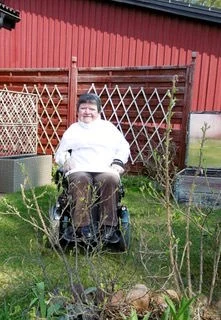
At 87 years old, Gisèle Caumont has unveiled her deeply personal memoir, a testament to a life lived with extraordinary courage and unwavering determination. The book chronicles her remarkable journey from the tumultuous backdrop of World War II France, where she was born with a disability, to the serene inland landscapes of Sweden, her home for the past two decades. Caumont’s narrative is not merely a personal account; it is a profound exploration of the evolution of disability rights, shifting from a medical model steeped in segregation and discrimination to a human rights-based approach that champions full societal integration. Her life’s work as a speech therapist, artist, and musician exemplifies this transformative perspective.
From War-Torn France to Swedish Shores: A Journey of Self-Discovery
Caumont’s story begins in France during the ravages of World War II. Born with a physical disability, her early years were marked by the challenges of a world not designed for her. The medical perspective of disability at the time was often characterized by a focus on limitations and a tendency towards institutionalization, a stark contrast to the inclusive ideals she would later champion. Her parents, however, provided a crucial foundation of support, fostering an environment where her potential could be nurtured. This early encouragement, coupled with the profound connections she forged with kindred spirits – friends who became soulmates in her quest for understanding – allowed her to navigate the prevailing medical paradigm.
Her journey was one of actively challenging societal perceptions. The memoir details how Caumont, with the help of her supportive parents and later, friends who understood her vision, began to dismantle the segregationist views surrounding disability. This process was not passive; it involved a conscious effort to move towards a human rights model, one that recognizes the inherent dignity and right to full participation of every individual, regardless of their physical abilities. Her chosen professions – speech therapist, artist, and musician – were not mere hobbies; they were deliberate choices to engage with the world on her own terms, demonstrating that disability does not preclude a rich and fulfilling professional and personal life.
Overcoming Physical Barriers with Ingenuity and Artistic Passion
Caumont’s physical stature, though small, belied her immense spirit. Her size, in some instances, became an unexpected advantage, allowing her to be carried to places that would otherwise have been inaccessible. This ingenuity was a recurring theme throughout her life. Her deep-seated desire for artistic expression and her profound appreciation for the natural beauty of Sweden fueled her creative endeavors. She recounts leading choirs to picturesque coastal areas, with the majestic backdrop of mountains, showcasing her ability to orchestrate and inspire despite physical limitations.
The memoir vividly illustrates Caumont’s problem-solving prowess. When faced with the lack of accessible toilets, a common barrier for individuals with disabilities, she and her personal assistants ingeniously constructed a makeshift solution using a camping chair. This anecdote is a powerful symbol of her refusal to be defeated by practical obstacles. Similarly, her hands, which might have appeared ill-suited for playing musical instruments like the piano or organ, never deterred her. Her unwavering will and determination to find a way became her greatest assets, allowing her to overcome perceived limitations and achieve her musical aspirations.
La Dame aux Roulettes: A Chronicle of Independent Living
The publication of her autobiography, titled La Dame aux Roulettes (The Lady on Wheels), marks a significant milestone. The French title itself evokes a powerful image of agency and mobility. Caumont offers her own translation of the title into Swedish as Kvinnan på hjul, further emphasizing the narrative’s focus on personal autonomy.
Within the pages of this deeply personal work, Caumont not only recounts her life story but also sheds light on the nascent movement for Independent Living that was instrumental in the establishment of personal assistance in Sweden. This movement, which gained traction in the latter half of the 20th century, fundamentally shifted the discourse around disability from one of care and dependency to one of rights and self-determination.
Caumont’s personal assistance is a cornerstone of her ability to live a full and meaningful life. The memoir details how her chosen assistants, funded by the Swedish state, provide the support she needs to perform daily tasks that she cannot accomplish independently. From the moment she rises from bed to the time she returns to it, her assistants are there, allowing her to maintain a sense of control and dignity. This system, born from the principles of Independent Living, empowers individuals with disabilities to be active participants in society, fostering a sense of satisfaction and providing the strength to confront life’s challenges. The Swedish model of personal assistance, which Caumont herself helped pioneer through her advocacy, has become a global benchmark for disability rights, enabling hundreds of thousands to live autonomous lives.
A Testament to Courage: The Leap to Sweden
Caumont’s decision to emigrate from France to Sweden was an act of profound courage. She undertook this significant transition alone, without immediate support, armed only with the knowledge that upon arrival, she would need to secure the necessary assistance to navigate each subsequent day. This was a bold gamble, a testament to her unwavering belief in the possibility of a more independent and fulfilling life.
Her narrative is painted with a rich palette of emotions, blending warmth and anger. There is a palpable warmth directed towards those who offered indispensable support, individuals whose contributions were vital to her success. Conversely, there is a righteous anger directed at the French state, which she perceives as slow to enact legislation that would grant individuals with disabilities the right to full participation and self-determination. This critique highlights the ongoing struggle for disability rights globally and the disparities that persist between nations.
A close friend of Caumont, who also relies on personal assistance to live a full life as a person with a disability, shared their emotional response to the memoir. They described experiencing both laughter and tears while reading Caumont’s account, a testament to the book’s emotional resonance. The friend recalled imagining Caumont’s brother running through the streets of Paris, pushing her wheelchair to ensure she arrived at her graduation ceremony on time, a poignant illustration of familial support in the face of adversity. This particular anecdote underscores the challenges of navigating inaccessible urban environments, especially when public transportation systems falter. Graduation, in this context, represented not just an academic achievement but a critical key to unlocking a future as a speech therapist, a profession she had fought arduously to attain.
The friend also recounted a humorous yet telling incident where Caumont’s brother flagged down an accessible vehicle belonging to a radio station to help them get around, with Caumont’s wheelchair precariously balanced on the roof. This scene, described as eliciting laughter, speaks volumes about the resourcefulness and determination required to overcome systemic barriers. The friend, familiar with the inaccessibility of Paris streets, recognized the immense willpower displayed by Caumont. They also drew a parallel to their own experiences in Sweden, where the prevailing attitude of "we can fix it" has significantly eased their daily lives. The friend’s recollection of a young Caumont, eager to learn piano, being told by a dismissive man that her fingers were unsuitable for playing, brought tears to their eyes. This deeply personal anecdote highlights the prejudice and doubt that individuals with disabilities have historically faced, and underscores Caumont’s triumph over such negativity.
Activism: A Lifelong Commitment to Rights
Caumont’s activism began in France, where she was a young advocate for the rights of people with disabilities. This passion for social justice continued unabated upon her arrival in Sweden. She became an active participant in STIL (The Foundation for Independent Living in Sweden), an organization that was instrumental in the development of the Independent Living movement in the country. STIL’s philosophy is rooted in the belief that individuals with disabilities are the experts in their own lives and should have the autonomy to make their own choices regarding their support and daily living.
Caumont’s ongoing frustration with France’s legislative progress on disability inclusion is a recurring theme. She chose Sweden precisely because she recognized its commitment to Independent Living and the availability of personal assistance, which she knew would enable her to lead a more complete life. Despite residing in Sweden, she has not abandoned her efforts to effect change in France. The hope is that the publication of La Dame aux Roulettes in France will serve as a catalyst, raising awareness and inspiring further action towards achieving full inclusion for people with disabilities. The book’s potential to spark dialogue and foster understanding within French society cannot be overstated.
Inspiring Hope and Empowering Futures
The author of this piece, a friend of Gisèle Caumont who also benefits from personal assistance to live a full life as a person with a disability, expresses a profound sense of hope for the book’s future translations. They are deeply grateful to be able to read it in French, finding Caumont’s inspirational story a powerful source of optimism. The memoir offers a vision of a long and rich life, similar to Caumont’s, lived to the age of 87.
This narrative serves as a powerful affirmation of the Independent Living movement and its impact. It validates the efforts of those who advocate for the rights of people with disabilities, demonstrating that their vision of hope and empowerment for individuals with disabilities is indeed being realized. Caumont’s life is a living testament to the transformative power of self-determination, community support, and the unwavering pursuit of a life lived with dignity and full participation. The book’s release is not just a personal achievement for Gisèle Caumont; it is a significant contribution to the ongoing global conversation about disability rights and the fundamental human right to live an independent and fulfilling life. The potential for this memoir to inspire future generations of activists and individuals with disabilities is immense, offering a tangible example of what can be achieved when barriers are challenged and human potential is fully embraced.
Related posts: