Remembering Knut Flaaum: A Pioneer of the European Independent Living Movement and Co-Founder of ULOBA

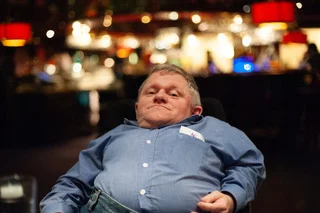
The international disability rights community is mourning the loss of Knut Flaaum, a towering figure in the global Independent Living movement and one of the principal architects of personal assistance rights in Norway. Flaaum passed away on August 24, 2026, leaving behind a legacy that transformed the legal, social, and practical realities of disabled people across Scandinavia and the wider European continent. As a co-founder of ULOBA (Forbundet Uloba Independent Living Norge) and a steadfast collaborator within the European Network on Independent Living (ENIL), Flaaum dedicated decades of his life to dismantling institutional barriers and championing self-determination, autonomy, and human rights for individuals with disabilities.
Main Facts of the Loss and Legacy
Flaaum’s passing marks the conclusion of a life defined by tireless advocacy, strategic institutional building, and profound personal mentorship within the disability rights sphere. Working alongside fellow pioneers such as Vibeke Marøy Melstrøm, Flaaum helped build ULOBA from a grassroots Norwegian initiative into a formidable cooperative model that redefined how society views and delivers personal assistance.
His influence extended far beyond Norway’s borders. Through his engagement with ENIL, the ENIL Foundation, and Bente Skangård’s Independent Living Fund, Flaaum helped shape transnational policy discussions, bridging the gap between local municipal struggles and pan-European human rights frameworks. Colleagues remember him not only for his legislative acumen and relentless campaigning but also for his characteristic warmth, intellectual generosity, and enduring optimism—qualities that sustained the movement through decades of legislative battles.
Historical Context and the Birth of Independent Living in Norway
To understand the magnitude of Knut Flaaum’s contribution, one must examine the socio-political landscape of Scandinavia in the late 20th century. Prior to the emergence of the Independent Living movement, disabled individuals in Norway—much like the rest of Western Europe—faced institutionalization, severe over-medicalization, and a profound lack of control over their daily routines. Welfare states provided care, but that care was typically paternalistic, administered by municipal institutions or family members, effectively denying disabled people the right to education, employment, and civic participation.
Inspired by the American Independent Living movement pioneered by Ed Roberts and the Berkeley school of activism in the 1970s, European activists began demanding a paradigm shift. They argued that disability is not a medical tragedy to be cured or managed by professionals, but rather a political and social issue resulting from environmental and architectural barriers.
In response to these systemic failures, Flaaum and a small collective of visionary activists founded ULOBA in the early 1990s. Their mission was radical for its time: to establish User-Controlled Personal Assistance (BPA—Brukerstyrt Personlig Assistanse), a system that places the disabled person in the role of the employer, granting them total control over who assists them, when, and how. This model fundamentally shifted the power dynamic from passive care recipient to active citizen.
Chronology of a Movement: Flaaum’s Path in Activism
The trajectory of Knut Flaaum’s life mirrors the institutionalization and expansion of disability rights in modern Europe:
- 1980s–Early 1990s: Flaaum emerges as a vocal local advocate, confronting institutional paradigms and demanding community-integrated living options in Norway.
- 1991: Flaaum collaborates with Vibeke Marøy Melstrøm and other pioneers to officially establish ULOBA, setting the foundation for the User-Controlled Personal Assistance (BPA) model in the Nordic region.
- Mid-1990s to 2000s: ULOBA expands its operational framework, transforming from an advocacy group into a major cooperative service provider, proving that disabled people could successfully manage complex administrative and employment structures.
- 2000s–2020s: Flaaum broadens his scope to the international arena, becoming a vital contributor to ENIL, the ENIL Foundation, and various grant-making bodies designed to finance human rights initiatives across Europe.
- August 24, 2026: Knut Flaaum passes away, prompting an outpouring of grief, tribute, and solidarity from civil rights leaders worldwide.
Supporting Data and the Evolution of Personal Assistance
The statistical reality of personal assistance in Europe highlights the scale of the infrastructure Flaaum helped build. According to comparative social policy data from the European Union Agency for Fundamental Rights and ENIL monitoring reports, countries that adopted user-controlled personal assistance models—led primarily by Scandinavian pioneers—experienced exponential increases in workforce participation, higher educational attainment, and drastically reduced rates of involuntary institutionalization among disabled adults.
In Norway, the legal codification of BPA—which eventually saw legislative victories guaranteeing the right to user-controlled assistance for eligible individuals—directly traces its lineage to the advocacy, lobbying, and pilot programs initiated by ULOBA under the guidance of leaders like Flaaum. However, disparities remain across Europe. Data indicates that while Nordic nations maintain relatively high per capita access to personal assistance, Eastern and Southern European states lag significantly behind, relying heavily on family caregivers or outdated residential facilities. Flaaum’s international work was consistently focused on closing this gap by exporting the ideological and structural framework of the Independent Living philosophy to regions lacking robust legislative protections.
Institutional Responses and Tributes from European Leaders
Following the announcement of his passing, tributes poured in from across the international disability community, highlighting Flaaum’s unique ability to combine rigorous political advocacy with interpersonal warmth.
Jamie Bolling, a prominent leader within the European Network on Independent Living and a long-standing colleague, reflected on the emotional and strategic weight of the loss. In an official statement distributed across international networks, Bolling emphasized Flaaum’s dual role as a tireless strategist and an accessible mentor.
"Knut was one of my colleagues in ENIL and in the ENIL Foundation, Bente Skangård’s Independent Living Fund, and in general for raising the awareness of our life situations in this world," Bolling stated. "With a smile often on his face and a chuckle, he was one I turned to for answers to my questions."
Bolling also addressed the broader existential questions facing the movement as its foundational generation passes on. "With each loss of our great leaders, I feel fear for the future, but then I turn and see the flow of new and younger persons carrying the spirit of Independent Living forward. I am thankful for Knut and his commitment and engagement in Independent Living and for his friendship. May we keep Knut alive by saying his name and what he meant for our movement. Rest in peace and power, Knut."
Other European advocacy groups echoed these sentiments, noting that Flaaum’s legacy is embedded in the very language of modern human rights legislation, including the United Nations Convention on the Rights of Persons with Disabilities (CRPD), particularly Article 19, which guarantees the equal right of all disabled people to live in the community, with choices equal to others.
Broader Impact and Implications for the Future of Independent Living
The passing of Knut Flaaum occurs at a critical juncture for the global disability rights movement. As the generation of activists who drafted the foundational demands of the movement transitions into history, organizations like ULOBA and ENIL face the challenge of generational handover.
Analysts of social movements point out that institutional memory is one of the most valuable assets in civil rights advocacy. Figures like Flaaum carried not only the historical narrative of how rights were won—often through intense legislative combat, public protest, and institutional resistance—but also a deep understanding of the systemic vulnerabilities that threaten those rights during periods of economic austerity.
In recent years, disability advocates across Europe have raised concerns over the commercialization of care services, municipal budget cuts affecting personal assistance hours, and attempts by administrative bodies to re-medicalize independent living support. The framework established by Flaaum and his contemporaries—rooted firmly in human rights, self-determination, and the social model of disability—serves as both a defense mechanism against these rollbacks and a blueprint for future expansion.
Furthermore, the integration of younger activists into the leadership structures of ENIL and national organizations suggests that Flaaum’s legacy will not fade into historical archive status. By mentoring upcoming cohorts, leaders like Flaaum ensured that the core tenets of the Independent Living movement—that disabled people are the ultimate authorities on their own lives—remain central to contemporary civil rights discourse.
Conclusion
Knut Flaaum’s life was a testament to the power of collective organizing, visionary persistence, and unwavering solidarity. From his early days challenging Norwegian institutional orthodoxy to his pan-European efforts with ENIL and the Independent Living Fund, he reshaped the possibilities of human dignity for thousands of individuals. As the international community mourns his passing, the enduring structures he helped create—and the community of activists inspired by his work—stand as a permanent monument to his vision. The movement he nurtured will continue to carry forward the principle that independence is not a privilege to be granted by the state, but an inherent human right.