IAPC Launches Third Infographic in "Care Continuum" Series, Focusing on Palliative Care at Home

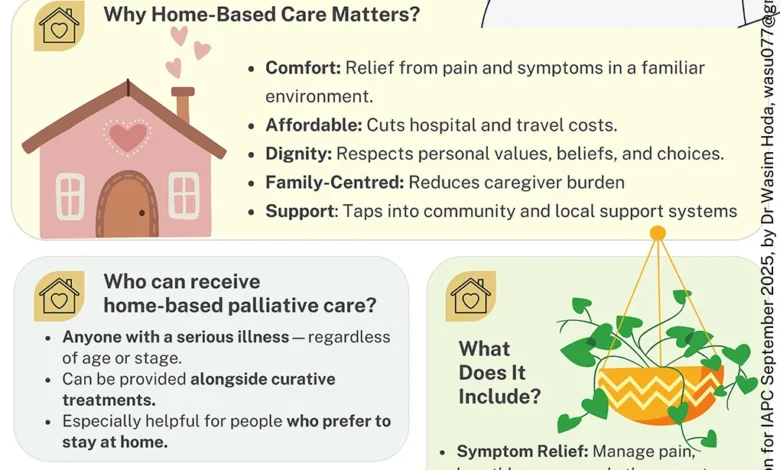
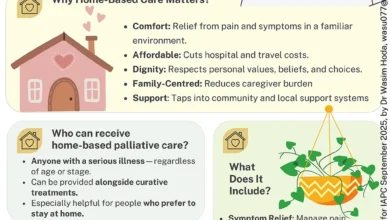
The Indian Association of Palliative Care (IAPC) has unveiled its latest infographic, the third installment in its ongoing "Care Continuum" series, this month, dedicating its focus to the crucial aspect of "Palliative Care at Home." This initiative underscores the IAPC’s commitment to expanding the reach and understanding of palliative care across India, aiming to educate and raise awareness among a wider audience. The infographic, which will be disseminated through the IAPC’s social media platforms and website, encourages its sharing within professional and public networks to maximize its educational impact.
Expanding Access to Palliative Care: A Strategic Infographic Initiative
The "Palliative Care at Home" infographic represents a significant step in the IAPC’s strategic approach to demystifying and promoting palliative care. Following the successful launch of its "Care Continuum" series in June of this year, which likely explored broader themes of integrated healthcare delivery, this month’s focus zeroes in on a specific, yet vital, modality of care. Palliative care, often misunderstood as solely end-of-life care, is in fact a specialized approach designed to improve the quality of life for patients and their families facing the challenges associated with serious illness, regardless of prognosis. Its principles encompass symptom management, pain relief, psychological and spiritual support, and facilitating communication between patients, families, and healthcare providers.
The decision to highlight "Palliative Care at Home" is particularly pertinent given the demographic landscape of India and the increasing preference for care within familiar surroundings. Home-based palliative care offers numerous advantages, including enhanced patient comfort, reduced burden on hospitals and healthcare facilities, and the ability for patients to remain connected with their families and support systems. It also allows for a more personalized approach to care, tailored to the individual needs and preferences of the patient within their own environment.
Context and Chronology of the "Care Continuum" Series
The "Care Continuum" series was initiated by the IAPC with the overarching goal of illustrating how palliative care integrates seamlessly into a patient’s journey through illness. The first infographic, launched in June, likely provided a foundational overview of the care continuum, potentially detailing the various stages of illness and how palliative care can be beneficial at each point. This could have included early diagnosis, active treatment phases, survivorship, and advanced illness.
The second installment, released in July or August, would have built upon this foundation, perhaps focusing on a different aspect of the continuum, such as palliative care in specific settings like hospitals or specialized palliative care units. The current infographic, the third in the series, now specifically addresses the crucial role of home-based palliative care, marking a progression from general concepts to more practical and accessible forms of care delivery. This phased approach allows for a comprehensive understanding of palliative care’s multifaceted nature and its adaptable application across diverse healthcare scenarios. The IAPC’s consistent monthly releases demonstrate a structured and sustained effort to educate and engage stakeholders.
Supporting Data: The Growing Need for Palliative Care in India
The release of this infographic is timely, as India faces a growing burden of non-communicable diseases (NCDs) and an aging population, both of which contribute to an increasing demand for palliative care services. According to data from the World Health Organization (WHO), NCDs, including cardiovascular diseases, cancer, diabetes, and chronic respiratory diseases, are responsible for a significant proportion of deaths in India. These conditions often lead to chronic pain, debilitating symptoms, and a substantial impact on the quality of life for patients and their families.
Furthermore, a study published in the Indian Journal of Medical Ethics highlighted that a vast majority of Indians requiring palliative care do not have access to it. This access gap is particularly pronounced in rural areas, where healthcare infrastructure and trained personnel are scarce. Home-based palliative care emerges as a critical solution to bridge this gap, extending the reach of specialized care to underserved populations.

The IAPC’s initiative to promote "Palliative Care at Home" directly addresses this unmet need. By providing accessible information through infographics, the association aims to empower patients, caregivers, and healthcare professionals with the knowledge to implement and advocate for this essential service. The infographic likely details key components of home-based palliative care, such as symptom management techniques, the role of family caregivers, the importance of multidisciplinary teams, and the availability of community resources.
Expert Endorsement and Collaboration
The IAPC’s commitment to fostering expertise in palliative care is further exemplified by the acknowledgment of Dr. Wasimul Hoda. Dr. Hoda, a Fellow in Pain Medicine from the Department of Anaesthesia, Critical Care and Pain Medicine at All India Institute of Medical Sciences (AIIMS), New Delhi, provided valuable support for this initiative. His involvement signifies the collaboration between leading medical institutions and palliative care advocacy groups, reinforcing the scientific and clinical underpinnings of the IAPC’s educational materials.
The involvement of an expert from AIIMS, a premier medical institution in India, lends significant credibility to the infographic and the IAPC’s efforts. It suggests that the content is not only educational but also grounded in current medical understanding and best practices. This collaborative approach is crucial for disseminating accurate and up-to-date information on palliative care, a field that is continuously evolving.
Broader Implications and Future Outlook
The "Palliative Care at Home" infographic has several far-reaching implications for the healthcare landscape in India. Firstly, it serves as a powerful tool for public awareness. By simplifying complex information into a visually engaging format, the IAPC can reach a broader demographic, including individuals who may not have prior knowledge of palliative care. This can lead to earlier recognition of the need for such services and empower patients to seek appropriate care.
Secondly, the infographic can facilitate training and education for healthcare professionals. While it may not replace formal training, it can serve as a valuable supplementary resource for doctors, nurses, and allied health professionals, particularly those in primary care settings who may encounter patients requiring palliative support. It can also be instrumental in training family members who are increasingly taking on caregiving roles.
Thirdly, by highlighting the benefits and accessibility of home-based palliative care, the IAPC’s initiative can advocate for policy changes and increased resource allocation. Governments and healthcare policymakers can be influenced by evidence-based advocacy that demonstrates the impact and cost-effectiveness of home-based palliative care models. This could lead to greater investment in community-based palliative care programs and support services.
The sharing mechanism encouraged by the IAPC – through social media and direct networks – is a strategic element designed to amplify the infographic’s reach. In an era of digital connectivity, such dissemination strategies are highly effective in reaching diverse audiences rapidly and efficiently. The availability of past infographics on the IAPC website ("https://www.palliativecare.in/iapcs-infographics/") further consolidates their educational resources, creating a valuable repository for anyone seeking information on palliative care.
Looking ahead, the success of this infographic series suggests a potential for the IAPC to develop further specialized content. This could include infographics on pediatric palliative care, palliative care in specific diseases like cancer or neurological disorders, or even resources tailored for different linguistic groups within India. The focus on "Palliative Care at Home" is a pragmatic and impactful step, aligning with the global trend towards patient-centered, community-based healthcare solutions. As India continues to grapple with a growing burden of chronic diseases, the IAPC’s proactive approach through such educational initiatives is vital in ensuring that quality of life remains a priority for all patients facing serious illnesses. The infographic serves not just as an informational tool, but as a catalyst for change, promoting a more compassionate and comprehensive approach to healthcare delivery across the nation.