Federal Autism Panel Postpones Crucial Meeting Amidst Public Outcry Over Limited Comment Period

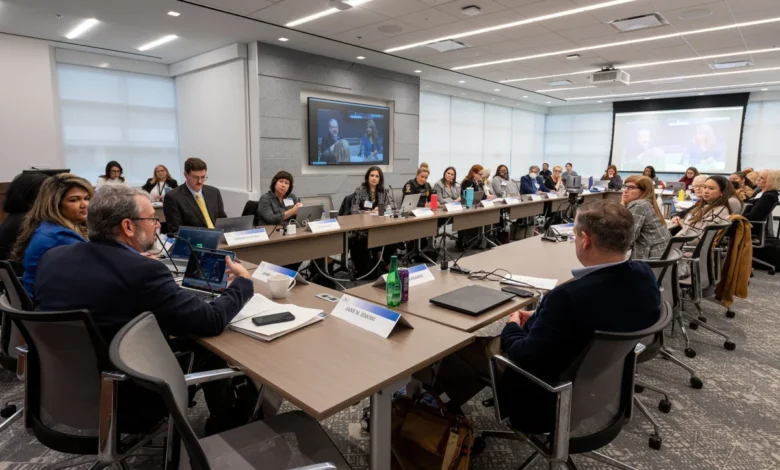
Federal officials have announced a significant postponement of a pivotal meeting for the Interagency Autism Coordinating Committee (IACC), a key advisory body tasked with shaping the government’s approach to autism. The decision comes in direct response to widespread alarm from autism advocates who contend that the public was provided an unacceptably short window of just four days to review and comment on a comprehensive draft strategic plan. The U.S. Department of Health and Human Services (HHS) confirmed to Disability Scoop on Wednesday that the IACC meeting, originally scheduled for July 31, will be rescheduled for late August, with a new, extended deadline for public comment to be established.
This abrupt delay signifies a victory for numerous advocacy organizations that banded together to protest the compressed timeline for reviewing the 336-page draft strategic plan. The document, which represents the IACC’s primary responsibility and offers recommendations to the Secretary of Health and Human Services on autism research, services, and supports, was released on a Monday with a comment deadline of Friday. This rapid turnaround was widely criticized as insufficient, particularly for individuals and families who face significant daily challenges in managing autism.
Advocates Demand Adequate Time for Input on National Autism Strategy
The pushback against the expedited review process was swift and unified. Judith Ursitti, co-founder and president of the Profound Autism Alliance, articulated the frustration felt by many, stating, "For caregivers of people with profound autism, who frequently can’t even get a shower for themselves every four days, this timeline created a barrier to participation." Her sentiment was echoed by a coalition of prominent autism advocacy groups, including the Autism Science Foundation, the Autism Society of America, the Coalition of Autism Scientists, the National Council on Severe Autism, Autism Speaks, and the Autistic Self Advocacy Network. This collective voiced their demand for a substantial extension of the public comment period to a more equitable 90 days.
In response to this concerted advocacy, Emily Hilliard, a spokesperson for HHS, acknowledged the committee’s commitment to public engagement. "After receiving feedback from autism stakeholders, the Interagency Autism Coordinating Committee (IACC) will extend the public comment period," Hilliard stated. "The committee appreciates the strong engagement from the autism community and remains committed to ensuring feedback is heard and thoughtfully considered as part of its process." While an official new date for the meeting and a revised comment deadline have not yet been formally announced, IACC Chair Dr. Sylvia Fogel indicated in a social media post that the new public comment deadline would be August 20 at 5 p.m. ET.
Strategic Plan’s Significance and Evolving Review Process
The IACC’s strategic plan plays a critical role in guiding federal and private sector efforts in autism. Mandated by the Autism CARES Act, the plan is intended to be updated annually, providing a roadmap for allocating resources and prioritizing research. The current draft holds particular significance due to a provision in the latest iteration of the autism law, which stipulates that the National Institutes of Health’s budget for autism research should be informed by the IACC’s strategic plan. This linkage elevates the importance of the plan, making public input on its contents directly influential to the future direction and funding of autism research.
Historically, the development of the IACC’s strategic plans has been a more deliberate and inclusive process. The previous comprehensive strategic plan, released in 2023, spanned nearly 250 pages and covered seven key areas, including diagnosis, biology, interventions, services, and lifespan issues. According to David Sitcovsky, vice president of advocacy at Autism Speaks, that plan was the product of approximately two years of development. This extensive process involved soliciting public comments on priorities before drafting began, followed by the formation of a working group, and undergoing two draft revisions before final publication. "The public had repeated opportunities to shape the document as it developed," Sitcovsky remarked, contrasting it with the current situation. "Public input in this cycle is arriving after the document was substantially written, rather than helping to shape it from the outset." The IACC had approved a 2024 update to the plan, but it was never formally released.
Controversy Surrounds IACC Restructuring and Plan Development
The circumstances surrounding the current draft strategic plan are further complicated by recent changes to the IACC itself. Earlier this year, HHS Secretary Robert F. Kennedy Jr. implemented a restructuring of the committee, which led to the sidelining of representatives from some of the nation’s most prominent autism groups. These changes brought in several new members with a history of promoting vaccine skepticism and other controversial viewpoints.
The newly constituted committee has held only one public meeting, and the draft strategic plan was reportedly developed through a private process. Advocates have expressed concern that the current proposal is more extensive than any previous versions and that the individuals involved in its creation remain unclear. Helen Tager-Flusberg, director of the Center for Autism Research Excellence at Boston University and a leader within the Coalition of Autism Scientists, a group comprising over 300 researchers, noted the plan’s "radically different structure" and its divergence from prior iterations.
While Tager-Flusberg, a former IACC member, acknowledged the plan’s positive focus on crucial areas like diagnosis, housing, and mental health services, she raised concerns about other sections. Specifically, she pointed to a section on improving communication for nonspeaking autistic individuals as potentially problematic. More critically, she expressed apprehension about the plan’s apparent omission of key research areas. "It is not clear whether the plan would support continued funding for genetics, neuroscience, screening or treatments other than pharmaceuticals. None of these key topics are included," she stated. Tager-Flusberg warned, "Given that the (plan) includes many proposals that are consistent with (Kennedy’s) views on autism, if this plan is approved by the IACC, this will (give) him license to radically change the priorities for future autism research."
Inclusion and Concerns within the Draft Plan
Despite these overarching concerns, some aspects of the draft plan have been met with positive reception. Ursitti of the Profound Autism Alliance expressed her satisfaction that profound autism, a designation that had not previously received explicit attention in federal plans, is now included. However, like many other advocates, she and others noted a mixed bag of content, with some sections deemed beneficial and others questionable, underscoring the need for thorough review.
HHS has maintained that the draft plan was informed by two decades of public comments. Dr. Sylvia Fogel, chair of the IACC, emphasized the committee’s urgency in fulfilling its obligations under the Autism CARES Act. In her social media post, she acknowledged the long-standing concerns of many individuals within the autism community, stating, "Many individuals with autism, their families, clinicians, researchers, and advocates have spent years, and in some cases decades, raising concerns, only to feel that their most urgent priorities were not heard or addressed. Meaningful public participation requires not only sufficient time to comment on the current Draft, but also responsiveness to concerns raised repeatedly over time."
The Path Forward: A Call for Transparency and Collaboration
The postponement of the IACC meeting and the commitment to an extended comment period represent a significant step toward ensuring more meaningful public participation. The initial four-day window was widely seen as an attempt to circumvent thorough review and robust debate, particularly given the profound implications of the strategic plan for the autism community and federal research priorities.
"Moving forward, I strongly encourage the IACC to conduct their work in the public eye and allow appropriate time for the community to engage," Ursitti urged. "This will pave the path to progress that we all desire." This sentiment highlights the broader expectation for transparency and collaborative decision-making as the IACC navigates the complex and vital task of shaping national autism policy and research agendas. The extended timeline provides a crucial opportunity for stakeholders to thoroughly examine the draft, voice their concerns and recommendations, and ultimately contribute to a more inclusive and effective strategic plan for the autism community.
The updated information from HHS indicates the public comment deadline is set for August 20 at 5 p.m. ET. The exact dates for the rescheduled IACC meeting remain pending official announcement.
(Updated: July 23, 2026 at 11:43 a.m. ET)
Related posts: