U.S. Global Health Strategic Initiatives and the Landscape of Bilateral Funding in Fiscal Year 2024

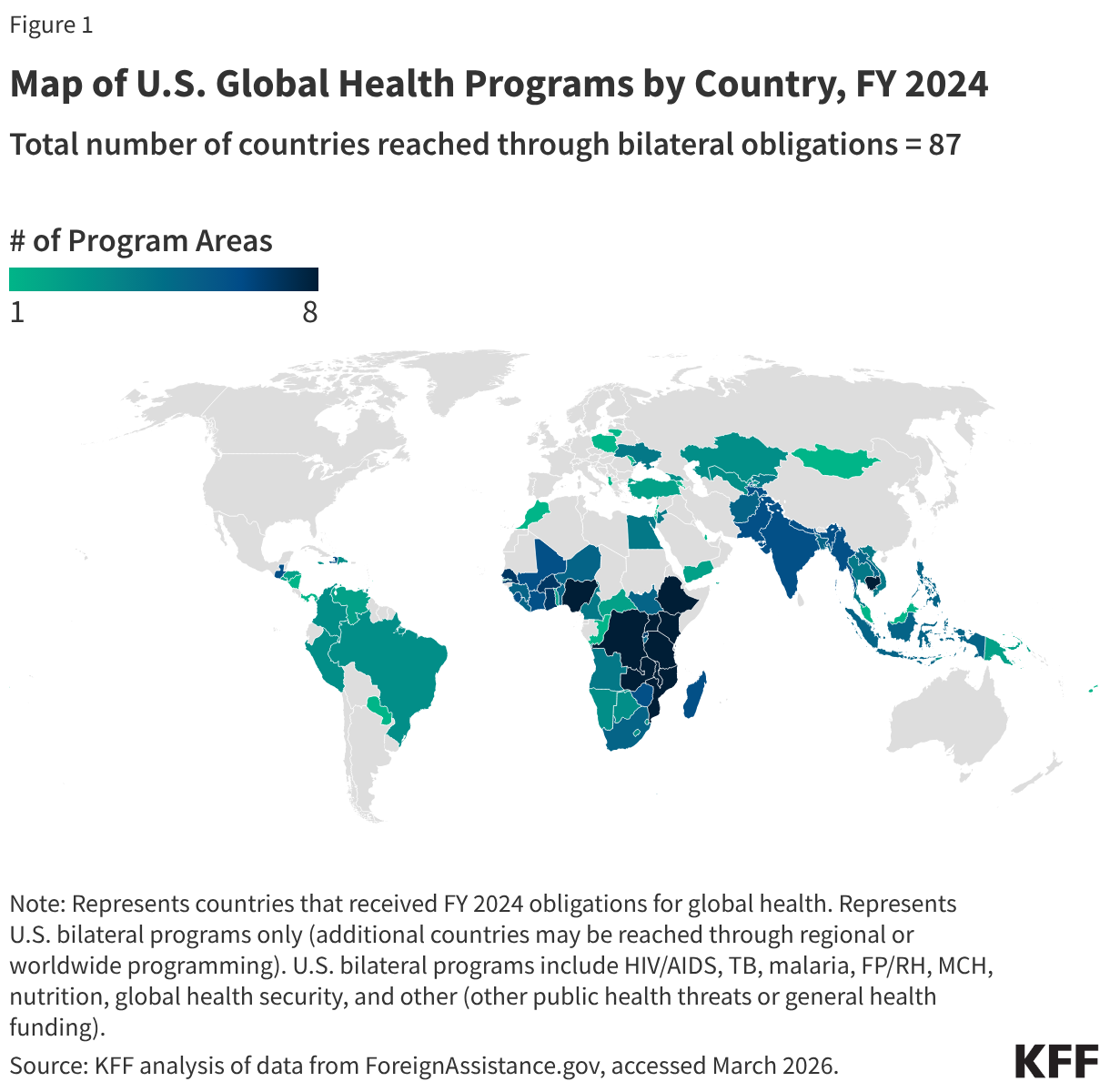
The United States government continues to maintain its position as the largest donor to global health worldwide, supporting comprehensive health programs in more than 80 countries through a sophisticated network of bilateral agreements, regional initiatives, and contributions to multilateral organizations. As of Fiscal Year (FY) 2024, the U.S. global health portfolio encompasses a diverse array of critical interventions designed to combat infectious diseases, improve maternal and child survival, and bolster the capacity of partner nations to detect and respond to emerging biological threats. This expansive footprint is managed primarily through the U.S. Agency for International Development (USAID), the Department of State, and the Centers for Disease Control and Prevention (CDC), reflecting a multi-agency commitment to global stability and humanitarian progress.
In each partner nation, U.S. programs are tailored to address specific epidemiological profiles and systemic weaknesses. The core pillars of this engagement include the President’s Emergency Plan for AIDS Relief (PEPFAR), the President’s Malaria Initiative (PMI), and dedicated programs for Tuberculosis (TB), Family Planning and Reproductive Health (FP/RH), Maternal and Child Health (MCH), Nutrition, and Global Health Security. By integrating these efforts, the U.S. seeks not only to provide immediate clinical interventions but also to strengthen the underlying health systems of host countries, ensuring long-term sustainability and resilience against future health crises.
The Pillars of U.S. Global Health Engagement
The strategic framework of U.S. global health is built upon several flagship initiatives that have redefined international development over the last two decades. At the forefront is PEPFAR, launched in 2003, which remains the largest commitment by any nation to address a single disease. In FY 2024, PEPFAR continues to pivot toward the "95-95-95" targets—ensuring that 95% of people living with HIV know their status, 95% of those diagnosed are on antiretroviral therapy (ART), and 95% of those on ART achieve viral suppression. This program operates in dozens of countries, with a heavy concentration in sub-Saharan Africa, where the burden of the HIV/AIDS epidemic has historically been highest.
Parallel to the fight against HIV is the President’s Malaria Initiative (PMI). Since its inception in 2005, PMI has been instrumental in reducing malaria-related mortality through the distribution of insecticide-treated bed nets, indoor residual spraying, and the provision of rapid diagnostic tests and artemisinin-based combination therapies. In FY 2024, PMI’s reach extends to nearly 30 partner countries, focusing on the most high-burden areas in Africa and the Greater Mekong Subregion. The initiative’s data-driven approach has allowed for a significant scale-up of preventative measures, contributing to a global decline in malaria deaths over the past two decades.
Beyond these disease-specific programs, U.S. investments in Maternal and Child Health (MCH) and Nutrition address the foundational elements of public health. These programs target the leading causes of mortality among women and children under five, including pneumonia, diarrhea, and complications during childbirth. By funding skilled birth attendants, immunization campaigns, and nutritional supplementation, the U.S. provides a safety net for the world’s most vulnerable populations. In FY 2024, these efforts are increasingly integrated with Global Health Security (GHS) initiatives, recognizing that a robust primary healthcare system is the first line of defense against pandemic outbreaks.
A Chronology of U.S. Global Health Leadership
The current landscape of U.S. global health involvement is the result of a multi-decade evolution of policy and legislative action. This chronology highlights the milestones that have shaped the FY 2024 priorities:
- 1961: The Foreign Assistance Act is signed into law, establishing USAID and formalizing health as a component of U.S. foreign policy.
- 1990s: The U.S. expands its role in childhood immunization and polio eradication efforts, partnering with organizations like Gavi, the Vaccine Alliance.
- 2003: President George W. Bush announces the creation of PEPFAR during his State of the Union address, marking a paradigm shift in global health funding.
- 2005: The President’s Malaria Initiative (PMI) is launched to reduce malaria mortality by 50% in target countries.
- 2009: The Global Health Initiative (GHI) is introduced by the Obama administration to foster a more integrated and "woman-centered" approach to health delivery.
- 2014: The Global Health Security Agenda (GHSA) is established following the West Africa Ebola outbreak, emphasizing the need for international cooperation in pandemic preparedness.
- 2020-2022: The COVID-19 pandemic prompts a massive surge in U.S. global health spending, focused on vaccine distribution (COVAX) and strengthening oxygen supplies and surveillance systems globally.
- 2024: The U.S. focuses on "localization," shifting more direct funding and implementation authority to local organizations within partner countries to ensure long-term self-reliance.
Data and Regional Distribution in FY 2024
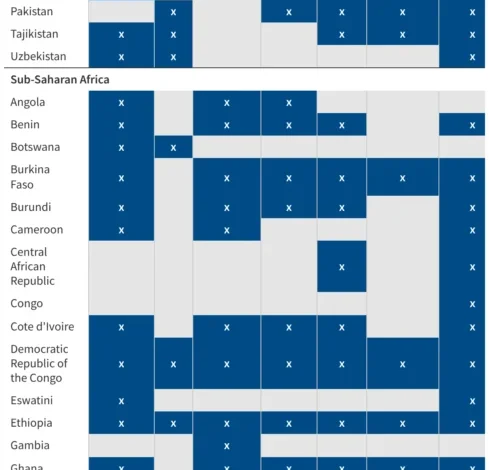
According to the latest data trackers, the geographic distribution of U.S. bilateral global health programs remains concentrated in regions with the greatest health disparities. Sub-Saharan Africa receives the largest share of funding and program activity, with significant operations in countries such as Nigeria, Ethiopia, Kenya, and South Africa. In these nations, the U.S. often implements the full spectrum of its health portfolio, from HIV treatment to nutrition and global health security.
In the Asia-Pacific region, U.S. efforts are frequently centered on Global Health Security and Tuberculosis. Countries like Indonesia, Vietnam, and the Philippines are key partners in monitoring zoonotic diseases—those that jump from animals to humans—which are high-risk factors for future pandemics. Meanwhile, in the Western Hemisphere, programs in Haiti and parts of Central America focus heavily on Maternal and Child Health and infectious disease control, reflecting regional migration and economic stability concerns.
The FY 2024 data indicates that Global Health Security has become a permanent and prominent feature of the bilateral landscape. While PEPFAR and PMI remain the largest budgetary items, the GHS portfolio has expanded to include laboratory strengthening, workforce development (field epidemiology training), and the creation of rapid response teams in over 50 countries. This shift reflects a strategic understanding that a localized health crisis in one part of the world can rapidly become a global economic and security threat.
Official Perspectives and Strategic Implications
U.S. officials and policymakers emphasize that global health assistance is not merely an act of charity but a strategic necessity. High-ranking representatives from the Department of State have frequently noted that health programs serve as a cornerstone of "soft power," fostering goodwill and stability in volatile regions. By reducing the burden of disease, U.S. investments help stabilize economies, allowing parents to return to work and children to remain in school, which in turn reduces the likelihood of civil unrest and mass migration.
From a clinical perspective, the CDC and USAID have highlighted the importance of "integrated service delivery." In FY 2024, there is a concerted effort to ensure that a mother visiting a clinic for prenatal care can also receive malaria prevention education and screening for TB or HIV. This holistic approach maximizes the impact of every dollar spent and respects the time and resources of the patients being served.
However, the program is not without its challenges. Official reports often cite "absorptive capacity" as a hurdle—the ability of a partner country’s infrastructure to effectively utilize large influxes of aid. To combat this, the U.S. has increased its focus on "Health Systems Strengthening" (HSS). Instead of just buying medicine, the U.S. is investing in the training of pharmacists, the digitization of medical records, and the improvement of supply chain logistics to ensure that life-saving supplies reach the "last mile" of rural areas.
Economic and Geopolitical Analysis
The implications of U.S. global health programs extend far beyond medical outcomes. Economically, the ROI (return on investment) for global health is substantial. For instance, every dollar invested in immunization is estimated to return up to $52 in economic benefits by preventing illness and long-term disability. By supporting these programs, the U.S. helps create healthier, more productive trading partners.
Geopolitically, these programs provide a counter-narrative to the influence of other global powers. In many partner countries, the U.S. is seen as the partner of choice for health because of its commitment to transparency, clinical excellence, and the use of evidence-based interventions. The "PEPFAR effect" has been credited with increasing favorable views of the United States in several African nations, serving as a vital tool for diplomatic engagement.

Furthermore, the focus on Global Health Security in FY 2024 aligns with national security interests. The COVID-19 pandemic demonstrated that the U.S. domestic economy is inextricably linked to the health of the rest of the world. By funding disease surveillance in "hotspots" abroad, the U.S. creates an early-warning system that can detect a pathogen before it reaches American shores.
The Path Forward: Localization and Sustainability
As the U.S. moves through FY 2024 and looks toward the future, the primary theme is "localization." This involves a strategic shift from U.S.-based contractors to local NGOs, community-led organizations, and host-country governments. The goal is to move away from a donor-recipient dynamic toward a true partnership where local entities take the lead in managing their own public health systems.
This transition is viewed as essential for sustainability. With global budgets under pressure from various geopolitical conflicts and domestic economic concerns, the U.S. is aiming to ensure that the progress made in the last 20 years—such as the 60% reduction in malaria deaths or the millions of lives saved by ART—is not reversed. By building local capacity, the U.S. ensures that even if funding levels fluctuate, the knowledge, infrastructure, and systems remain in place to protect global health.
In conclusion, the U.S. global health footprint in FY 2024 represents a complex, multi-layered commitment to humanity and security. Through its support of programs in over 80 countries, the U.S. continues to lead the world in tackling the most pressing health challenges of our time. While the methods and geographic focuses may shift in response to new data and emerging threats, the underlying objective remains constant: the creation of a healthier, safer, and more stable world for all. The data tracked this year serves as a testament to the enduring impact of these bilateral and regional efforts, providing a roadmap for the next generation of global health leadership.
Related posts: