
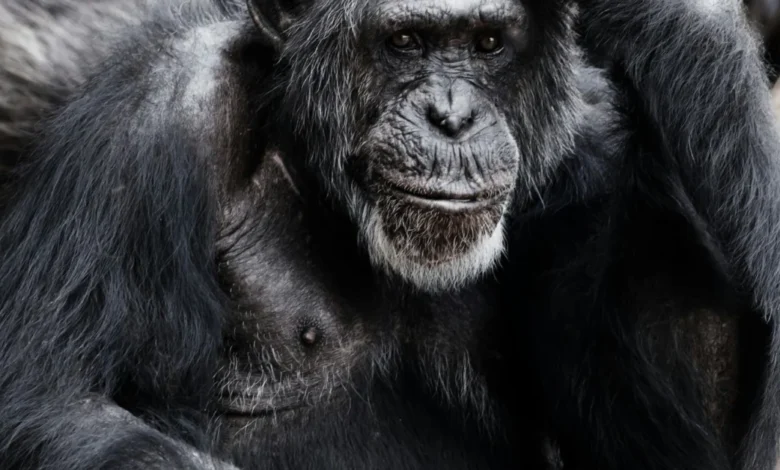
The scientific community is currently navigating a period of profound transformation regarding the understanding of nonhuman consciousness, a field that intersects the boundaries of biology, psychology, and philosophy. Dr. Mike Dacey, a prominent philosopher of science, has recently released a comprehensive analysis titled Seven Challenges for the Science of Animal Minds, which seeks to codify the primary obstacles hindering a complete understanding of how animals think and feel. This work arrives at a critical juncture as public and academic interest in the emotional and cognitive lives of nonhumans reaches an all-time high, driven by advancements in neuroimaging and long-term ethological observations. The study of animal minds, often categorized as cognitive ethology, has historically oscillated between extreme skepticism regarding animal sentience and anecdotal anthropomorphism. Dr. Dacey’s framework aims to provide a rigorous, optimistic path forward by addressing the inherent difficulties of the discipline without succumbing to defeatism.
The Evolution of Cognitive Ethology: A Brief Chronology
To understand the context of Dr. Dacey’s seven challenges, one must look at the historical trajectory of how science has viewed the nonhuman mind. For much of the early 20th century, the field was dominated by Behaviorism, a school of thought led by figures such as B.F. Skinner and John B. Watson. Behaviorism argued that because internal mental states could not be observed directly, they were not a fit subject for scientific inquiry. Animals were often viewed as "black boxes" that responded to stimuli with programmed behaviors, an approach that effectively sidelined the study of consciousness for decades.
The "Cognitive Revolution" of the 1960s and 70s began to shift this perspective, but it was the publication of Donald Griffin’s The Question of Animal Awareness in 1976 that arguably birthed modern cognitive ethology. Griffin, who discovered echolocation in bats, argued that animals likely possess conscious intent. Since then, the field has expanded rapidly. In 2012, a group of prominent neuroscientists signed the "Cambridge Declaration on Consciousness," which stated that "non-human animals, including all mammals and birds, and many other creatures, including octopuses," possess the neurological substrates required for consciousness. Dr. Dacey’s work represents the next phase of this evolution, moving from the question of if animals have minds to the technical and philosophical question of how we can accurately study them.
Deconstructing the Seven Challenges
Dr. Dacey’s analysis identifies seven distinct hurdles that researchers must overcome to build a reliable science of animal minds. These challenges are not presented as reasons to abandon the field, but rather as methodological parameters that must be accounted for in any robust study.
The primary challenge identified is the "Inference Gap." Because researchers cannot directly access the subjective experience of another being—human or nonhuman—all conclusions about mental states must be inferred from behavior and physiology. This is particularly difficult when studying species with vastly different sensory worlds, such as the echolocating bat or the electric-sensing platypus.
A second and more controversial challenge involves "Anthropomorphic Bias." Historically, researchers have relied on Morgan’s Canon, a principle of parsimony which suggests that animal behavior should be explained by the lowest possible level of cognition. Dr. Dacey argues that while this was intended to prevent bias, it has often functioned as a bias itself, leading scientists to ignore evidence of high-level intelligence simply because it resembled human cognition. He suggests that anthropomorphism should be studied as a cognitive phenomenon rather than used as a "cudgel" to dismiss hypotheses.
Other challenges include the "Ecological Validity" problem, which questions whether data gathered from animals in highly controlled laboratory settings can be applied to their relatives in the wild. The discrepancy between the behavior of a captive chimpanzee and a free-ranging one can be significant, complicating the development of a unifying theory of mind. Additionally, Dr. Dacey highlights the "Interdisciplinary Boundary" challenge, noting that neuroscientists, evolutionary biologists, and psychologists often use different vocabularies and methodologies, leading to fragmented data.
Supporting Data and Case Studies
To illustrate these challenges, Dr. Dacey utilizes a variety of case studies that highlight the diversity of the animal kingdom. These examples serve as data points for the complexity of the task at hand:
- Chimpanzee Social Reasoning: Studies on primates have long suggested they possess a "Theory of Mind"—the ability to attribute mental states to others. However, interpreting whether a chimp is "thinking about what another chimp thinks" or simply reacting to subtle physical cues remains a central debate in primatology.
- Rat Emotions: Research into the affective neuroscience of rats has shown they exhibit behaviors consistent with joy (such as "chirping" when tickled) and empathy (rescuing trapped cage-mates). The challenge lies in determining if these are homologous to human emotions or unique biological responses.
- Bee Learning: Despite having brains the size of sesame seeds, honeybees have demonstrated the ability to understand the concept of "zero" and solve complex mathematical problems like the "Traveling Salesman Problem." This challenges the assumption that large, complex brains are a prerequisite for sophisticated cognition.
- Octopus Consciousness: As cephalopods, octopuses are evolutionarily distant from humans, yet they exhibit high levels of problem-solving and play behavior. Their nervous systems are decentralized, with a large portion of their neurons located in their arms, posing a unique challenge to neurocentric definitions of the "mind."
Official Perspectives and Institutional Responses
The scientific community’s response to these challenges has been mixed but increasingly proactive. Institutional bodies are beginning to recognize the implications of animal cognition in policy and law. For instance, the UK’s Animal Welfare (Sentience) Act 2022 officially recognized decapod crustaceans (such as crabs and lobsters) and cephalopod mollusks (such as octopuses and squid) as sentient beings. This legislative shift was informed by a rigorous review of over 300 scientific studies conducted by the London School of Economics.
Furthermore, the "replication crisis" in social psychology has prompted animal researchers to be more transparent about sample sizes and experimental design. While Dr. Dacey acknowledges that small sample sizes in animal studies can be a limitation, he argues that this does not render the data worthless. Instead, it necessitates a "bits of evidence" approach, where conclusions are drawn from a mosaic of findings across multiple disciplines rather than a single "silver bullet" experiment.
Broader Impact and Ethical Implications
The implications of Dr. Dacey’s work extend far beyond the laboratory. If the challenges to understanding animal minds are met with a "productive optimism," the resulting knowledge could fundamentally alter human-animal relationships. In the realm of conservation, understanding the cognitive needs of a species can lead to more effective reintroduction programs. In the legal sector, the debate over "nonhuman personhood" for great apes and cetaceans hinges entirely on scientific definitions of self-awareness and autonomy.
Moreover, the recognition of animal emotions has direct consequences for the industrial farming and pharmaceutical industries. As the science of animal minds becomes more precise, the ethical threshold for what constitutes "humane treatment" is likely to rise. Dr. Dacey’s book suggests that by looking these challenges "straight-on," society can build a richer, more personal understanding of the creatures with whom we share the planet.
Analysis of Future Directions
The future of the science of animal minds likely lies in the integration of artificial intelligence and advanced bio-logging. AI is already being used to decode the vocalizations of sperm whales and the facial expressions of mice, potentially providing a new window into subjective experiences that were previously inaccessible. However, as Dr. Dacey emphasizes, technological advancement must be paired with philosophical rigor. The "seven challenges" serve as a roadmap for this future, ensuring that as our tools become more sophisticated, our interpretations remain grounded in logical and objective analysis.
Ultimately, the study of nonhuman minds is as much a study of the human mind. By identifying our own biases and the limitations of our reasoning, we become better equipped to understand the diverse forms of consciousness that exist in nature. Dr. Dacey’s work suggests that while the mind of an octopus or a bee may remain partially "other," the pursuit of understanding them is one of the most significant scientific endeavors of the 21st century. The transition from viewing animals as biological machines to recognizing them as complex, feeling individuals is a paradigm shift that is only just beginning to take hold in the global scientific consciousness.