Navigating the Complex Landscape of Medicaid Section 1115 Demonstration Waivers and Evolving Federal Policy

Medicaid Section 1115 demonstration waivers continue to serve as one of the most dynamic and consequential tools in American healthcare policy, offering states the regulatory flexibility to test innovative delivery systems, reshape benefit packages, and experiment with eligibility criteria that deviate from federal statutes. As these waivers reflect both localized state priorities and the shifting ideological agendas of successive presidential administrations, the national healthcare landscape is experiencing a profound period of transformation. From addressing health-related social needs (HRSN) and providing pre-release healthcare services to incarcerated individuals to implementing mandatory work requirements and shifting continuous eligibility rules, Section 1115 waivers lie at the epicenter of debates over the future of the nation’s largest public health insurance program for low-income individuals.
Understanding Section 1115 Waivers and Their Statutory Foundation
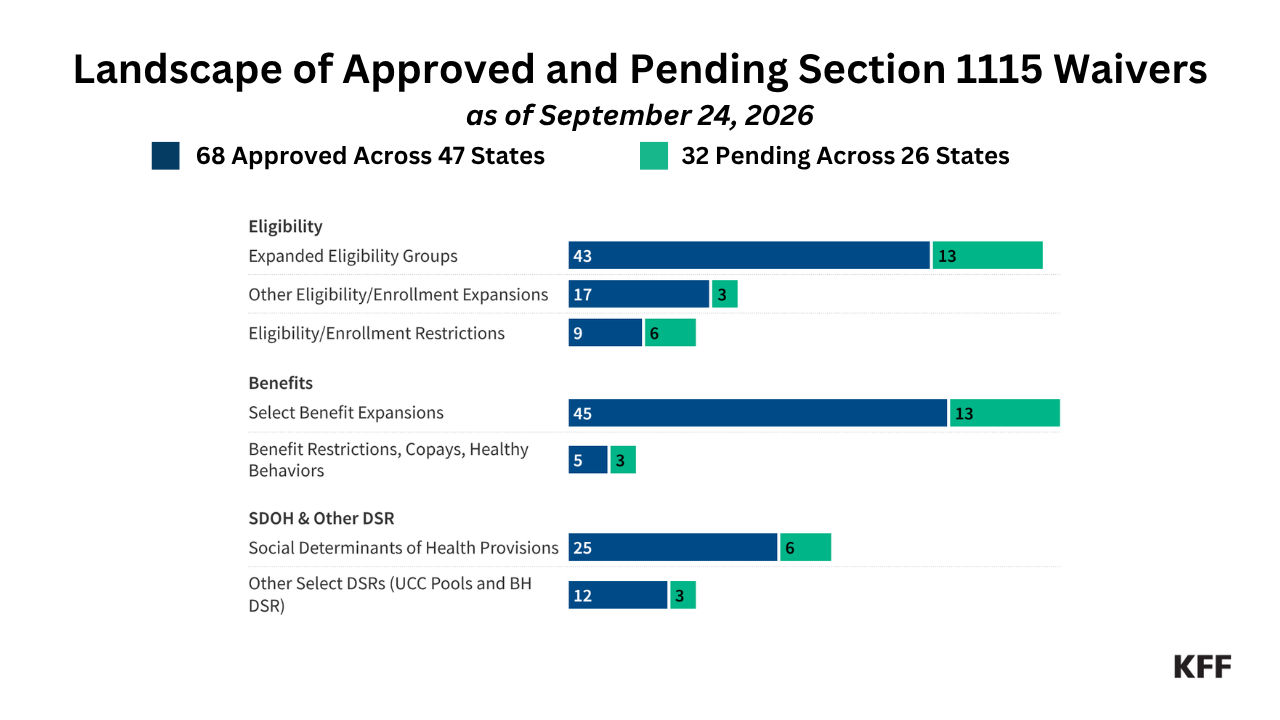
Under Section 1115 of the Social Security Act, the Secretary of the Department of Health and Human Services (HHS) is granted broad authority to approve experimental, pilot, or demonstration projects that are judged to be likely to assist in promoting the objectives of the Medicaid program. This statutory mechanism grants states the ability to waive compliance with specific federal requirements—such as statewide uniformity, freedom of choice of providers, and comparability of services—allowing them to tailor their Medicaid programs to address unique local challenges.
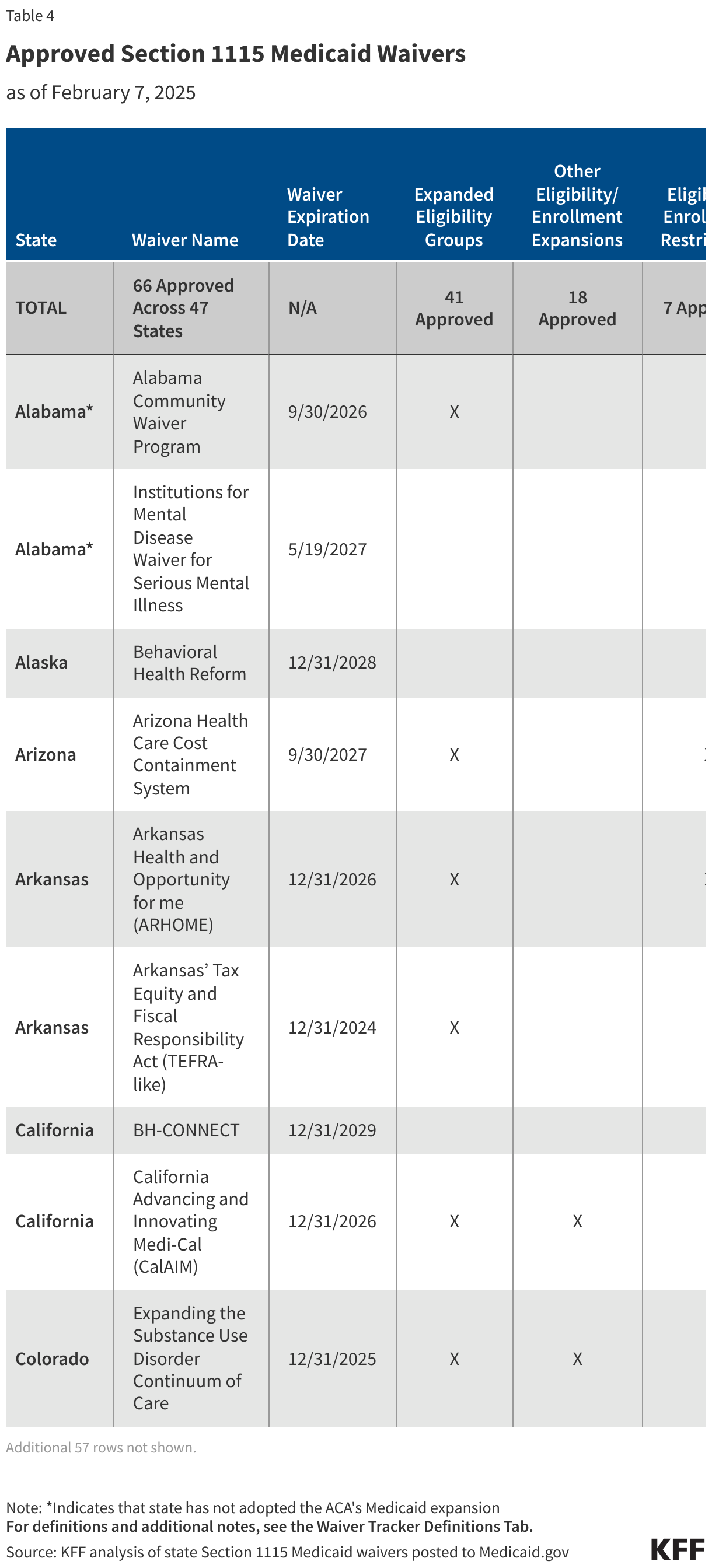
Historically, these waivers have evolved from modest administrative exceptions into sweeping reform vehicles. Nearly all states currently maintain at least one active Section 1115 waiver, while several states juggle multiple waivers simultaneously to manage everything from managed care delivery models to targeted behavioral health initiatives. Because these waivers require federal approval and periodic renewal through the Centers for Medicare & Medicaid Services (CMS), they are inherently susceptible to the shifting policy directives of the White House. Consequently, priorities emphasized under one presidential administration can be heavily revised, phased out, or rescinded entirely when a new administration takes office.
The Chronology of Recent Policy Shifts: From Biden-Era Expansions to Trump-Era Realignments
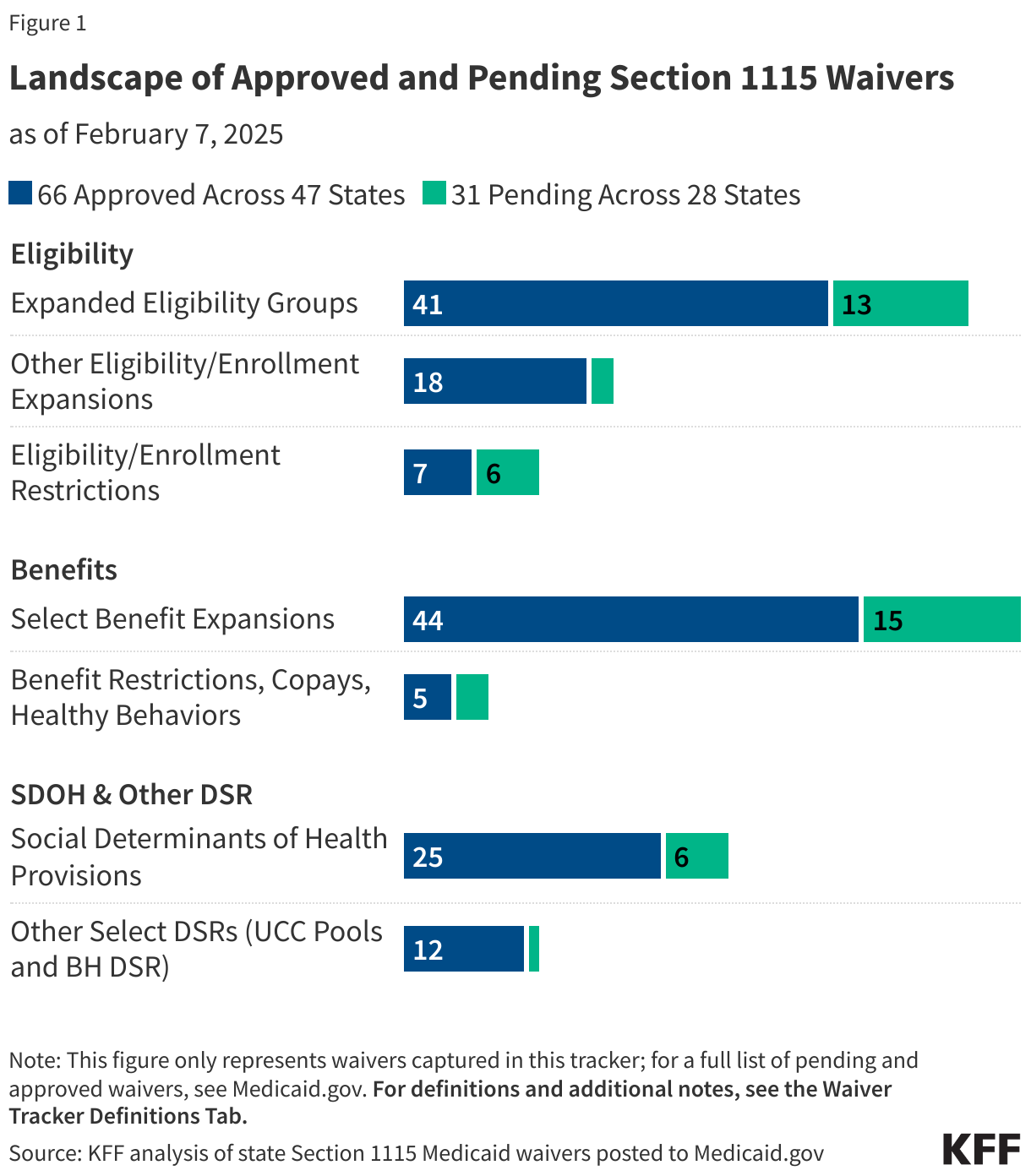
The trajectory of Section 1115 waivers over the past several years illustrates a striking pendulum effect in federal healthcare oversight. During the Biden administration, CMS heavily promoted waivers aimed at broadening health coverage, addressing structural inequities, and tackling social determinants of health (SDOH). Key initiatives championed during this era included comprehensive frameworks for addressing health-related social needs—such as housing instability and nutrition insecurity—as well as pioneering pre-release coverage for individuals who are incarcerated to facilitate smoother community reentry and reduce recidivism. Furthermore, the Biden administration approved multi-year continuous eligibility waivers for children, designed to minimize coverage disruptions, commonly known as "churn."
However, the political landscape shifted notably with the transition into the second Trump administration, bringing a swift recalibration of federal priorities. In early 2025, CMS rescinded the previous administration’s formal guidance regarding health-related social needs. While federal officials clarified that this rescission would not automatically nullify existing HRSN waiver approvals, future requests in this domain would face rigorous, case-by-case evaluation.
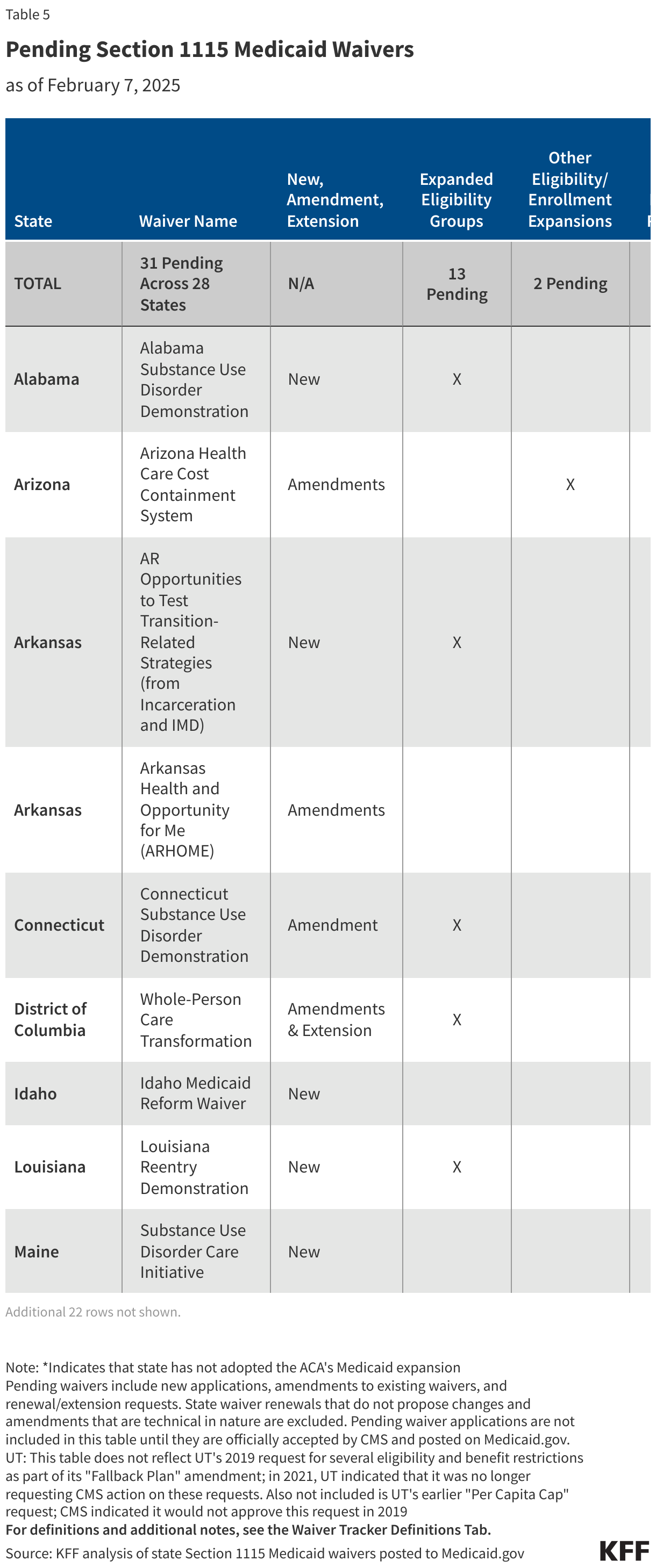
Subsequent policy updates compounded this regulatory pivot. In April 2025, the administration announced plans to phase out federal funding for "Designated State Health Programs" (DSHP) historically tied to waivers. By July 2025, CMS issued guidance stating it would no longer approve new continuous eligibility waivers or extend existing ones for either children or adults. Additionally, the federal government moved to phase out targeted initiatives designed to strengthen the Medicaid workforce across primary care, behavioral health, dental services, and home- and community-based services. These cumulative regulatory adjustments signal a decisive return to a more conservative federal stance regarding the permissible scope of demonstration projects.
The Reemergence and Implementation of Medicaid Work Requirements
One of the most significant structural changes impacting the Medicaid landscape stems from federal legislative action rather than executive waiver policy alone. The 2025 budget reconciliation law introduced a statutory mandate requiring states to condition Medicaid eligibility for non-elderly, non-pregnant adults in the Affordable Care Act (ACA) expansion group on meeting specific work and community engagement requirements, with a national enforcement deadline set for January 1, 2027.
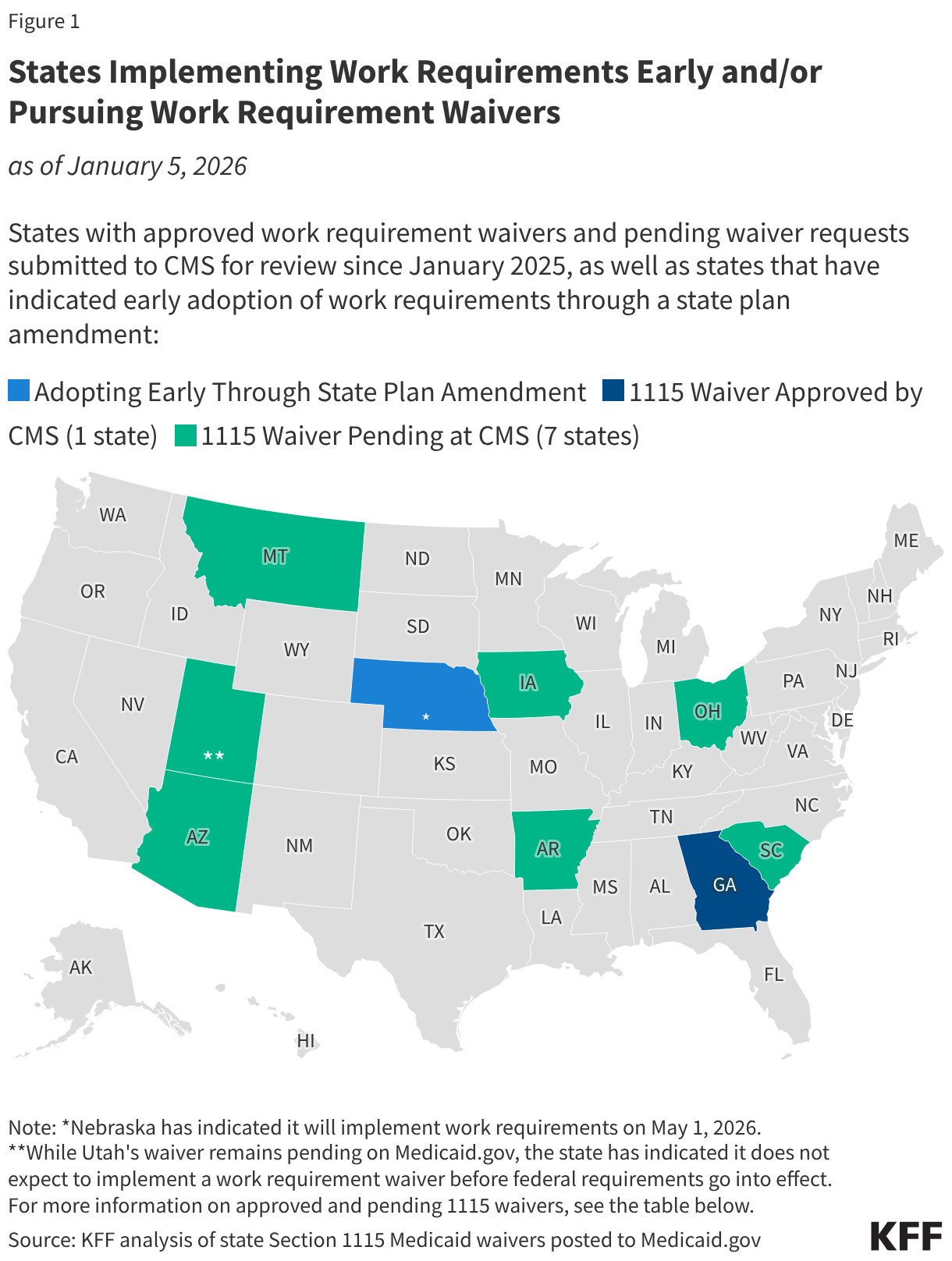
While the federal mandate looms ahead, states have been given the option to implement work requirements earlier than the 2027 deadline by utilizing either a State Plan Amendment (SPA) or an approved Section 1115 waiver. Despite initial speculation that states would rush to submit new work requirement waivers following the inauguration of the second Trump administration, the passage of the federal reconciliation law altered state strategic planning. Because the federal law provides a clearer, statutory pathway via SPAs, most states opting for early implementation are choosing that route rather than pursuing complex 1115 waiver negotiations.
Nebraska made headlines as the first state to announce early enforcement of federal work requirements through a State Plan Amendment, slated to begin on May 1, 2026. Montana and Iowa subsequently announced plans for early implementation on July 1, 2026, and December 1, 2026, respectively. Meanwhile, Arkansas adopted a phased approach, announcing a "soft implementation" of work requirements on July 1, 2026, which will encourage compliance without disenrolling individuals prior to the mandatory January 1, 2027 federal cutoff.
Among 1115 waiver pursuits, Georgia remains unique as the only state with a dedicated Medicaid work requirement waiver actively in place, having survived protracted litigation during the previous administration. Georgia’s waiver is scheduled to expire on December 31, 2026, at which point the state must seamlessly transition into compliance with the overarching federal work requirement framework taking effect the following day.
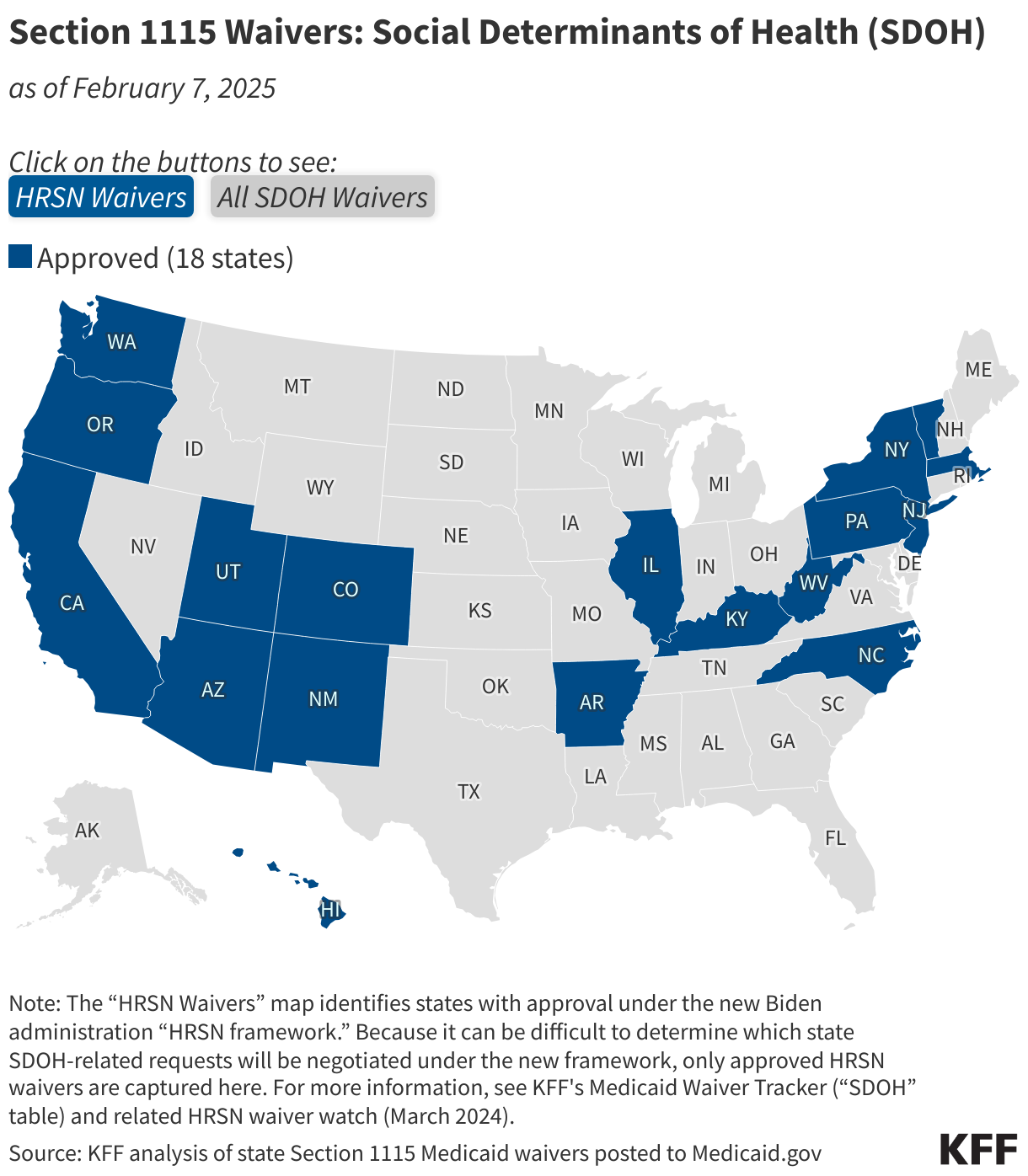
Addressing Health-Related Social Needs (HRSN) and Social Determinants of Health (SDOH)
Social determinants of health—encompassing housing stability, food security, transportation, education, and personal safety—have increasingly been recognized by public health experts as primary drivers of health outcomes and overall healthcare expenditures. Recognizing this, the Biden administration established a structured framework in 2022 and 2023 enabling states to incorporate HRSN services directly into their Section 1115 demonstrations. These approvals allowed states to use federal Medicaid dollars to pay for non-clinical interventions, such as temporary housing assistance, tenancy support, and medically tailored meals for high-need enrollees.
The Trump administration’s March 2025 rescission of the Biden-era HRSN guidance introduced uncertainty into this space. Although states with existing operational HRSN programs were permitted to maintain their initiatives through their current approval periods, future expansions face heightened scrutiny. Despite federal headwinds, the foundational push by states to integrate social care with medical care has left a lasting imprint on state health policy, with numerous states continuing to track and evaluate the clinical and financial return on investment of these targeted interventions.
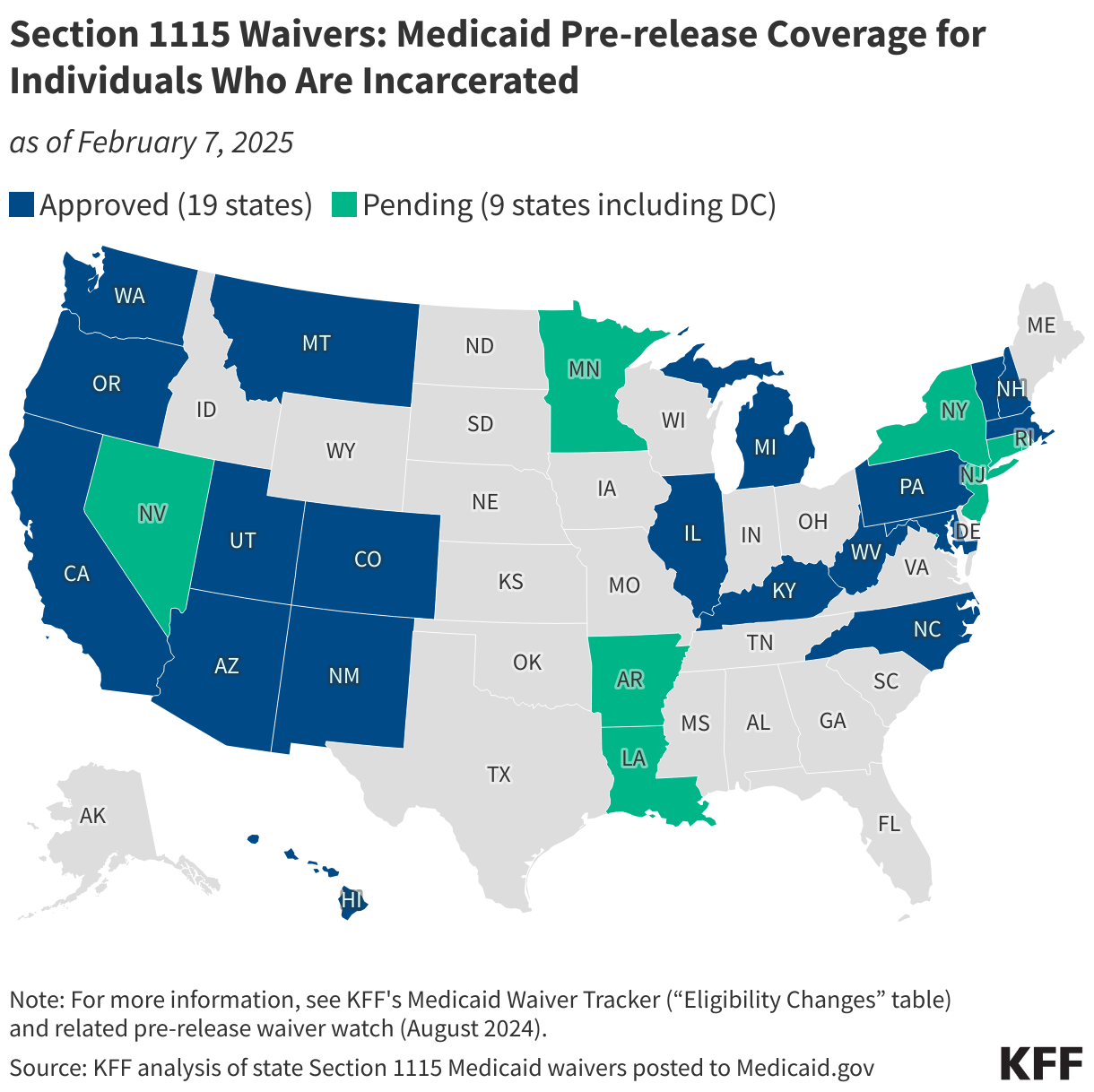
Transforming Reentry: Pre-Release Coverage for Incarcerated Individuals

Perhaps one of the most bipartisan areas of innovation within Section 1115 waiver policy has been the effort to provide Medicaid pre-release services to individuals who are incarcerated. Historically, the longstanding federal "inmate exclusion policy" prohibited Medicaid from paying for medical care provided to incarcerated individuals, except for inpatient hospital stays lasting 24 hours or longer. This restriction frequently resulted in severe disruptions in chronic disease management, interrupted prescriptions upon release, and poor post-release health outcomes, culminating in high rates of recidivism and emergency department utilization.
In April 2023, the federal government invited states to apply for a specialized Section 1115 demonstration opportunity to test transition-related strategies aimed at supporting community reentry. This waiver permits states to provide targeted Medicaid services—such as case management, medication-assisted treatment (MAT) for substance use disorders, and a 30-day supply of essential prescription drugs—to individuals up to 90 days prior to their expected release from prison or jail.
Demonstrating broad cross-ideological appeal, pre-release waivers have been pursued and secured by governors across the political spectrum. By the conclusion of the Biden administration, 19 states had successfully secured approvals for reentry demonstrations. The momentum continued into the second Trump administration, which approved four additional reentry waivers in late 2026 and signaled plans to release updated transition-related demonstration guidance. Proponents of these waivers argue that bridging the gap between correctional facilities and community health networks is a commonsense fiscal and humanitarian strategy that enhances public safety while reining in downstream acute care costs.
Continuous Eligibility for Children and Vulnerable Populations
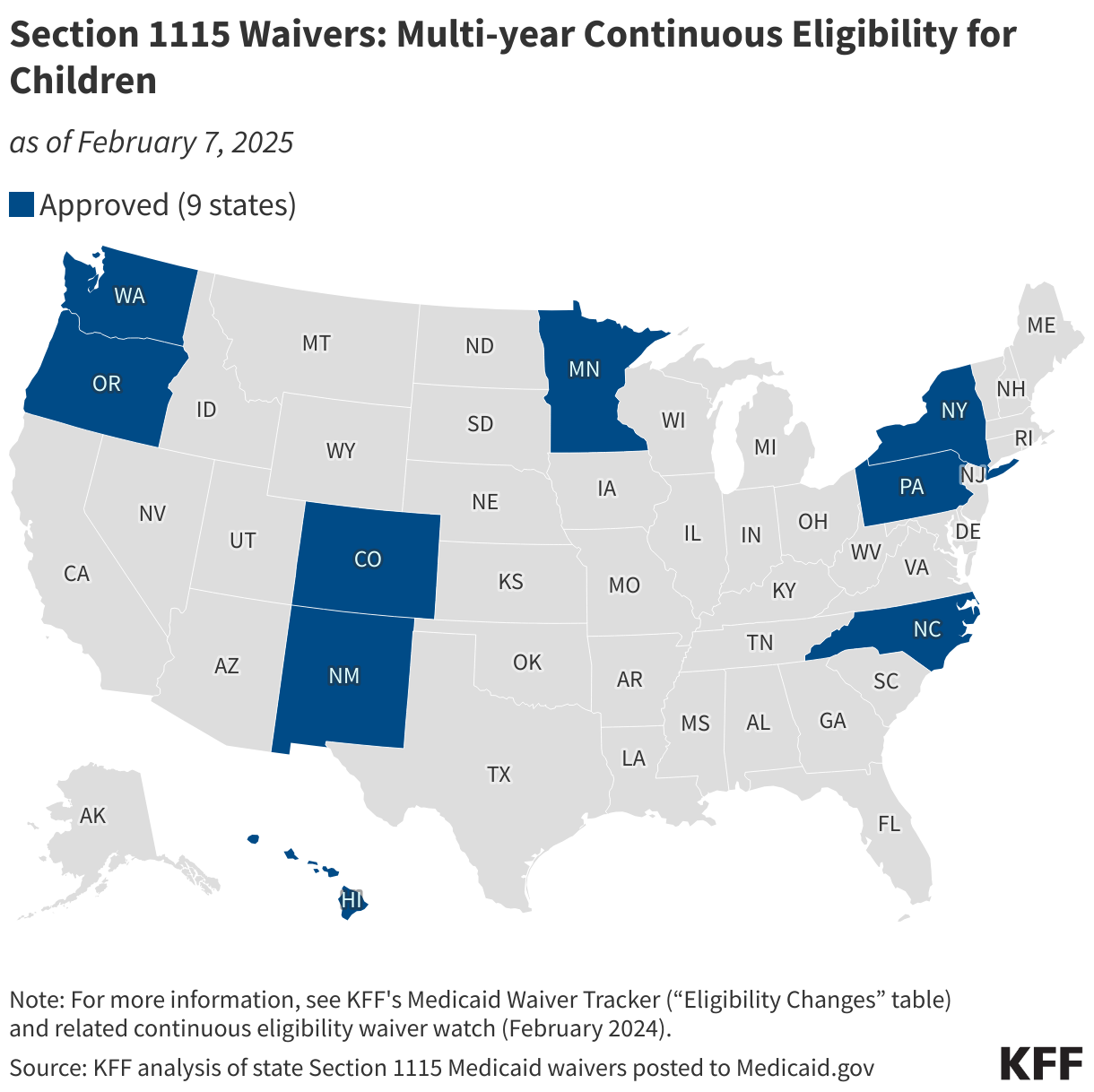
Another critical dimension of Section 1115 waiver activity centers on continuous eligibility policies designed to protect vulnerable beneficiaries from sudden coverage losses. Historically, periodic eligibility reviews and administrative hurdles led to high rates of "churn," where individuals temporarily lost Medicaid coverage despite remaining income-eligible, only to re-enroll months later after experiencing a gap in care.
Recognizing the detrimental effects of coverage disruptions on pediatric health, the Consolidated Appropriations Act of 2023 mandated that all states implement 12-month continuous eligibility for children starting January 1, 2024. Beyond this baseline requirement, several progressive states utilized Section 1115 waivers to secure multi-year continuous eligibility extensions, allowing children to remain enrolled from birth up to age six without interruption.
However, this expansionary trend encountered a federal roadblock in July 2025, when CMS issued guidance stating it would no longer approve new multi-year continuous eligibility waivers or grant extensions for existing ones. While children will continue to benefit from the federally mandated 12-month continuous eligibility protections, the curtailment of multi-year waiver approvals limits the ability of states to experiment with longer uninterrupted coverage windows.
Implications and Future Outlook for State Medicaid Programs
The current landscape of Medicaid Section 1115 waivers reflects a complex interplay between federal statutory mandates, executive branch ideology, and state-level healthcare administration. As states adapt to the 2025 budget reconciliation law’s work requirement mandates and navigate stricter federal oversight regarding social determinants of health and continuous eligibility, healthcare policymakers face difficult strategic choices.
States that invested heavily in innovative delivery system reforms, HRSN interventions, and multi-year coverage expansions must now assess the long-term financial sustainability of these programs in the absence of favorable federal matching or renewal prospects. Conversely, states prioritizing administrative stringency, work enforcement, and traditional acute care models are finding renewed alignment with federal oversight priorities. Ultimately, Section 1115 waivers remain the ultimate laboratory of American healthcare federalism, where the ongoing tension between federal standardization and state-level experimentation will continue to shape the health coverage of tens of millions of low-income Americans.
Related posts: