Independent Living Movement Gains Official Representation on Human Rights Council


The burgeoning Independent Living movement has achieved a significant milestone with the appointment of its first dedicated representative to the Human Rights Council. Mari Siilsalu, a legal expert affiliated with ILI (Independent Living Organization), was formally inducted as a member of the Council just days before the midsummer celebrations, marking a pivotal moment for disability advocacy and the broader human rights landscape in Sweden. This appointment underscores a growing recognition of the unique perspectives and experiences of individuals advocating for self-determination and autonomy in their lives.
A Landmark Appointment for Disability Rights
The Human Rights Council serves as a crucial advisory body to the Swedish Institute for Human Rights, providing expert guidance and fostering a deeper understanding of human rights issues within the nation. Comprising twenty members, the Council draws upon a diverse array of expertise and lived experiences from across civil society and various stakeholder groups. A core mandate of the Council is to ensure the inclusion of voices representing persons with disabilities, a principle that has now been significantly strengthened by the inclusion of an Independent Living advocate.
Prior to Mari Siilsalu’s appointment, the Council had indeed seen representation from individuals with disabilities and those involved in migration advocacy. However, Siilsalu, speaking from her perspective as a representative of ILI, articulated that her inclusion brings a distinct and vital dimension to the Council’s deliberations. "ILI brings something new to the table," she stated, emphasizing the unique philosophical underpinnings of the Independent Living movement.
The Independent Living Philosophy: Autonomy and Self-Determination
The Independent Living philosophy, which forms the bedrock of ILI’s advocacy, champions the right of all individuals, regardless of disability, to have control over their own lives and make their own choices. This includes decisions about where they live, who they associate with, and what services they access. It is a paradigm shift from a medical or charity-based model of disability, which often positions individuals as passive recipients of care, to a rights-based approach that emphasizes empowerment, inclusion, and full participation in society.
Siilsalu highlighted ILI’s impactful projects, such as "Disabled Refugees Welcome," "Disabled Refugees Support Center," and "Disabled Refugees Stories," as concrete examples of how ILI contributes to this philosophy. These initiatives directly address the intersectionality of disability and migration, providing crucial support and amplifying the voices of a particularly vulnerable population. "Now ILI has the opportunity to contribute to the Council’s knowledge base from the perspective of the Independent Living philosophy and its principles," Siilsalu explained. "Drawing from our experiences with projects for people with disabilities and migrant backgrounds, we can share our insights into the intersection of migration experiences and disability."
This nuanced understanding of intersecting identities is critical. Individuals with disabilities who are also migrants often face compounded challenges, including language barriers, cultural differences, discrimination, and limited access to essential services, all while navigating their disability-related needs. ILI’s work aims to bridge these gaps, ensuring that the rights and needs of disabled refugees are recognized and met.
The Selection Process and Council Mandate
The process for selecting members of the Human Rights Council is designed to ensure broad representation and expertise. Nominations can be submitted by both organizations and private individuals. Subsequently, the Board of the Institute for Human Rights makes the final appointments. This inclusive nomination process allows for a wide range of qualified candidates to be considered, reflecting the multifaceted nature of human rights advocacy.
The Council’s mandate extends until the spring of 2028, providing a stable platform for its members to contribute to the Institute’s work. The inaugural meeting of the current Council is scheduled for September in Lund, a city known for its academic institutions and commitment to human rights research. This initial gathering will set the tone and direction for the Council’s activities over the coming years, with Siilsalu’s perspective poised to significantly influence discussions on disability rights and related issues.
Supporting Data and the Broader Context of Disability Rights in Sweden
The appointment of a representative from the Independent Living movement arrives at a time when disability rights are increasingly under scrutiny and subject to ongoing policy development in Sweden. While Sweden is recognized for its comprehensive welfare state, challenges persist in ensuring full inclusion and equal opportunities for all individuals with disabilities.
According to Statistics Sweden (SCB), approximately 1.7 million people in Sweden, or about 17% of the population, have some form of disability. This significant demographic highlights the importance of robust advocacy and policy frameworks that address their diverse needs and rights. The United Nations Convention on the Rights of Persons with Disabilities (CRPD), which Sweden ratified in 2008, serves as a guiding international framework, emphasizing principles of accessibility, non-discrimination, and full participation.
The Independent Living movement, by its very nature, aligns closely with the core tenets of the CRPD, particularly Article 19 on living independently and being included in the community. ILI’s efforts to empower individuals with disabilities to make their own choices about their lives and to access the necessary support systems directly contribute to the realization of these rights.
Implications for Future Policy and Advocacy
Mari Siilsalu’s presence on the Human Rights Council is expected to have several significant implications:
- Enhanced Focus on Intersectionality: The Council’s discussions are likely to gain a deeper appreciation for the complex challenges faced by individuals with disabilities who also belong to other marginalized groups, such as refugees and migrants. This will foster more inclusive and targeted policy recommendations.
- Strengthened Independent Living Principles: The integration of the Independent Living philosophy into the Council’s advisory capacity can lead to a more rights-based approach to disability policy in Sweden, moving beyond traditional service provision models to focus on empowerment and self-determination.
- Increased Visibility for ILI and its Mission: Siilsalu’s role will undoubtedly elevate the profile of ILI and the broader Independent Living movement, encouraging greater public awareness and support for their advocacy.
- Improved Collaboration: Her position can facilitate stronger partnerships between disability organizations, government bodies, and other civil society actors, fostering a more collaborative approach to human rights work.
Potential Reactions and Future Outlook
While the article does not explicitly detail reactions from other parties, it is logically inferred that the appointment would be met with enthusiasm by disability advocacy groups and human rights organizations in Sweden. Representatives from the disability sector, who have long advocated for greater inclusion and recognition of their rights, would likely view this as a positive step forward.
For instance, the Swedish Disability Federation (Hjälpmedelsinstitutet) and various other national disability organizations that champion the rights of individuals with different types of disabilities would likely welcome this development. They often collaborate on advocacy efforts and would see Siilsalu’s role as a valuable addition to the broader human rights discourse.
Furthermore, governmental bodies responsible for social welfare and human rights might see this as an opportunity to gain more informed perspectives on disability issues, potentially leading to more effective policy development. The Institute for Human Rights itself would benefit from the direct input and lived experience that Siilsalu brings.
The future outlook for disability rights in Sweden, with the strengthened representation on the Human Rights Council, appears promising. The inclusion of the Independent Living perspective is not merely symbolic; it represents a commitment to ensuring that individuals with disabilities are not only heard but are also active participants in shaping the policies that affect their lives. This strategic appointment is a testament to the growing recognition of the vital role that grassroots movements and rights-based philosophies play in advancing human rights for all.
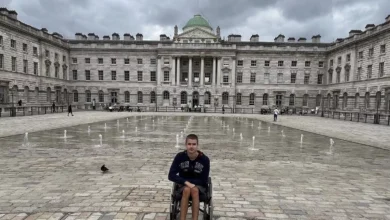
The text was originally written by Sara Shamloo Ekblad, with photography by Erik Tillander. The image accompanying the original article depicts Mari Siilsalu.
Related posts: