Remembering Knut Flaaum: A Pioneer of the Independent Living Movement in Norway and Europe

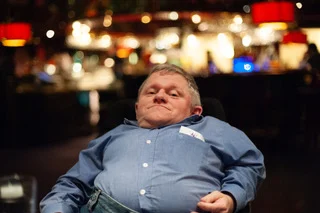
The global disability rights community is mourning the loss of Knut Flaaum, a visionary activist, dedicated colleague, and one of the founding pillars of the Independent Living movement in Norway and across Europe. Flaaum, whose tireless advocacy reshaped policies and societal perceptions regarding personal assistance and human rights for individuals with disabilities, passed away on August 24, 2026. His death marks the passing of another foundational leader from the generation that fundamentally transformed how society views disability, shifting the paradigm from institutional care and paternalistic welfare to self-determination, autonomy, and civil rights.
As a co-founder of ULOBA (Andelslag for Uavhengig Livprising i Norge) alongside pioneering figures such as Vibeke Marøy Melstrøm, Flaaum played an instrumental role in establishing user-controlled personal assistance (BPA) as a cornerstone of modern Norwegian social policy. His influence, however, extended far beyond Scandinavia. Through his extensive involvement with the European Network on Independent Living (ENIL), the ENIL Foundation, and Bente Skangård’s Independent Living Fund, Flaaum helped architect a transnational network of solidarity, advocacy, and policy reform that continues to empower disabled people globally.
The Main Facts of a Lifelong Struggle for Autonomy
Knut Flaaum’s passing represents a profound moment of reflection for the disability rights movement. Throughout his decades-long career, Flaaum operated on the fundamental premise that disabled people are the ultimate experts on their own lives. This philosophy underpinned his work with ULOBA, an organization that revolutionized the provision of personal assistance by ensuring that disabled individuals act as employers and directors of their own care, rather than passive recipients of municipal services.
The announcement of his death was met with deep sorrow across international advocacy networks. Jamie Bolling, a prominent leader within the Independent Living movement and a long-time colleague of Flaaum at ENIL, issued a poignant tribute reflecting both the magnitude of the loss and the enduring legacy Flaaum leaves behind. Bolling highlighted Flaaum’s trademark resilience, noting that even amidst complex political battles, he approached advocacy with a characteristic smile and a ready chuckle, serving as an invaluable mentor and institutional memory for younger activists.
A Historical Chronology of the Independent Living Movement in Norway
To fully understand the impact of Knut Flaaum’s life’s work, it is necessary to examine the historical trajectory of the Independent Living movement in Norway and Europe during the late 20th and early 21st centuries.
The movement found its ideological roots in the United States during the late 1960s and 1970s, spearheaded by activists such as Ed Roberts at the University of California, Berkeley. These concepts crossed the Atlantic in the 1980s, striking a profound chord among disabled activists in Scandinavia who remained constrained by traditional, highly paternalistic welfare state models that often relegated disabled people to segregated institutions or dependent domestic arrangements.
In 1991, Knut Flaaum, alongside Vibeke Marøy Melstrøm and a dedicated collective of fellow activists, founded ULOBA. This milestone moment sought to operationalize the Independent Living philosophy within the Norwegian context. ULOBA’s establishment challenged the prevailing bureaucratic structures by demonstrating that user-managed personal assistance was not only a more liberating model for the individual, but also a more economically sustainable approach that fostered active societal participation and employment.
Throughout the 1990s and 2000s, Flaaum expanded his scope to the European arena. The formation of ENIL provided a platform to harmonize disability advocacy across borders, challenging the policies of the European Union and the Council of Europe. Flaaum was a regular participant in pan-European strategy sessions, legislative hearings, and grassroots mobilizations, consistently pushing for the recognition of personal assistance as a fundamental human right rather than a discretionary social benefit.
Supporting Data: The Evolution of Personal Assistance and Disability Rights
The structural impact of Flaaum’s work can be measured through the evolution of policy frameworks in Norway and the broader European landscape. Prior to the establishment of organizations like ULOBA, the vast majority of individuals with extensive support needs in Norway relied heavily on institutional placement or fragmented, professionally controlled home-nursing services that offered little to no flexibility regarding daily routines, employment, or social engagement.
By the early 2000s, advocacy efforts spearheaded by Flaaum and his contemporaries contributed significantly to the formal recognition of user-controlled personal assistance within Norwegian legislation. In 2015, the Norwegian Parliament enacted statutory rights to BPA, a legislative victory that, while heavily debated regarding its implementation and consistency across municipalities, marked a paradigm shift in how the state conceptualized support services.
Data from social research institutes indicate that the widespread adoption of personal assistance models directly correlates with increased rates of higher education completion, labor market participation, and independent household formation among disabled individuals. Flaaum’s insistence on the principle of "nothing about us without us" ensured that these statistical gains were driven by the lived experiences and direct demands of the community itself.
Official Responses and Tributes from the International Community
In the wake of Flaaum’s passing, tributes poured in from human rights organizations, municipal leaders, and civil rights advocates across Europe.
Jamie Bolling’s reflections encapsulated the dual emotional landscape of the movement following the loss of its senior architects. Bolling noted the anxieties that naturally arise as the foundational generation of Independent Living pioneers passes away, observing that each loss triggers a momentary fear for the future continuity of institutional knowledge and activist fervor. However, Bolling immediately tempered this concern with an observation of renewal, pointing to the steady influx of new, younger activists who continue to inherit, adapt, and carry forward the Independent Living spirit.
Colleagues at ENIL emphasized Flaaum’s instrumental role in maintaining the ideological purity of the movement. In an era where social welfare systems face continuous fiscal pressures and tendencies toward re-institutionalization under the guise of cost-efficiency, Flaaum consistently reminded policymakers that true independence cannot be commodified or standardized into rigid bureaucratic boxes. His work with the ENIL Foundation and Bente Skangård’s Independent Living Fund further ensured that grassroots initiatives had access to the financial and structural resources necessary to challenge systemic inequities.
Broader Impact and Implications for the Future of Independent Living
The passing of Knut Flaaum arrives at a critical juncture for the international disability rights movement. As the original architects of the Independent Living philosophy conclude their life’s work, the movement faces complex contemporary challenges that require the same strategic clarity and uncompromising dedication that Flaaum embodied.
Chief among these challenges is the persistent threat of systemic rollbacks in social welfare budgets across Europe. In many jurisdictions, economic austerity measures have threatened to restrict access to personal assistance hours, impose rigid bureaucratic caps, or force individuals back into congregate care settings. Furthermore, the modern landscape must contend with intersectional challenges, ensuring that Independent Living is accessible to disabled individuals across diverse socioeconomic, racial, and geographic backgrounds.
Analysts of social policy note that the legacy of leaders like Flaaum provides a robust ideological blueprint for navigating these modern pressures. By anchoring the demand for personal assistance firmly in the framework of the United Nations Convention on the Rights of Persons with Disabilities (CRPD)—specifically Article 19 regarding the right to live independently and be included in the community—contemporary advocates possess powerful legal and moral instruments to defend hard-won gains.
Moreover, Flaaum’s emphasis on international solidarity highlights the necessity of cross-border cooperation. The challenges faced by disabled individuals in Norway mirror those experienced across the European Union and beyond, making transnational networks like ENIL indispensable for sharing best practices, coordinating legal challenges, and maintaining political pressure on national governments.
Conclusion: Preserving a Living Legacy
As the international community bids farewell to Knut Flaaum, the focus inevitably turns to how best to honor his memory and sustain his life’s mission. Tributes from his peers have stressed that remembering Flaaum transcends formal condolences; it requires an active, ongoing commitment to the principles of self-determination, dignity, and human rights.
As Jamie Bolling aptly suggested in her farewell, keeping Knut alive within the movement involves continually speaking his name, acknowledging his profound contributions, and embodying the uncompromising spirit of the struggle for Independent Living. Flaaum’s journey—from a local activist in Norway to a respected pillar of European human rights advocacy—demonstrates the transformative power of collective action guided by vision and integrity.
May Knut Flaaum rest in peace and power, secure in the knowledge that the path he helped forge remains illuminated by a new generation ready to carry the torch forward.
Related posts: