The definitive guide to accessing free all-terrain track chairs in state and national parks across the United States.

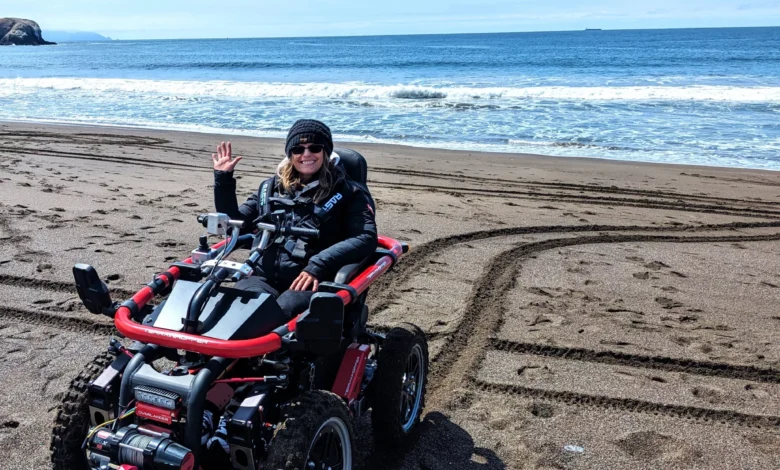
The outdoors has long been considered a shared American treasure, yet for millions of individuals with mobility limitations, the rugged beauty of forests, dunes, and mountain trails remained largely inaccessible. In recent years, a quiet revolution in park management has begun to bridge this divide. Through the widespread adoption of all-terrain track chairs—specialized, battery-powered vehicles equipped with continuous treads instead of wheels—state and national park systems are enabling visitors with limited mobility to traverse terrain that was previously off-limits. This shift marks a significant departure from traditional accessibility standards, which largely focused on paved paths and ADA-compliant boardwalks.
A Chronology of Accessible Exploration
The movement toward inclusive off-road recreation traces its roots back to 2016, when Colorado’s Staunton State Park launched what is widely considered the pioneer program for public-use track chairs. The success of the Staunton model provided a proof-of-concept that demonstrated both the safety and the high demand for such equipment. Following Colorado’s initiative, state departments of natural resources across the Midwest and South began evaluating similar programs.
By 2020, the push for "All-Terrain Georgia"—a collaborative effort between the state and the Aimee Copeland Foundation—showcased how public-private partnerships could scale these efforts. This period saw a rapid expansion, moving from isolated pilot programs to systemic state-wide networks. By 2026, the momentum reached a new peak, exemplified by Indiana’s ambitious commitment to deploy 45 electric track chairs across its entire state park system, a project bolstered by a significant endowment grant.
Regional Breakdown and Program Logistics
The landscape of accessibility is currently fragmented, with policies varying significantly by jurisdiction. Prospective users must navigate a complex web of reservation systems, weight restrictions, and equipment types.
Colorado and the Mountain West
Staunton State Park remains the gold standard for high-altitude accessibility. Operating from June through October, the park offers three specific trails—Davis Ponds, Mason Creek, and Staunton Ranch—designed for track chair use. The program is notable for its inclusion of specialized transfer equipment, including sling lifts and slide boards, which are essential for users with specific physical requirements. In Montana, the approach is more localized; Lone Pine and Lake Elmo state parks provide access, though they mandate that users be accompanied by a non-disabled companion, a common requirement across several states to ensure user safety in remote environments.
The Midwest and Great Lakes Corridor
The Midwest currently leads the nation in the density of available programs. Minnesota, for example, offers access to track chairs across 13 state parks. Their model emphasizes simplicity, requiring only a signed waiver rather than extensive documentation. Similarly, Missouri operates a robust network across six locations, maintaining a policy that allows access to any individual with a mobility need, provided they follow age-related safety guidelines. Michigan’s program is perhaps the most versatile, with equipment capable of handling snow and up to eight inches of water, effectively extending the accessibility season into the winter months.
The Eastern and Southern Networks
Connecticut and Virginia have integrated all-terrain access into their broader state forest management plans. Connecticut’s system is highly structured, featuring a three-hour reservation cap and strict safety protocols, including the mandatory use of four-point harnesses. Georgia’s "All-Terrain Georgia" program stands out for its comprehensive nature, offering training sessions and coordinating with local foundations to ensure that the equipment is utilized not only for leisure but for specialized activities like adaptive hunting and fishing.
National Park Service Initiatives
Unlike state programs, the National Park Service (NPS) does not operate a centralized, nationwide track chair mandate. Accessibility in national parks is currently handled at the individual unit level. While iconic locations like Rocky Mountain National Park and Redwoods National and State Parks have invested in track chairs, others focus on providing manual beach wheelchairs. The lack of a unified NPS portal means that visitors must cross-reference the specific park’s accessibility website before planning their logistics.
Data-Driven Accessibility: Implications and Challenges
The widespread rollout of these chairs is not merely a service improvement; it is an economic and social shift. Industry data suggests that the "disability travel market" is a multi-billion dollar segment, yet it has been historically underserved in outdoor recreation. By removing the barrier of entry—specifically the high cost of purchasing specialized all-terrain gear, which can range from $10,000 to $20,000—park agencies are democratizing access to public lands.
However, the expansion of these programs faces three primary challenges:
- Maintenance and Durability: Track chairs are complex electromechanical devices that require regular servicing. As parks scale their fleets, the burden of maintenance costs and the need for specialized technicians are becoming significant line items in department budgets.
- Transportation Logistics: In states like Wisconsin, the nonprofit Access Ability Wisconsin has pioneered a "tow-and-go" model, where users can check out a track chair on a trailer. This solves the "last mile" problem, but it requires the user to own or rent a vehicle capable of towing significant weight, potentially excluding some participants.
- Training and Safety: Because track chairs are not traditional wheelchairs, they require a learning curve. Programs that mandate "Buddy" systems or virtual training are finding that, while these requirements increase the administrative burden, they significantly reduce the rate of equipment misuse and accidents.
Institutional Responses and Future Outlook
Advocacy groups and government agencies emphasize that these programs are "living" entities. Because the equipment is subject to intense use in harsh environments, availability fluctuates. The recent surge in funding, particularly through private grants and state-level accessibility initiatives, suggests that the next decade will see a transition from "special access" to "standard access."
"The goal is to ensure that the wilderness is not a privilege, but a public right," notes a representative from the Aimee Copeland Foundation. This philosophy is reflected in the design of the latest generation of chairs, which are being built with modular components that allow for easier repairs in the field.
Essential Checklist for Prospective Users
For those planning an excursion, the following steps are recommended by accessibility coordinators:
- Check the Trackchair Finder: Before defaulting to a specific park, utilize the national crowdsourced Trackchair Finder tool to see if a more convenient location has recently added equipment.
- Verify Transfer Requirements: Always confirm if the park provides lift assistance or if you must bring your own care provider. Do not assume that staff are permitted to assist with physical transfers.
- Understand Battery Limitations: Most electric models have a range of 4 to 6 hours. When planning a route, factor in the terrain—uphill travel and deep mud will drain batteries significantly faster than flat, dry surfaces.
- Review Waiver Requirements: Many states, including Connecticut and South Dakota, require specific waivers that must be processed or signed on-site. Ensure you have the necessary identification and any required "Buddy" documentation ready upon arrival.
- Seasonality and Weather: Many programs are seasonal, often closing during winter or periods of extreme mud to protect the trails and the equipment. Always call the park office 48 hours in advance to confirm that the equipment is charged and the trails are open.
As technology continues to advance, the next phase of this movement will likely involve the integration of more durable, longer-range batteries and, potentially, the implementation of a centralized, multi-state reservation system. For now, the patchwork of state-led initiatives serves as a functional, if decentralized, bridge to the outdoors. By treating accessibility as a fundamental component of park infrastructure rather than an afterthought, state and federal agencies are finally ensuring that the American wilderness is open to all who wish to explore it.
Related posts: