States Prepare for Major Medicaid Overhaul as 2027 Work Requirement Deadlines Approach

The 2025 reconciliation law has set in motion a transformative shift in the administration of the Medicaid program, mandating that 44 states implement work requirements for specific enrollee groups beginning January 1, 2027. This federal mandate targets adults within the Affordable Care Act (ACA) Medicaid expansion group as well as certain enrollees participating in 1115 waiver programs. Notably, the requirement extends to non-expansion states such as Georgia, Tennessee, and Wisconsin, signaling a broad national pivot toward "community engagement" as a condition of health coverage. As the deadline approaches, state agencies are grappling with the immense administrative burden of overhauling eligibility systems, while federal regulators at the Centers for Medicare and Medicaid Services (CMS) have issued an interim final rule to standardize the transition.
The Regulatory Framework and Implementation Timeline
On June 1, 2026, CMS released a long-anticipated interim final rule designed to provide a roadmap for states as they navigate the complexities of the 2025 reconciliation law. This rule serves as the primary guidance for implementing work requirements, emphasizing the necessity of clear communication and robust outreach to prevent the mass loss of coverage for eligible individuals. The timeline for implementation is notably aggressive, leaving states with a narrow window to update their digital infrastructure and train personnel.
According to the federal schedule, the first critical milestone occurs in the summer and fall of 2026. For states utilizing a one-month "lookback" period to verify compliance—a path chosen by 36 states according to a recent KFF survey—outreach notices must be dispatched by September 2026. However, states like Idaho and Indiana, which have opted for a more rigorous three-month lookback period at the time of application, are required to begin their notification process as early as July 2026. This "lookback" mechanism is a central component of the new law, requiring states to verify an individual’s work or community engagement hours for the months preceding their eligibility redetermination.
The implementation of these requirements is not merely a policy shift but a massive technological undertaking. States must reconfigure their eligibility and enrollment systems to track work hours, process exemptions, and interface with other state labor databases. Failure to synchronize these systems could lead to "procedural disenrollments," where individuals lose coverage not because they are ineligible, but because of administrative bottlenecks or failures in the notification process.
Lessons from the "Medicaid Unwinding"
As states prepare for 2027, they are looking toward the recent "Medicaid unwinding" period for guidance. Following the end of the COVID-19 Public Health Emergency, states were required to conduct eligibility redeterminations for every person enrolled in the program, a process that saw millions of Americans lose coverage. KFF interviews with state officials, managed care organizations (MCOs), and advocacy groups have highlighted several successful strategies from that period that are now being adapted for the work requirement rollout.
One of the primary takeaways from the unwinding was the importance of "multi-modal" outreach. The 2025 reconciliation law codifies this by requiring states to send notices through at least two different channels—typically traditional mail and one electronic format, such as text messaging, email, or an online portal. During the unwinding, states found that relying solely on mail was ineffective, as many low-income enrollees move frequently. The integration of text alerts and mobile-friendly portals proved essential in maintaining contact with transient populations.
Furthermore, the unwinding underscored the critical role of community partners. Primary care associations and community-based organizations often serve as more "trusted messengers" than state government agencies. By providing these partners with toolkits and real-time data, states were better able to reach enrollees who might otherwise ignore official government correspondence.
The Challenge of Targeted Communication and Exemptions
The new work requirements are not universal; they apply only to specific subsets of the Medicaid population, creating a significant communication challenge. The law includes several mandatory exemptions, including for individuals who are "medically frail," pregnant or postpartum, and parents or caretakers of children under the age of 14 or individuals with disabilities.
The CMS interim final rule requires states to send notices to all expansion adults and applicable waiver enrollees, regardless of whether the state initially believes they are exempt. This decision stems from the reality that state databases often lack real-time information regarding an individual’s health status or caregiving responsibilities. By notifying the entire expansion population, CMS aims to ensure that no one is caught off guard, but this approach risks creating widespread confusion.
States must now craft messages that explain the requirements to those who must meet them while simultaneously reassuring exempt individuals that their coverage is secure. This is particularly difficult for parents. While many parents are covered through mandatory pathways and are exempt, those with older children covered through expansion pathways may be subject to the requirements. Differentiating these groups in a clear, plain-language notice is an ongoing hurdle for state communications teams.
State-Specific Strategies and Innovation
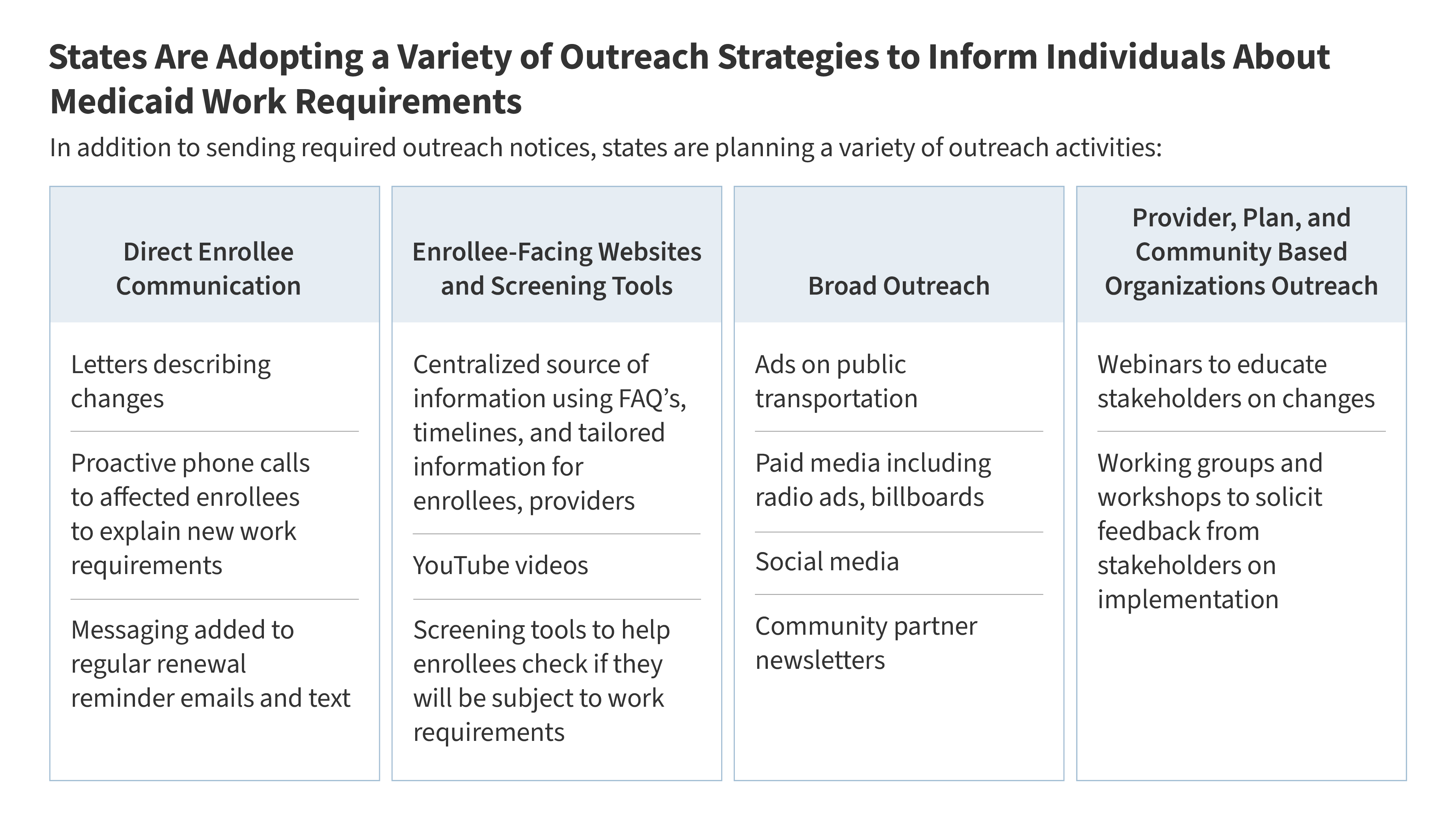
In response to these challenges, several states have already begun proactive outreach and the development of specialized tools.
- New Jersey and West Virginia: These states have launched "screening tools" on their Medicaid websites. These unofficial tools allow enrollees to answer a series of questions to determine if they are likely to be subject to the requirements or if they qualify for an exemption.
- Nebraska and Montana: Having already experimented with similar requirements, these states have shared draft notices with Medicaid Advisory Committees (MACs) to solicit feedback on clarity and reading level.
- Idaho and Indiana: As early adopters of the three-month lookback period, these states are serving as bellwethers for the rest of the country, testing the limits of their call centers and notice systems ahead of the broader national deadline.
Many states are also planning "road shows" and in-person community events for the fall of 2026. These events are designed to provide face-to-face assistance for enrollees who may find the new rules overwhelming. Additionally, states are leveraging their partnerships with MCOs. Under the new rule, MCOs are encouraged to help enrollees navigate "American Job Centers," which provide the training and employment services that count toward compliance hours.
Infrastructure and Resource Constraints
Despite the planning, states face significant resource constraints. State call centers, which are the primary point of contact for enrollees with questions, are already frequently overextended. The 2025 law and the CMS rule are expected to drive a surge in call volume that may exceed current staffing capacities. Furthermore, most call centers operate only during standard business hours, posing a barrier to individuals who work hourly jobs or have multiple shifts.
Training is another concern. Eligibility workers must be trained not only on the new rules but also on how to identify "medical frailty" and other nuanced exemptions. The CMS rule requires that notices be accessible to individuals with limited English proficiency (LEP) and those with disabilities, adding another layer of complexity to the document production process.
Broader Impact and Policy Implications
The shift toward Medicaid work requirements represents a fundamental change in the philosophy of the American healthcare safety net. Proponents argue that these requirements encourage economic independence and ensure that Medicaid resources are reserved for the most vulnerable. Critics, however, point to the "administrative churn" that often accompanies such policies. They argue that the complexity of reporting hours often leads to eligible people losing their health insurance, which can, in turn, lead to worsening health outcomes and higher long-term costs for the healthcare system.
From an economic perspective, the implementation of these requirements will necessitate a significant increase in state spending on administrative overhead. Millions of dollars are being diverted toward IT upgrades, postage, and staffing. Whether these costs will be offset by the reduction in Medicaid rolls remains a subject of intense debate among policy analysts.
As January 1, 2027, nears, the focus remains on the "outreach gap." The success of this transition will depend largely on whether states can effectively bridge the gap between complex federal regulations and the daily realities of the low-income Americans they serve. With the CMS interim final rule now in place, the clock is ticking for 44 states to prove that they can implement these changes without compromising the health security of their citizens.
Related posts: