Key insights and trends from KFF’s polling on Health Information and Trust

The landscape of public health communication in the United States is currently undergoing a profound transformation, characterized by a stark divide between the enduring trust in personal medical professionals and a deepening skepticism toward federal institutions. According to a series of comprehensive tracking polls conducted by KFF through early 2026, the American public is increasingly navigating health information through the lens of partisanship, even as they turn to emerging technologies like artificial intelligence to fill gaps in traditional care. While doctors and healthcare providers remain the most trusted figures across all demographic and political lines, trust in the Centers for Disease Control and Prevention (CDC), the Food and Drug Administration (FDA), and high-ranking government officials has become a casualty of political polarization and shifting administrative priorities.
The Foundation of Trust: Healthcare Providers vs. Federal Agencies
For the vast majority of Americans, the primary care physician remains the "gold standard" for reliable health information. KFF data indicates that a large majority of adults express at least a "fair amount" of trust in their own doctors. This trust transcends the deep partisan and demographic divides that define other areas of American life. Regardless of age, gender, race, or education, the individual healthcare provider is cited as the most reliable source of information. However, access to these providers is not universal; white adults and those with college degrees are more likely to express high levels of trust in their doctors, a trend that researchers suggest may reflect broader systemic issues regarding healthcare access and the quality of the patient-provider relationship in underserved communities.
In contrast, trust in federal health agencies has become increasingly fractured. As of early 2026, only about half of the public expresses trust in the CDC or the FDA. This represents a significant shift from the early days of the COVID-19 pandemic in 2020, when the CDC enjoyed high levels of bipartisan support. The decline began with a drop in Republican trust during the height of the pandemic and has more recently been followed by a decline in trust among Democrats. This latter shift coincides with the reelection of President Donald Trump and the confirmation of Robert F. Kennedy Jr. as the Secretary of Health and Human Services (HHS).
The Partisan Polarization of Public Health Leadership
The appointment of Robert F. Kennedy Jr. and the return of the Trump administration have fundamentally altered how the public perceives health leadership. Partisanship now serves as the primary predictor of trust for the nation’s top health officials. Approximately six in ten Republicans—and more than seven in ten of those identifying as MAGA (Make America Great Again) supporters—express trust in Secretary Kennedy and President Trump for reliable health information. Conversely, three in ten or fewer independents and Democrats share this sentiment.
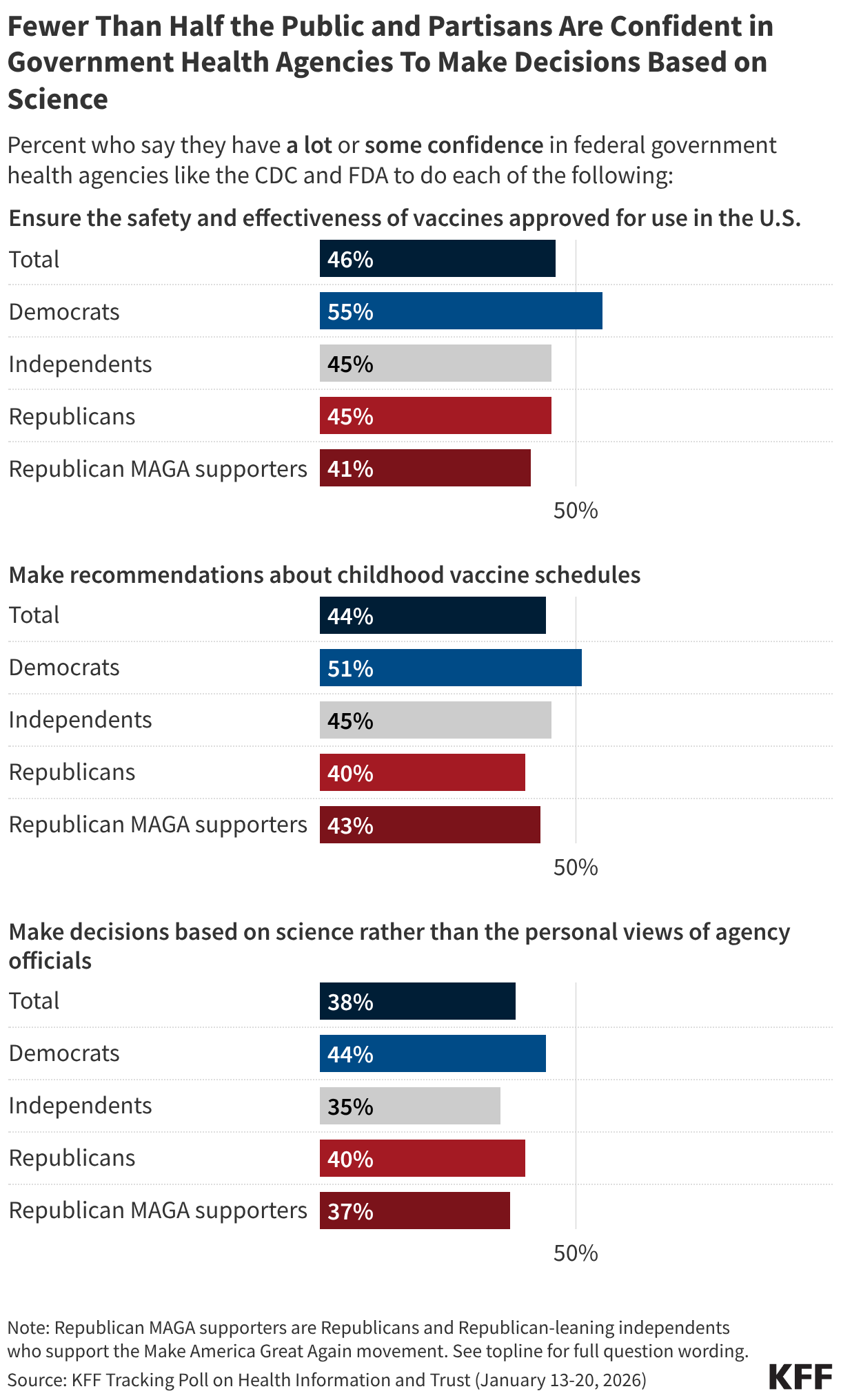
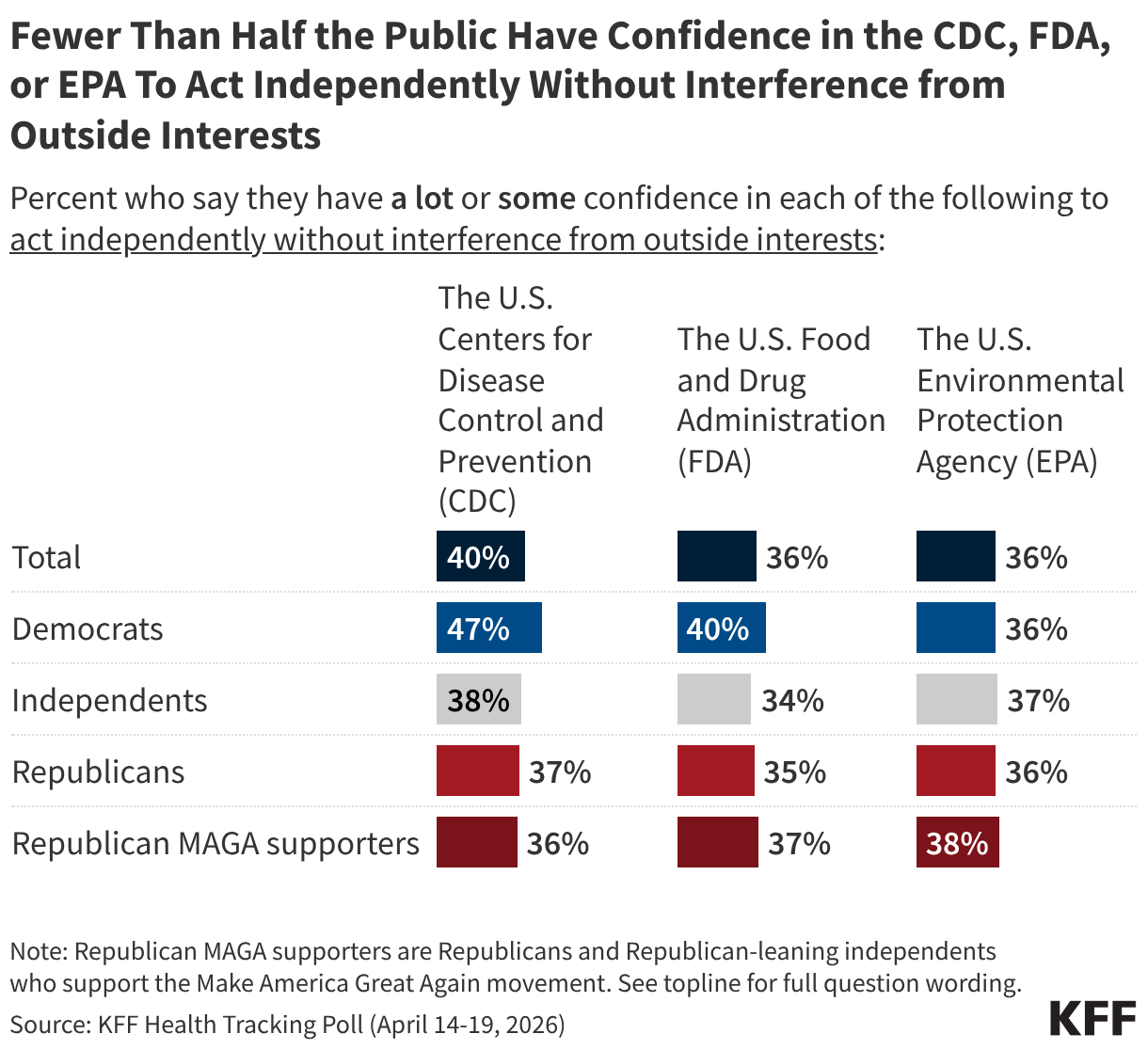
This polarization extends to the perceived independence of federal agencies. Fewer than half of the public expresses confidence that the CDC, FDA, or the Environmental Protection Agency (EPA) can act independently of outside interests or political interference. Democrats are slightly more likely to believe the CDC can maintain its independence, while Republicans and independents express higher levels of skepticism across the board. Furthermore, less than half of the public believes these agencies make decisions based primarily on science, a metric that highlights a significant crisis of legitimacy for the nation’s scientific infrastructure.
Chronology of Trust: From Pandemic Unity to Institutional Skepticism
The trajectory of public trust over the last six years reveals a clear pattern of institutional erosion:
- Early 2020: The CDC and local health departments enjoy broad, bipartisan trust as the public seeks guidance on the emerging COVID-19 virus.
- 2021–2023: Partisan divisions widen over vaccine mandates, masking, and school closures. Republican trust in federal agencies begins a steady decline.
- 2024–2025: Political campaigns increasingly focus on "medical freedom" and skepticism of federal health mandates. The "Make America Healthy Again" (MAHA) movement gains traction, blending traditional health concerns with a distrust of the pharmaceutical industry and federal oversight.
- January 2026: Significant changes to the childhood vaccine schedule are announced by HHS. KFF tracking polls show that while most parents still trust pediatricians, confidence in the CDC’s recommendations on the vaccine schedule is held by fewer than half of the population.
- Spring 2026: Trust in the CDC among Democrats falls significantly following the institutionalization of the MAHA movement’s priorities within the HHS, leaving the agency with a divided and shrinking base of support.
The "Malleable Middle" and the Misinformation Landscape
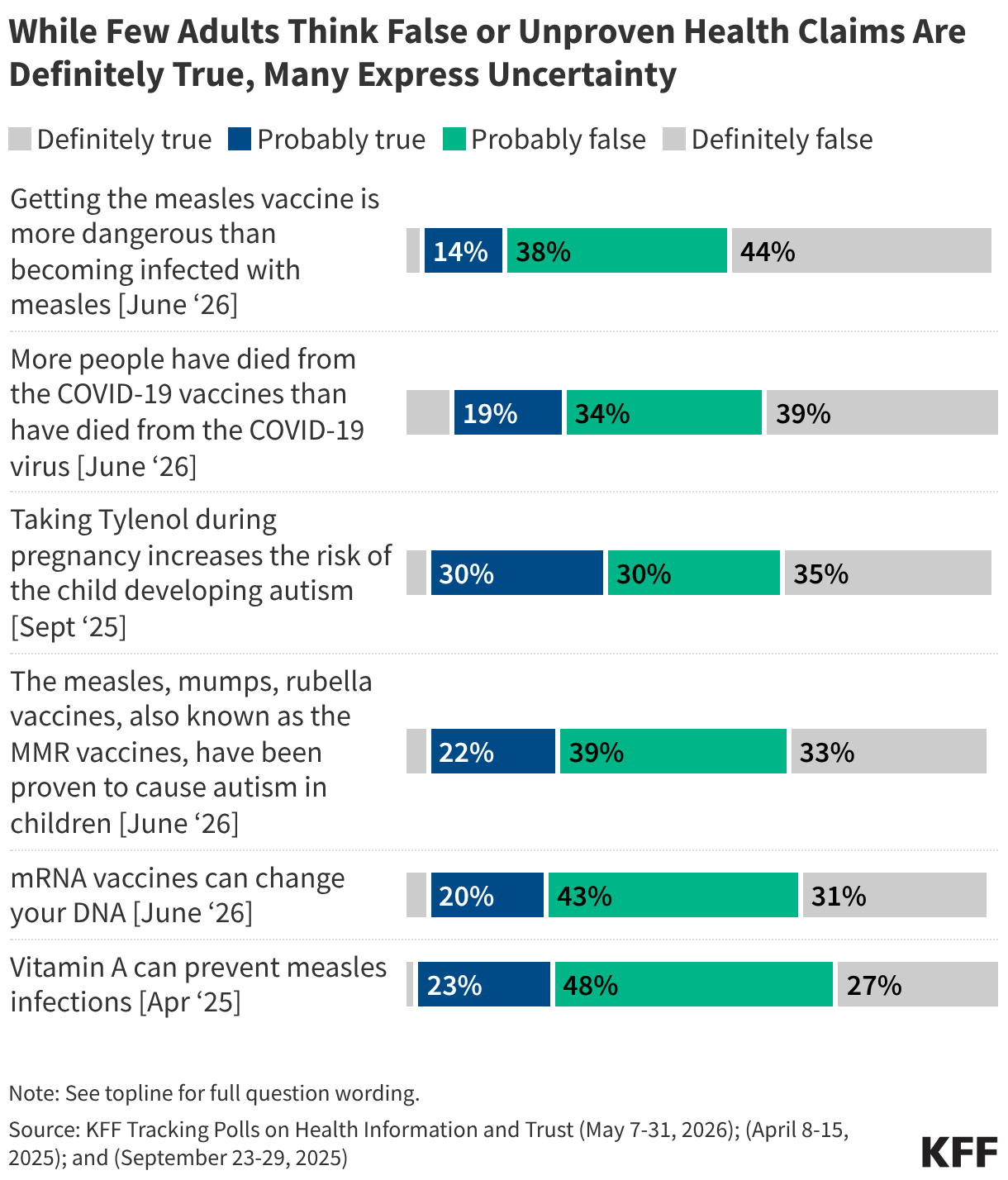
One of the most significant findings in the KFF research is the existence of a "malleable middle"—a large segment of the population that is neither fully convinced nor entirely skeptical of false health claims. While relatively few adults are "certain" that false claims are true, at least half of the public describes such claims as "probably true" or "probably false."
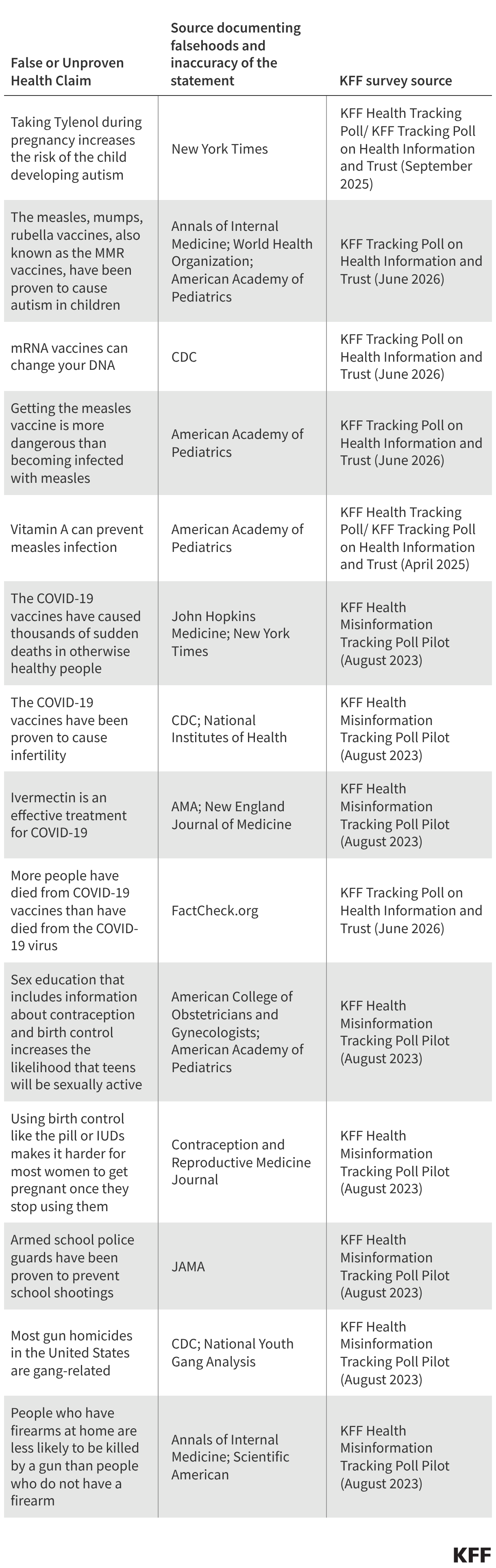
This uncertainty is particularly evident regarding several high-profile myths:
- Tylenol and Autism: The claim that taking Tylenol during pregnancy increases the risk of autism became the most widely heard false health claim after being cited by President Trump in a 2025 press conference.
- Vaccine Myths: Claims regarding the safety of the MMR vaccine and the purported link between vaccines and sudden infant death syndrome (SIDS) continue to circulate.
- mRNA Technology: While few adults explicitly label mRNA technology as "unsafe," about half of the public admits they "don’t know enough to say," leaving them vulnerable to future misinformation.
Susceptibility to these myths is higher among Republicans, adults without a college degree, and those who lack a regular, trusted healthcare provider. Black and Hispanic adults also show higher levels of uncertainty regarding certain vaccine-related claims, often reflecting historical distrust of the medical establishment or targeted misinformation campaigns.
Digital Frontiers: Social Media and the Rise of AI
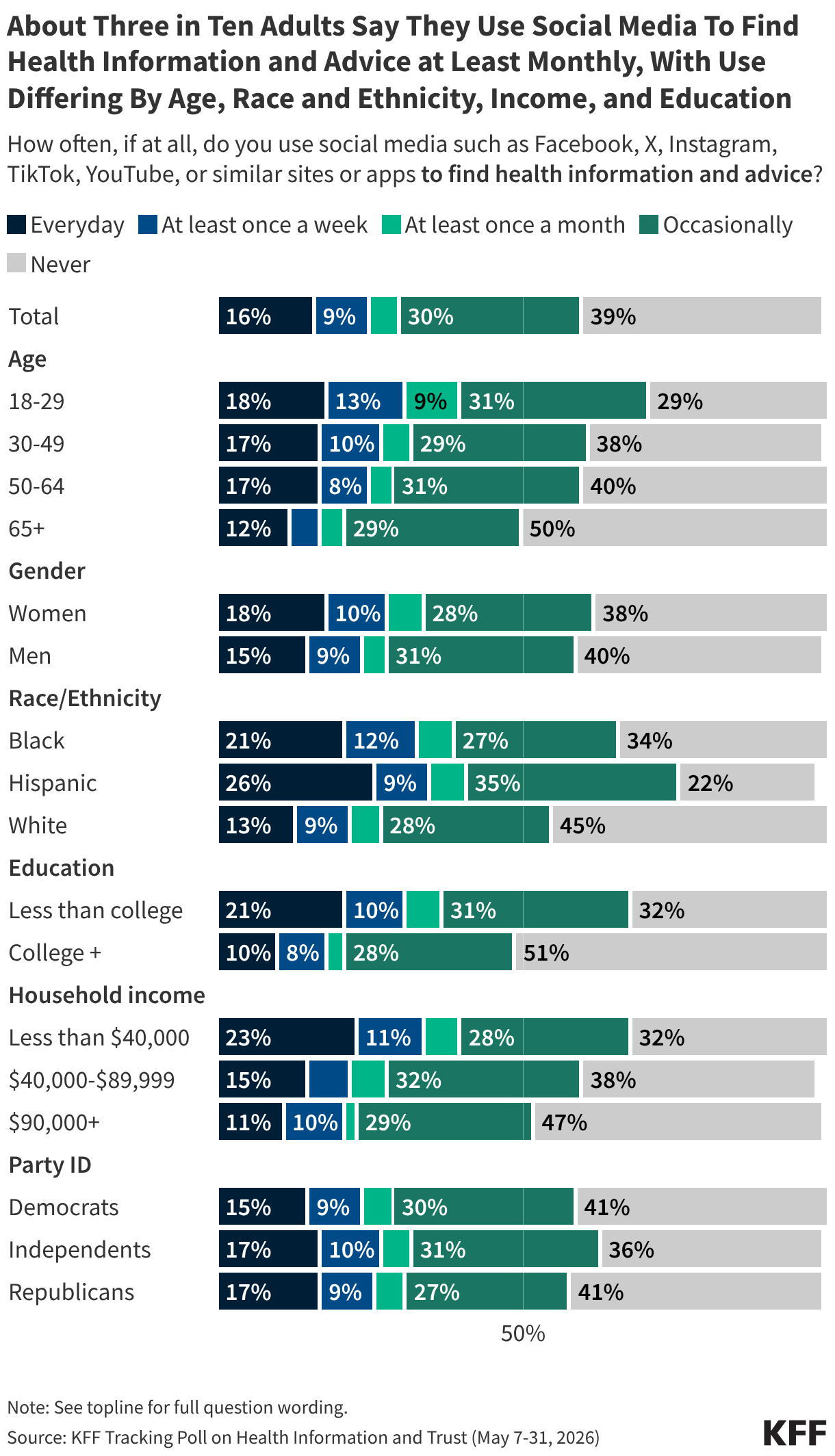
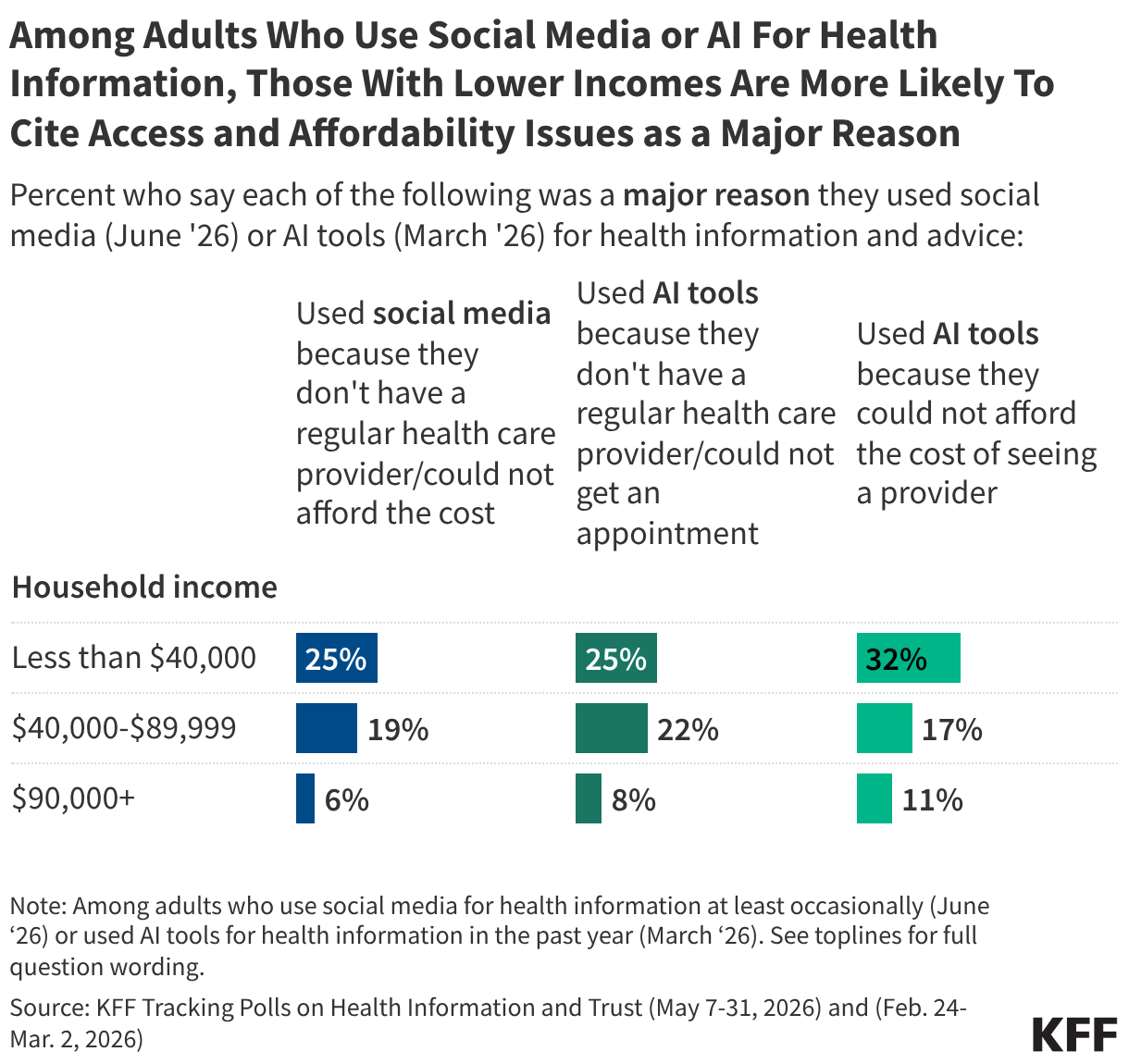
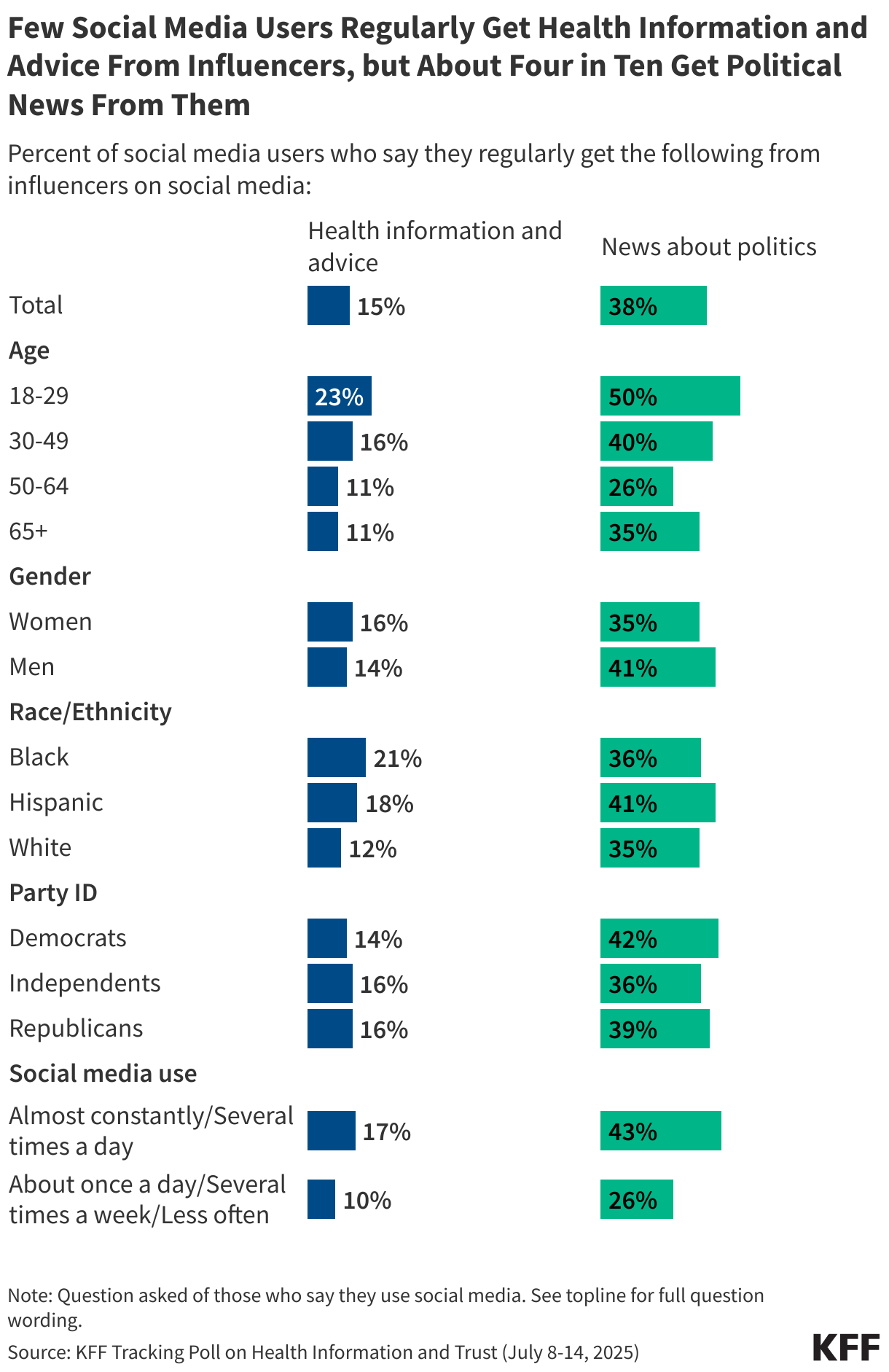
As trust in traditional institutions wanes and access to healthcare remains a challenge for many, Americans are increasingly turning to digital platforms for health advice. About 30% of adults use social media for health information at least monthly, with even higher rates among younger, Black, Hispanic, and lower-income adults.
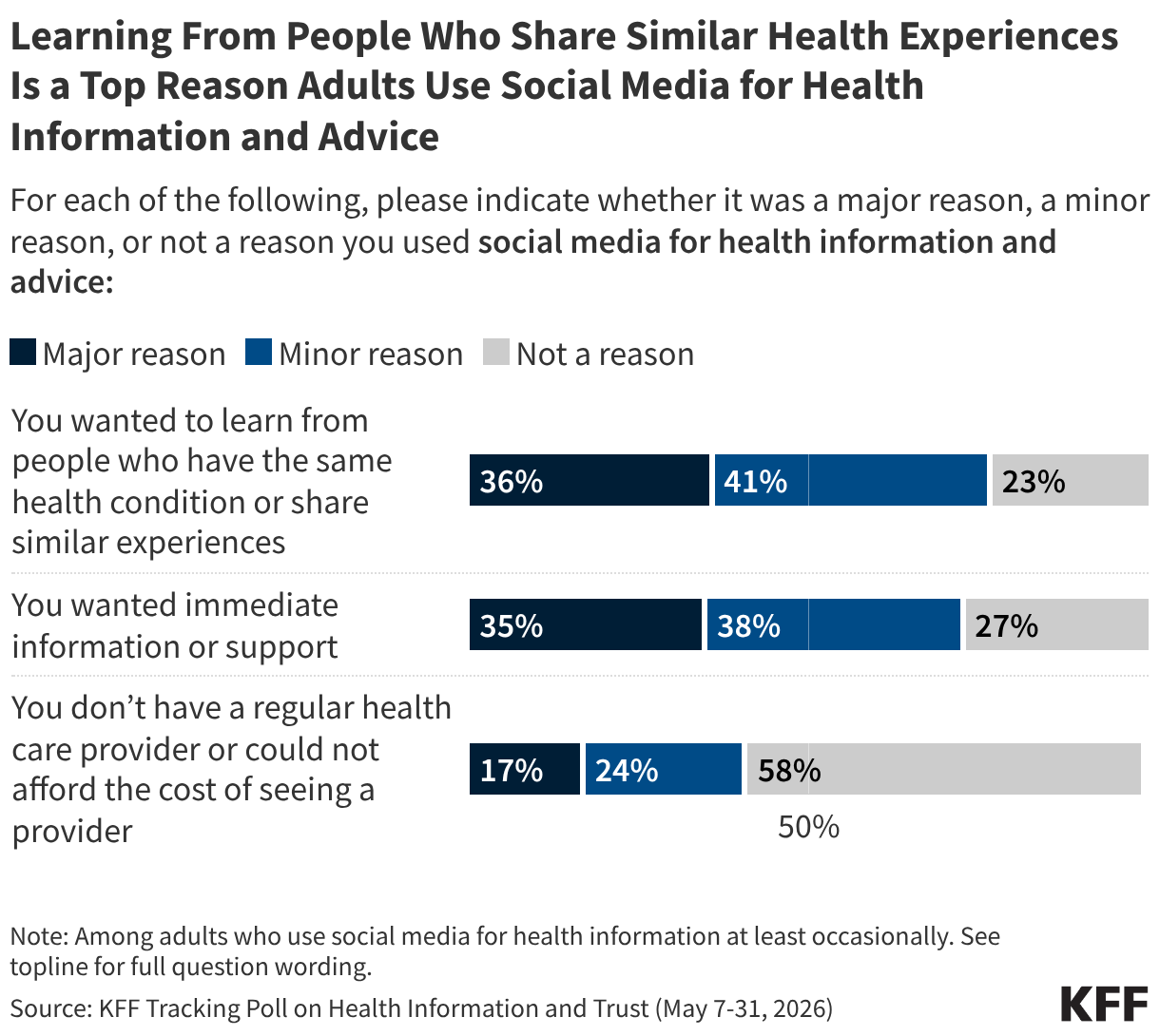
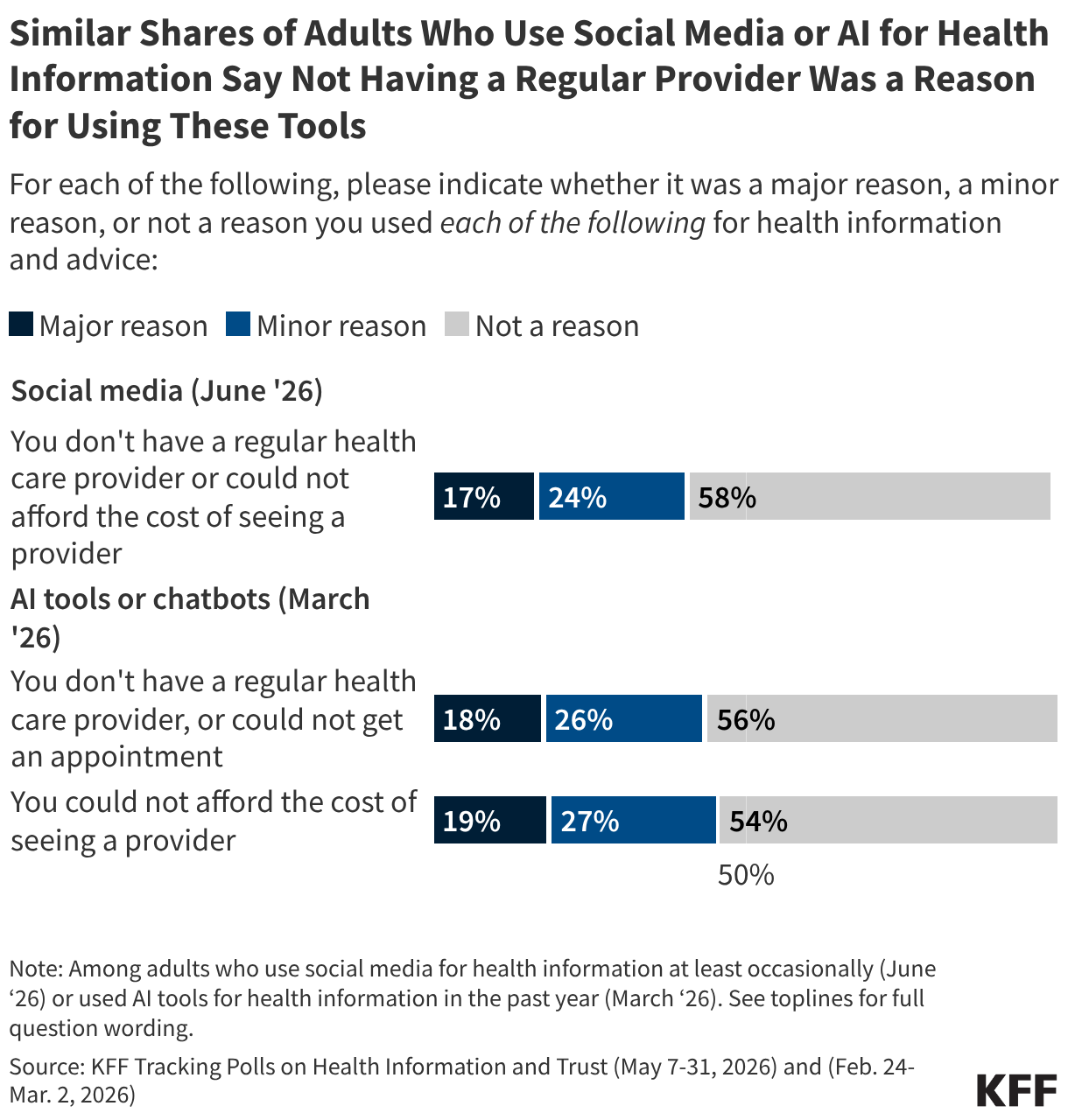
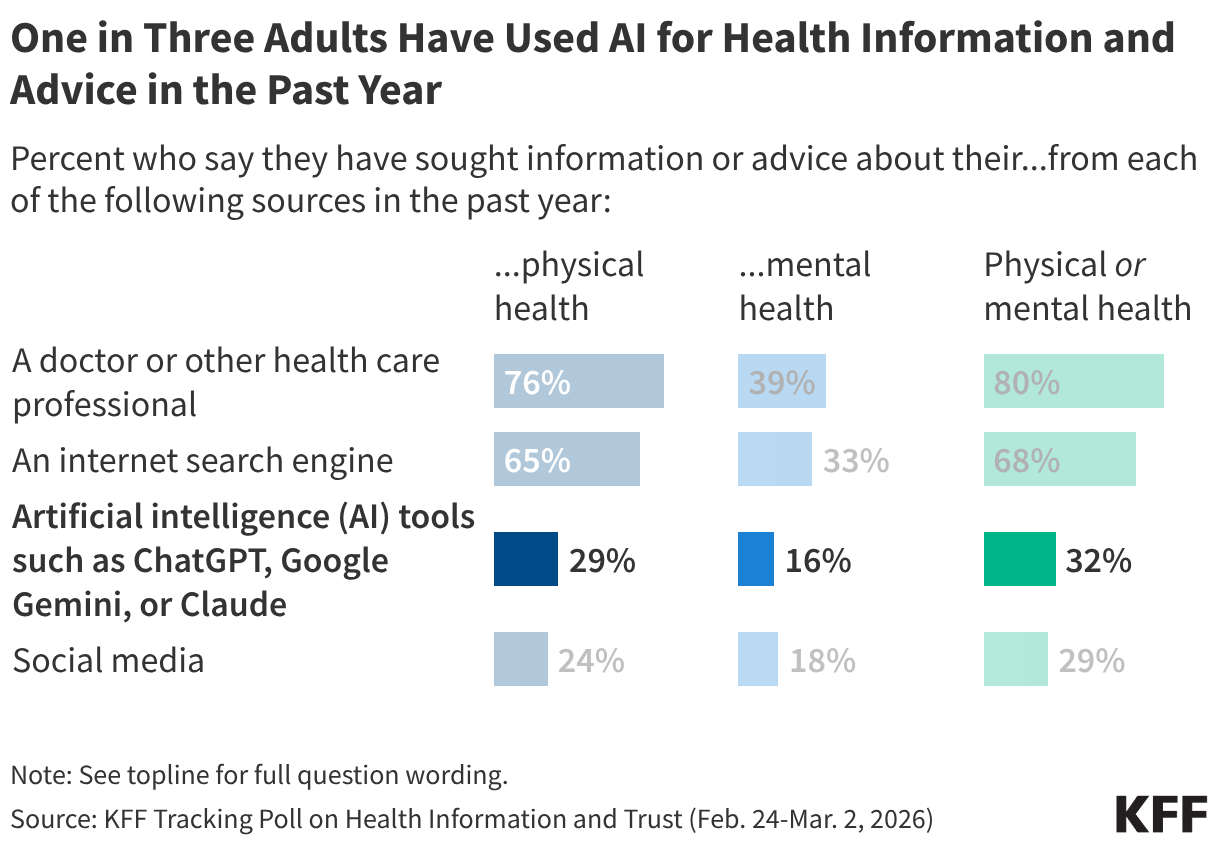
The motivations for using social media and AI chatbots (used by 32% of the public in the last year) are often rooted in systemic barriers. One in six social media users and one in five AI users cite difficulty accessing or affording traditional healthcare as a major reason for turning to these tools. Others seek immediate support or the comfort of learning from people with similar health experiences.
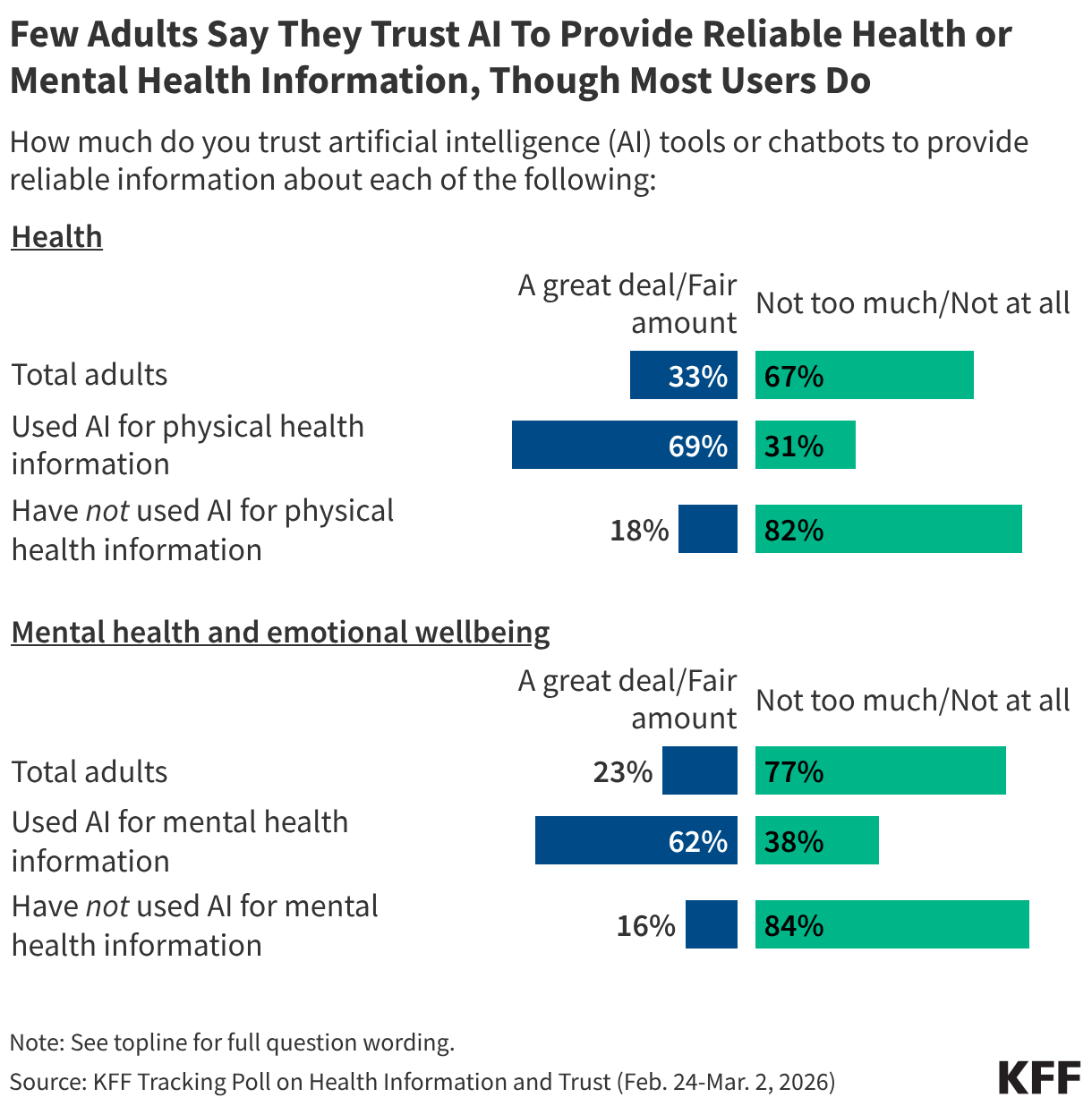
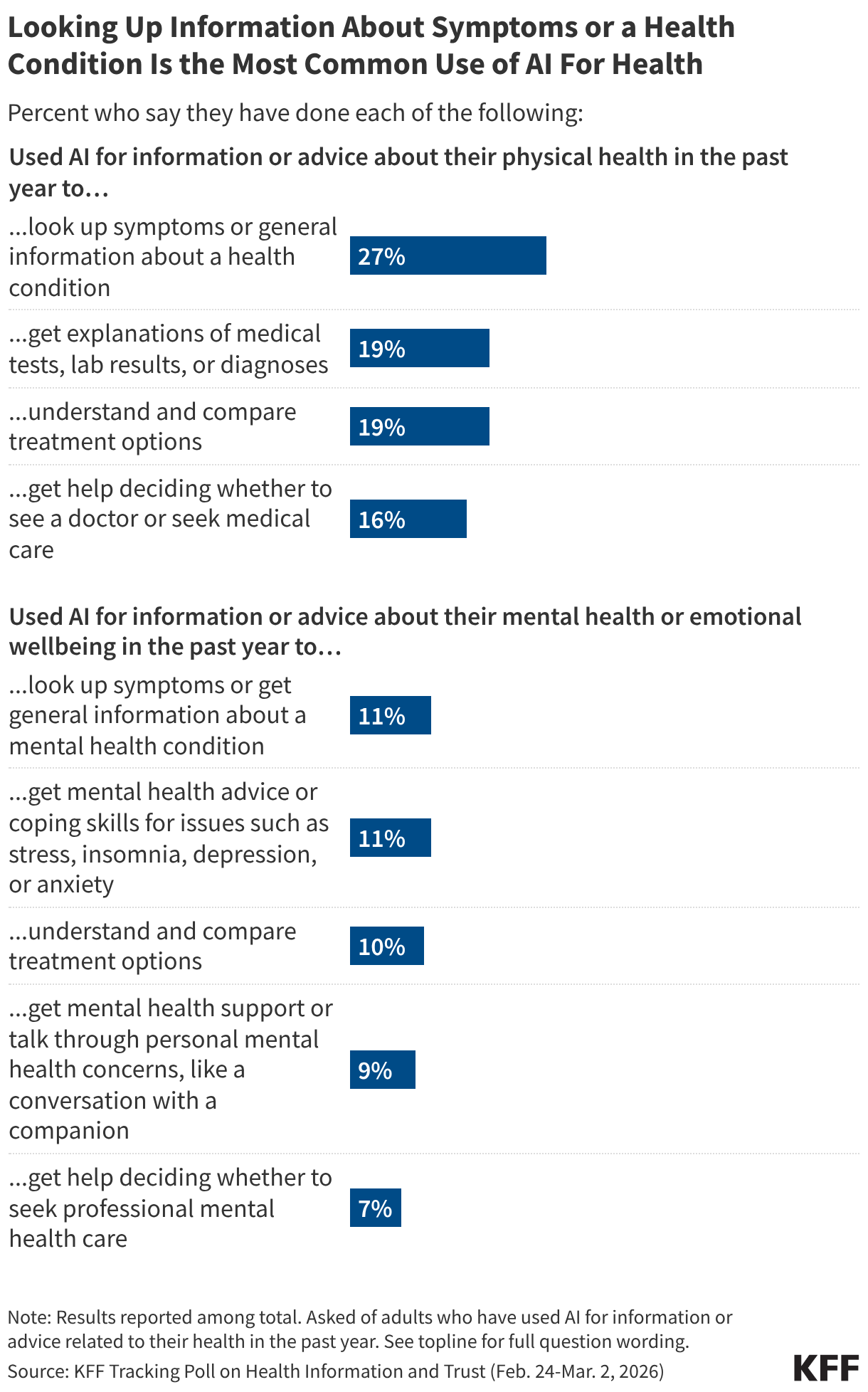
While trust in the content found on social media remains low overall, AI chatbots are gaining a foothold. Most people who have used AI for health information—primarily to look up symptoms or general condition info—report that they trust the results. This presents a new challenge for public health officials, as AI-generated results can sometimes lack the nuance or accuracy of professional medical advice.
Parental Perspectives and Vaccine Safety
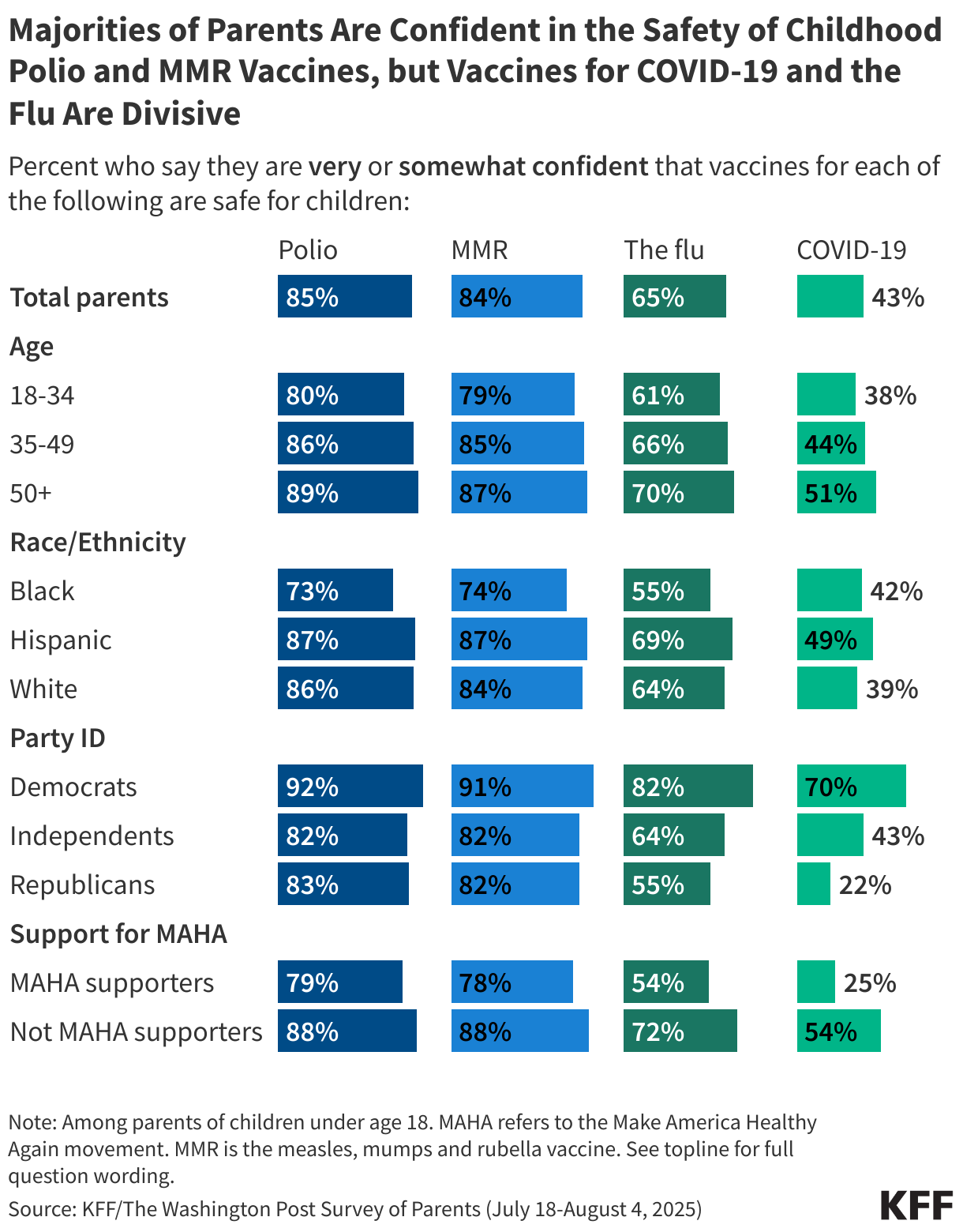
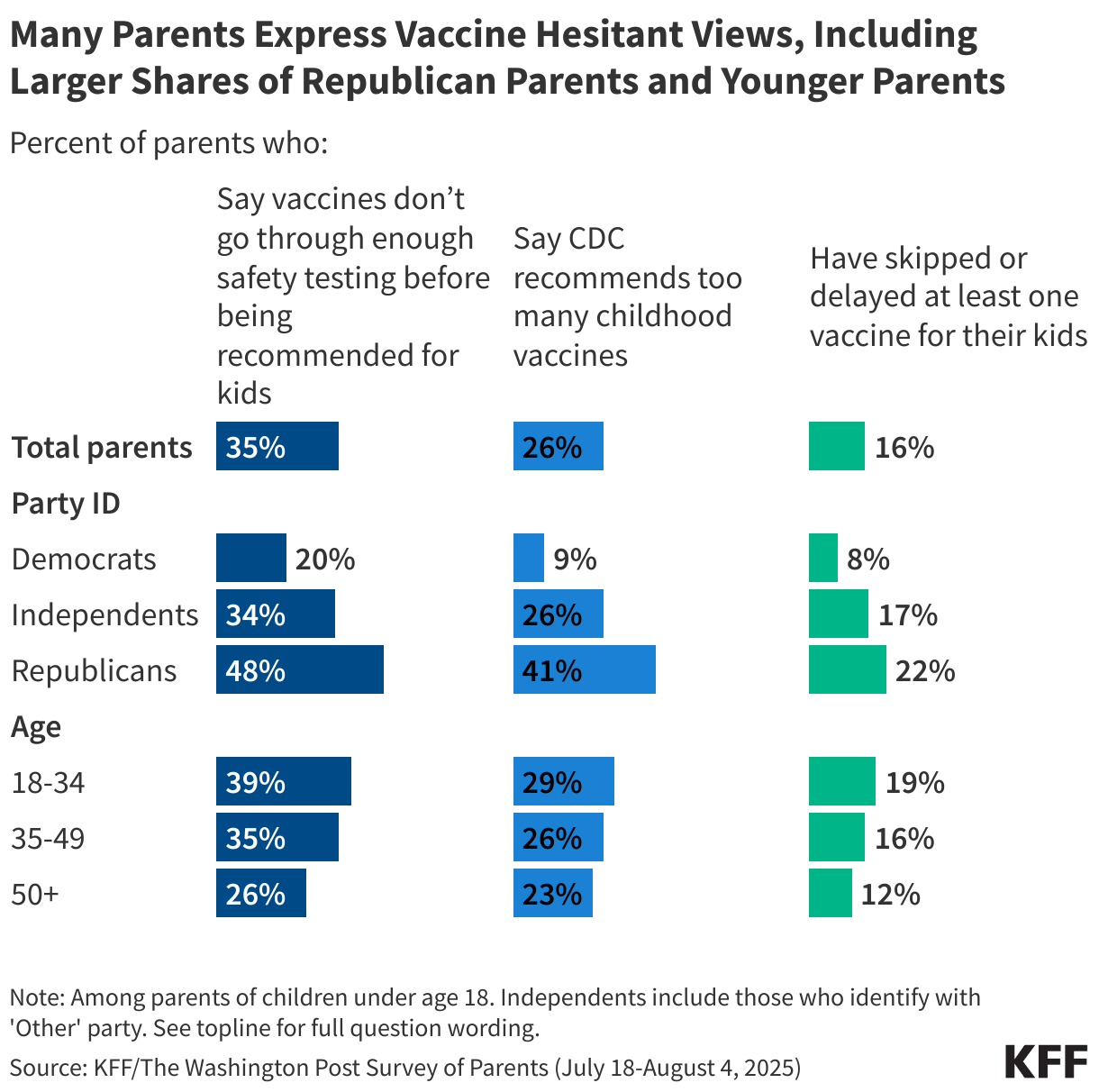
The stakes of declining trust are most visible in the realm of childhood vaccinations. While majorities of parents still view routine vaccines like polio and MMR as safe, views on the flu and COVID-19 vaccines are deeply polarized.
KFF’s partnership with The Washington Post in 2025 revealed that about one in six parents have skipped or delayed a recommended childhood vaccine. This behavior is more common among younger parents and those identifying as Republicans. Notably, parents who support the MAHA movement are twice as likely as their peers to believe false claims about vaccines, though a majority of this group still maintains trust in their child’s individual pediatrician.
Broader Impact and Implications for Public Health
The findings from KFF suggest that the United States is entering an era where public health is no longer viewed as a neutral, science-driven endeavor but as a partisan issue. This shift has several critical implications:
- Communication Strategies: Public health messaging can no longer rely solely on federal branding. To reach the "malleable middle," information must be funneled through local doctors and community leaders who retain high levels of trust.
- The Access-Information Gap: As long as healthcare remains unaffordable or inaccessible for large segments of the population, social media and AI will continue to fill the void, often bringing misinformation with them.
- Institutional Reform: The lack of confidence in the independence of the FDA and CDC suggests that these agencies may need to implement more transparent decision-making processes to regain public trust, particularly among those who suspect political or corporate interference.
- Vulnerability to Outbreaks: With a significant minority of parents skeptical of vaccine safety and the federal vaccine schedule, the risk of preventable disease outbreaks remains a persistent threat to national health security.
In conclusion, while the tools of health communication have evolved and the political leaders have changed, the fundamental driver of trust remains the personal connection between a patient and their provider. Bridging the gap between that individual trust and the necessary confidence in national health institutions remains the most significant challenge facing the American public health system in 2026.
Related posts: