Unlocking the Great Outdoors: A Nationwide Guide to Accessible All-Terrain Track Chair Programs

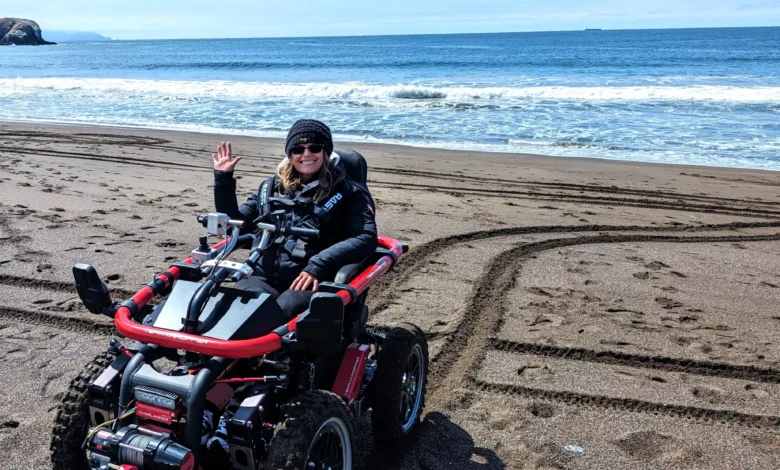
The traditional narrative of hiking has long been restricted to those with the physical mobility to navigate uneven terrain, steep inclines, and rugged wilderness trails. However, a quiet revolution in accessibility is reshaping the national landscape of outdoor recreation. Across the United States, state park systems, national parks, and dedicated nonprofits are increasingly deploying all-terrain track chairs—specialized, battery-powered vehicles designed to traverse mud, sand, snow, and gravel—at little to no cost to users. This shift marks a significant departure from previous decades, where individuals with mobility limitations were largely confined to paved, accessible boardwalks or visitor centers.
The Evolution of Accessible Recreation: A Chronology
The modern movement toward widespread track chair access began in earnest in 2016, when Colorado’s Staunton State Park launched what is widely considered the pioneer program of its kind in the state park system. By integrating specialized equipment directly into the park’s visitor services, Colorado Parks and Wildlife set a precedent for public-private partnerships. The success of the Staunton initiative demonstrated that there was a massive, underserved demographic eager to access backcountry trails.
Following this pilot, the momentum accelerated. By 2020, various states began evaluating the feasibility of permanent, site-specific programs. The COVID-19 pandemic served as a surprising catalyst; as public interest in outdoor recreation surged, so too did the demand for inclusive facilities. In 2026, the movement reached a new zenith with Indiana’s announcement of a statewide rollout, funded by a substantial Lilly Endowment grant, intended to equip every state park in the system with electric track chairs. This transition from "specialized pilot programs" to "standard park equipment" reflects a fundamental shift in how public lands are managed for universal accessibility.
Regional Breakdown: Current Availability and Protocols
The current infrastructure for these programs is decentralized, requiring users to navigate a variety of booking systems. Below is a comprehensive overview of existing state-level initiatives:
The Midwest Lead
The Midwest currently maintains some of the most robust offerings. Minnesota leads with 13+ state parks featuring track chairs, requiring only a state park vehicle permit and a signed waiver. Michigan’s DNR has also integrated these chairs across multiple recreation areas, emphasizing the chairs’ ability to handle diverse conditions, including up to eight inches of water. Wisconsin offers a dual-path approach: on-site rentals at popular parks like Peninsula and Point Beach, alongside the nonprofit "Access Ability Wisconsin," which provides towable track chairs that allow users to transport the equipment to locations of their choosing.
The Eastern Corridor
Connecticut has institutionalized its program, offering access from June through October across seven locations. The program is strictly regulated, requiring users to provide identification and adhere to a 3-hour usage limit to ensure turnover. Virginia has also invested heavily in its infrastructure, utilizing funds from an accessibility license plate program to supply both tracked and pneumatic-tire chairs to multiple parks.
Southern and Central States
Georgia’s "All-Terrain Georgia" initiative, a partnership with the Aimee Copeland Foundation, represents one of the most sophisticated booking systems. It requires a 7-day approval process and mandates that a "Buddy"—a companion aged 18 or older—complete a virtual training session before the user can take the chair onto the trail. In Missouri, the state park system provides access at six locations, allowing reservations to be made just two days in advance. Meanwhile, Kansas operates a regionalized, first-come-first-served model, emphasizing the need for users to have the physical dexterity to operate a right-hand joystick.
Western Frontiers
In Colorado, the Staunton State Park program remains the gold standard, offering specialized support, including sling lifts and slide boards, to assist with transfers. Montana continues to operate at a smaller scale, with chairs at Lone Pine and Lake Elmo State Parks, where proof of disability and a non-disabled companion are required for operation.
Supporting Data and Technical Considerations
The adoption of these technologies is not merely a matter of policy but a response to evolving mechanical capabilities. Modern track chairs, such as those manufactured by Action Trackchair, are designed to provide independence. These units generally feature high-torque electric motors, allowing for speeds of up to 3 mph, and battery life cycles ranging from four to six hours.
However, data from these programs highlights critical limitations. For instance, most programs cap the duration of use to preserve battery integrity. Furthermore, transfer assistance remains a primary barrier. While some parks, like Staunton, provide lift equipment, many others explicitly state that staff are not permitted to assist with transfers, placing the burden of care on the user and their companions. This underscores the importance of the "Buddy" systems implemented in Georgia and Montana, which prioritize safety in remote environments.
The Role of the National Park Service
While the National Park Service (NPS) has not established a unified federal policy mandating track chair availability at every unit, the agency has increasingly empowered individual parks to seek external funding and partnerships. High-profile locations, including Redwoods National & State Parks and Rocky Mountain National Park, have successfully integrated track chairs into their visitor experience. For coastal parks like the Golden Gate National Recreation Area, the focus often shifts toward beach-capable wheelchairs, which utilize large, low-pressure tires rather than tank-style tracks to navigate sand.
Official Responses and Industry Implications
The surge in these programs has been met with broad support from disability advocacy groups, though experts point to a significant "information gap." Because there is no single, centralized national registry for these devices, potential users are often forced to cross-reference multiple state websites.
"The equipment exists, and the funding is increasingly available," says an anonymous representative for an outdoor accessibility consultancy. "The challenge now is not just hardware; it is logistics. We need a standardized, nationwide interface where a user can search by zip code and see a unified calendar for every available track chair in the country. Right now, it is a fragmented system that favors those with the time and administrative skill to navigate twelve different state databases."
Broader Impact: The Economic and Social Case
The expansion of these programs carries implications that extend beyond recreation. There is a clear economic argument for accessibility: by making wilderness areas accessible to individuals with mobility limitations, state park systems increase their visitor base and justify ongoing conservation funding. Furthermore, these programs facilitate social inclusion, allowing families and groups to recreate together on equal footing.
The move toward universal access also challenges the traditional definition of "wilderness." For decades, the Americans with Disabilities Act (ADA) primarily addressed built environments—buildings, ramps, and parking lots. By bringing track chairs into the forest, the public sector is effectively acknowledging that "access" includes the natural world.
Planning Your Visit: Essential Best Practices
For those planning to utilize these programs, the following steps are strongly recommended:
- Advance Verification: Never assume equipment is available upon arrival. Even in "first-come, first-served" systems, equipment may be undergoing maintenance.
- Verify Transfer Needs: Determine if the site provides mechanical lift assistance or if you must provide your own support person.
- Check Physical Requirements: As noted in the Kansas program, many chairs require specific physical capabilities, such as right-hand joystick control or specific weight capacity limits (typically capped at 300–350 lbs).
- Utilize Crowdsourced Tools: The "Trackchair Finder" remains the most reliable, living document for tracking new installations nationwide.
As of August 2026, the landscape of accessible outdoor recreation is more expansive than ever before. While the system remains a work in progress, the combination of state-funded initiatives, nonprofit partnerships, and improved battery technology is rapidly dismantling the barriers that have historically kept millions of Americans away from the nation’s most scenic trails. Through careful planning and the continued commitment of land managers, the backcountry is finally becoming a space for all.