La Dame aux Roulettes: Gisèle Caumont’s Journey from War-Torn France to Independent Living in Sweden

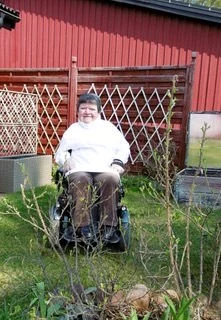
Gisèle Caumont, at the age of 87, has published her deeply personal autobiography, "La Dame aux Roulettes" (The Woman on Wheels), offering a compelling narrative of resilience, advocacy, and the transformative power of the Independent Living movement. This memoir, now available in French, traces Caumont’s life from her birth during World War II in France to her current residence in Sweden, where she has lived for the past two decades. The book is a testament to her unwavering spirit in navigating a world that has often viewed disability through a lens of segregation and discrimination, ultimately championing a human rights model that emphasizes full societal integration.
Caumont’s journey is marked by a profound personal evolution, moving from the limitations imposed by a medical model of disability to embracing a rights-based approach. Born with a disability, she recounts how, with the unwavering support of her parents and the solidarity of kindred spirits, she learned to navigate the complex landscape of medical perceptions and societal biases. Her story is not merely a personal account but a powerful illustration of the broader struggle for disability rights, highlighting how individuals can achieve full participation in society as speech therapists, artists, and musicians, despite facing systemic barriers.
From Post-War France to the Swedish Countryside: A Life Reimagined
The early chapters of "La Dame aux Roulettes" vividly depict the challenges faced by Caumont in post-war France. Her physical stature, though diminutive, became a catalyst for her resourcefulness. The memoir details her innovative approaches to overcoming physical inaccessibility, a recurring theme throughout her life. Her deep-seated desire for artistic expression and her profound connection to the natural world, particularly the Swedish landscape, led her to lead choirs by picturesque lakes, with majestic mountains as a backdrop. When faced with the lack of accessible facilities, such as restrooms, Caumont, with the assistance of her personal attendants, ingeniously constructed temporary solutions, embodying a spirit of proactive problem-solving.
Her hands, which some might have deemed incapable of playing instruments like the piano or organ, were not a barrier to her aspirations. Caumont’s narrative emphasizes the power of will and the discovery of pathways to achieve her artistic ambitions. This underscores a central message of her book: that perceived limitations can be transcended through determination and creative adaptation.
The book, whose title translates to "The Woman on Wheels," delves into Caumont’s life experiences and, crucially, her role in the burgeoning Independent Living movement that pioneered personal assistance services in Sweden. This innovative model of support has been instrumental in enabling Caumont to live a life of her choosing. Personal assistance, funded by the Swedish state, allows her to receive help with tasks she cannot perform independently, from the moment she wakes until she returns to bed each night. This vital support system has been crucial in her ability to find fulfillment and the strength to confront the challenges that arise.
A Courageous Leap: Emigration and the Fight for Autonomy
Caumont’s decision to emigrate from France to Sweden was an act of profound courage. She embarked on this journey alone, without immediate support, fully aware that upon arrival, she would need to secure the necessary resources for her daily survival. Her narrative is painted with a rich palette of emotions, encompassing warmth and gratitude for those who provided indispensable support, alongside a righteous anger directed at the French state for its perceived slowness in enacting legislation that would ensure full participation and self-determination for individuals with disabilities.
A close friend of Caumont, who also relies on personal assistance to live a full life as a person with a disability, shared their emotional response to the book. "I laughed and cried alongside Gisèle," they stated, requesting anonymity. "Her story resonated deeply with my own experiences." They recounted a poignant anecdote from Caumont’s past: her brother running through the streets of Paris, pushing Gisèle in her wheelchair to ensure she reached her graduation ceremony on time, a feat made necessary by a public transport strike on that crucial day. This graduation was the gateway to her hard-won career as a speech therapist, a profession she had fought tenaciously to attain.
The friend also shared a humorous yet telling incident where Caumont’s brother flagged down an accessible vehicle belonging to a radio station, requesting a lift with Gisèle and her wheelchair precariously balanced on the roof. "I know the streets of Paris and how inaccessible they can be," the friend remarked. "I know Gisèle and have witnessed her determination. Here in Sweden, I’ve also learned that the attitude of ‘we can fix it’ makes life so much simpler." This sentiment reflects a key difference in the societal approaches to disability that Caumont has experienced.
Tears welled up as the friend imagined the young girl eager to learn the piano, only to be met by a dismissive man who declared her fingers unsuitable for playing. "How wrong he was!" the friend exclaimed, highlighting Caumont’s triumph over such discouraging prejudice.
Activism and Advocacy: A Lifelong Commitment
Gisèle Caumont was an active participant in the disability rights movement in France from a young age. She continued this vital work in Sweden, becoming a driving force within STIL (The Foundation for Independent Living in Sweden), an organization that was instrumental in establishing the Independent Living philosophy in the country. Caumont’s frustration with France’s progress on disability inclusion remains palpable. She expresses anger that the nation has not yet fully embraced the principles of complete participation and self-determination for its disabled citizens.
Her choice to relocate to Sweden was a strategic one, born from the knowledge that she could achieve a more comprehensive and fulfilling life through the established framework of Independent Living and readily available personal assistance. However, her commitment to advocating for change in France has not waned. The publication of "La Dame aux Roulettes" in France, it is hoped, will serve as a catalyst, amplifying her voice and contributing to the legislative and societal shifts she has long championed.
The Broader Impact: Hope and Empowerment Through Independent Living
The author of the review, Jamie Bolling, a friend of Caumont and someone who also benefits from personal assistance to live a full life with a disability, expresses immense hope for the book’s wider accessibility. "With the hope that this book will soon be translated into as many languages as possible so that many more can access it, I am still glad that I can read it in French," Bolling writes. Caumont’s inspiring narrative has instilled in Bolling a profound sense of optimism, envisioning a future where they, too, will reach the age of 87 and lead a life as rich and meaningful as Caumont’s.
Bolling’s reflection underscores the core message of Caumont’s work: the tangible impact of the Independent Living movement. "Her story confirms that we who champion the rights of people with disabilities through Independent Living are achieving what we visualize – hope and empowerment for people with disabilities." This statement encapsulates the broader significance of Caumont’s memoir, positioning it not just as a personal story, but as a powerful testament to the ongoing struggle for disability rights and the transformative potential of enabling individuals to live autonomously and with dignity. The implications of Caumont’s narrative extend far beyond her personal journey, offering a beacon of hope and a roadmap for achieving true inclusion for people with disabilities worldwide. The book serves as a potent reminder that societal progress is often driven by the courage and unwavering dedication of individuals who refuse to accept limitations.
Related posts: