Building Bridges Over Sensory and Social Divides: How a Father-Son Initiative is Reshaping Adult Autism Support in Tampa Bay

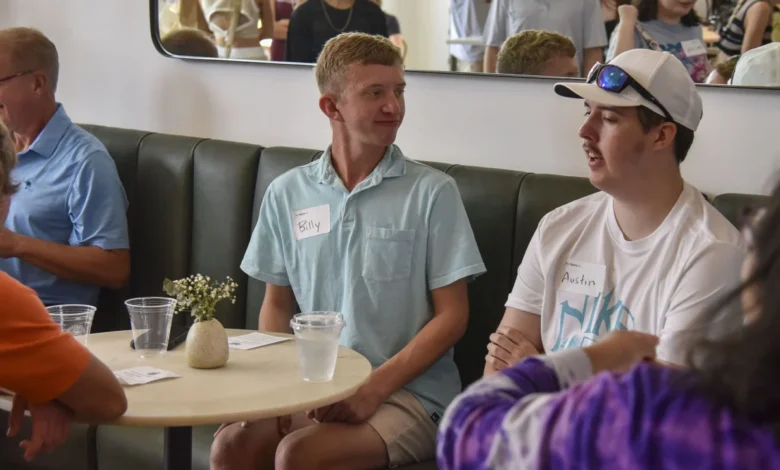
ST. PETERSBURG, Fla. — Amidst the stifling summer heat of downtown St. Petersburg, a trendy coffee shop provides a cool sanctuary for a group of young adults deeply engaged in conversation. Sipping iced coffees, 25-year-old Billy Eckert and a dozen peers discuss topics ranging from National Football League game highlights to local hangout spots across the Tampa Bay area. For these individuals, all of whom are on the autism spectrum, such gatherings represent more than just a weekend pastime; they serve as a critical bridge to a world that often feels exclusionary.
Billy Eckert is an enthusiastic communicator, though his eagerness to connect can sometimes manifest in rapid pacing, physical fidgeting, or challenges in balancing conversational turns. Navigating the modern social landscape has not been without its harsh realities. When he first ventured onto mainstream dating applications, he encountered severe stigma, including derogatory slurs directed at his intellectual differences. Yet, inside Intermezzo coffee shop, those painful digital interactions feel distant. Today, he and a cohort of neurodivergent individuals in their twenties are experiencing the straightforward comfort of peer acceptance.
This gathering is known as "Fun on the Spectrum St. Pete," a grassroots social club founded in May by Billy and his father, Bill Eckert. Designed specifically for adults aged 20 to 29 who are neurodivergent or diagnosed with autism, the initiative has rapidly evolved from a humble family brainstorming session into an essential social lifeline across Florida’s Gulf Coast.
The Genesis of a Social Lifeline
The creation of Fun on the Spectrum St. Pete was born out of both necessity and inspiration. Like many parents of children with developmental differences, Bill and his wife, Diane, spent decades navigating a society whose infrastructure is frequently built without neurodiversity in mind. Securing stable employment, finding romantic partners, and achieving residential independence are formidable milestones for any young adult, but for those on the autism spectrum, the hurdles are often magnified.
Recent statistical data underscores the magnitude of these challenges. Studies indicate that just over half of all adults with autism have ever engaged in paid employment. Similarly, only about half have experienced a romantic relationship, and fewer than 20% achieve independent living arrangements.
Despite these barriers, the demographic landscape of autism is shifting rapidly. Increased awareness, broader diagnostic criteria, and improved screening tools have led to a significant surge in diagnoses over the past decade. Public health tracking highlights a staggering 450% increase in autism diagnoses over a ten-year period leading into the 2020s. As more children diagnosed during the early-detection waves of the 2000s and 2010s age into adulthood, communities are facing an urgent demand for adult-oriented support systems, transitional housing, and continued social infrastructure.
For the Eckert family, supporting Billy’s transition into adulthood has been an ongoing, hands-on endeavor. Billy harbored clear aspirations: he wanted to live independently, build a career, and eventually start a family of his own. To address employment barriers, Bill and Diane established Angels in Action Pinellas, a nonprofit commercial cleaning enterprise that specifically employs adults with autism, including Billy and two of his peers.
However, employment was only half the battle. Billy sought meaningful friendships outside of work. Trips to standard sports bars and conventional social venues failed to expand his peer circle, often leaving him feeling isolated in crowded rooms. The turning point arrived when Bill watched the critically acclaimed documentary-style reality television series Love on the Spectrum, which follows neurodivergent young adults as they navigate the complexities of dating and relationships. Inspired by the show’s emphasis on peer community and shared understanding, Bill proposed a localized solution to his son: why not build a dedicated social group for individuals navigating similar life experiences?
Structure and Execution of the Gatherings
The mechanics of a Fun on the Spectrum event are intentionally designed to alleviate social anxiety while encouraging authentic interaction. As participants trickle into the venue, they are greeted by Bill Eckert, whose warm demeanor immediately sets an inclusive tone. Attendees and their accompanying parents fill out index cards detailing their favorite leisure activities and local destinations.
For many parents attending for the first time, visible anxiety is a common initial reaction. Years of advocating for and shielding their children from a potentially rigid or judgmental society can foster a protective parental instinct. However, Bill’s empathetic approach—grounded in his own lived experience as a father—quickly disarms these concerns.
Once introductory cards are completed, structured activities commence. In a recent session outside the cafe, participants lined up face-to-face, tasked with discussing the information written on their partners’ cards. The exercise bypasses the awkwardness of unstructured small talk by providing a clear conversational prompt.
Participants readily share their unique preferences and personality traits. Parker Shirey, a 28-year-old attendee, shared his affinity for local establishments centered around animals. "I don’t drink alcohol. It’s the funniest thing," Shirey remarked. "I go there to pet the dogs." Another participant, 23-year-old Andrew Inabinet, expressed a shared local interest by connecting over his participation in a regional running club. Meanwhile, Melody Englmann, 24, bonded with a peer over the shared relief of finding air-conditioned spaces during the sweltering Florida summer.
Observing the interactions with a quiet pride, Bill Eckert reflected on the diverse personalities within the group. "They’re like snowflakes," he noted. "All special in their own way."
Beyond the Participants: A Support Network for Parents
An unforeseen yet powerful byproduct of the Fun on the Spectrum initiative has been the establishment of a secondary community: a support network for the parents and caregivers themselves.
While young adults engage in structured socializing, their parents frequently utilize the time to connect, share resources, and offer mutual emotional support. At the St. Petersburg gathering, mothers Jeanette Kooser and Laura Englmann greeted each other with the warmth of long-standing friends, demonstrating a bond forged through shared experiences.
"It’s been really therapeutic for the parents," Englmann observed.
Kooser echoed the sentiment, emphasizing the psychological relief of shared solidarity. "We’re not alone in this, you know? Knowing that really does help."
Child developmental psychologists and social workers frequently emphasize the high rates of caregiver burnout among families of neurodivergent adults. The transition period from structured educational systems to adult life—often referred to as falling off the "services cliff"—places immense psychological and logistical pressure on families. Grassroots groups like the one fostered by the Eckerts fill a vital gap by providing psychological respite and community validation for parents who often shoulder advocacy duties alone.
Broader Implications and Future Outlook
The success of Fun on the Spectrum St. Pete highlights a broader national conversation regarding the necessity of neurodiversity-affirming community spaces. Traditional social structures often place the burden of adaptation entirely on neurodivergent individuals, requiring them to mask their traits to fit neurotypical standards. Initiatives that deliberately create environments centered on mutual understanding allow participants to practice social skills without the fear of social penalty or stigma.
As the afternoon coffee shop gathering drew to a conclusion, participants stepped outside for a group photograph, exchanging phone numbers and coordinating future meetups via digital messaging platforms. The transformation in confidence among attendees was palpable.
"My social skills, I think they’ve gotten better," Melody Englmann reflected as the event wrapped up. "Being around people that are loving, it makes you more confident."
For organizers like Bill Eckert, the ultimate metric of success is seeing participants transition from isolated individuals into an interconnected network of mutual support. What began as a father seeking a way to help his son find companionship has expanded into a scalable blueprint for community building—proving that with the right environment, young adults on the spectrum can forge lasting connections, build self-assurance, and navigate early adulthood on their own terms.