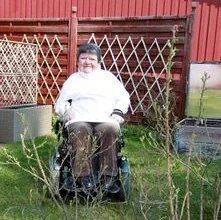
The Global Independent Living Movement Mourns the Loss of Norwegian Pioneer Knut Flaaum

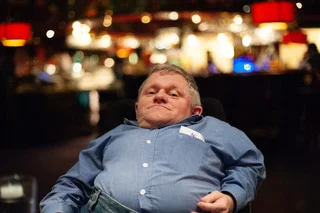
The international disability rights community is in mourning following the passing of Knut Flaaum, a towering figure in the global Independent Living movement and one of the founding architects of personal assistance in Scandinavia. Flaaum drew his final breath on August 24, 2026, leaving behind a legacy that fundamentally reshaped the legal, social, and practical realities of disabled individuals across Norway, Europe, and the wider world. His death marks the conclusion of a decades-long crusade for human rights, self-determination, and the absolute deinstitutionalization of people with disabilities.
As a co-founder of ULOBA (Uno Lokale Boliger av Funksjonshemmede, later known as ULOBA – Independent Living Norway), Flaaum was instrumental in shifting the paradigm of disability care from institutional charity and medical paternalism to civil rights and consumer-directed personal assistance. Alongside fellow trailblazers such as the late Vibeke Marøy Melstrøm, Flaaum challenged the Scandinavian welfare state to recognize disabled citizens not as passive recipients of care, but as autonomous agents capable of directing their own lives, employment, and community participation.
Main Facts of a Monumental Legacy
Knut Flaaum’s contributions extended far beyond the borders of Norway. Throughout his active years, he operated at the intersection of grassroots activism and high-level policy advocacy. He was a prominent fixture within the European Network on Independent Living (ENIL), the ENIL Foundation, and Bente Skångård’s Independent Living Fund. Colleagues remember him not only as an intellectual strategist who understood the mechanics of systemic oppression, but also as a steadfast mentor characterized by his signature warmth, collaborative spirit, and unwavering optimism.
The impact of Flaaum’s work is tangible. The model of User-Controlled Personal Assistance (UPAs) that he and his ULOBA peers fought to establish in Norway became a benchmark for progressive social policy globally. By demonstrating that disabled individuals could successfully manage their own support staff, budget their care hours, and live fully integrated lives within society, Flaaum helped dismantle decades of institutional segregation. His passing closes a vital chapter of first-generation leadership within the European Independent Living movement, triggering deep reflection among contemporary activists regarding succession, institutional memory, and the future of disability rights.
Chronology of a Movement: The Rise of Independent Living in Norway
To understand the magnitude of Knut Flaaum’s impact, one must examine the historical trajectory of disability rights in Northern Europe during the late 20th century. Prior to the establishment of organizations like ULOBA, disabled people in Norway faced severe systemic barriers, including forced institutionalization, severe restrictions on personal freedom, and a complete reliance on family members or state-run medical facilities for daily living tasks.
1980s: The Global Spark Reaches Scandinavia
Inspired by the American Independent Living movement pioneered by Ed Roberts and the Berkeley Center for Independent Living, European activists began organizing. The core philosophy asserted that disability is primarily a social construct resulting from environmental and architectural barriers, rather than an individual medical tragedy.
1991: The Birth of ULOBA
Recognizing that existing welfare structures were inadequate, Knut Flaaum, alongside Vibeke Marøy Melstrøm and a small collective of visionary disabled individuals, founded ULOBA in 1991. The organization was built on a radical premise: the user is the employer. This cooperative model allowed disabled people to hire, train, and direct their own personal assistants, effectively transferring power from the municipality to the individual.
2000s: European Expansion and Policy Reform
Flaaum took the Norwegian model to the international stage. Through his engagement with ENIL and various transnational advocacy networks, he lobbied the Council of Europe and the European Union to recognize personal assistance as a fundamental human right. His efforts dovetailed with the drafting and eventual ratification of the United Nations Convention on the Rights of Persons with Disabilities (CRPD), particularly Article 19, which enshrines the right to live independently and be included in the community.
2010s–2020s: Institutionalization Resistance and Legacy Consolidation
In his later years, Flaaum remained vigilant against the retrenchment of welfare services and the commercialization of care. He continuously warned against the corporate takeover of assistance services, advocating fiercely for user-led cooperatives that prioritized human dignity over profit margins. Until his final days, he remained an active voice within the ENIL Foundation and grant-making bodies designed to seed new Independent Living initiatives across developing regions.
Supporting Data: The Socio-Economic Impact of Personal Assistance
The framework championed by Flaaum and his contemporaries is not merely a moral imperative; it has proven to be an economically sound and socially transformative policy. According to comparative social policy data from Scandinavia and the European Union:
Employment and Economic Participation: Studies consistently show that the implementation of user-controlled personal assistance drastically increases the labor market participation of disabled individuals. When individuals have reliable, flexible support tailored to their professional and personal schedules, they are significantly more likely to pursue higher education, enter the workforce, and contribute to the tax base.
Cost-Effectiveness vs. Institutional Care: Longitudinal economic analyses conducted by social welfare researchers indicate that while personal assistance requires upfront public investment, it is substantially more cost-effective than institutional care or long-term nursing home placement. Crucially, it replaces a high-cost, low-quality segregated model with a low-cost, high-autonomy integrated model.
Deinstitutionalization Metrics: Across countries where the Independent Living model has been successfully institutionalized through legislation—such as Norway and Sweden—the population of disabled individuals residing in large-scale residential institutions has decreased by over 70% since the early 1990s, directly reflecting the foundational labor of leaders like Flaaum.
Official Responses and International Tributes
The international disability rights community responded to the news of Flaaum’s passing with an outpouring of grief, solidarity, and gratitude. Prominent figures within the global movement issued statements highlighting his indelible footprint on human rights jurisprudence.
Jamie Bolling, a leading voice in ENIL and a longtime collaborator of Flaaum, captured the sentiment of the community in a poignant tribute:
"With each loss of our great leaders, I feel fear for the future, but then I turn and see the flow of new and younger persons carrying the spirit of Independent Living forward. I am thankful for Knut and his commitment and engagement in Independent Living and for his friendship. May we keep Knut alive by saying his name and what he meant for our movement. Rest in peace and power, Knut."
Representatives from the European Network on Independent Living (ENIL) released a joint statement emphasizing Flaaum’s strategic acumen and steadfast dedication to grassroots organizing. The organization noted that Flaaum possessed a rare ability to bridge the gap between academic policy analysis and the gritty, day-to-day realities of disabled people fighting for basic accommodations. His contributions to the ENIL Foundation ensured that financial resources were continuously funneled to emerging activists who lacked institutional backing.
Similarly, board members of ULOBA released commemorative statements reflecting on his foundational role in shaping Norwegian social democracy. They credited Flaaum with forcing the Norwegian government to codify personal assistance rights into national legislation, ensuring that future generations would not have to fight the foundational battles that his generation waged.
Broader Impact and Implications: Navigating the Post-Pioneer Era
The passing of Knut Flaaum arrives at a critical juncture for the global disability rights movement. The generation of activists who conceptualized Independent Living—those who fought the initial legal battles and built the organizational infrastructure of the 1980s and 1990s—is slowly passing the torch. This generational transition presents both profound challenges and strategic opportunities for organizations like ENIL, ULOBA, and their international counterparts.
The Risk of Institutional Amnesia
One of the primary implications of losing foundational leaders like Flaaum is the threat of institutional amnesia. Younger generations of disabled individuals, having grown up with certain baseline rights (such as accessible public transport and personal assistance schemes), may take these hard-fought victories for granted. Analysts point out that without a robust understanding of the activist history—specifically the civil disobedience, hunger strikes, and intense political lobbying that secured these rights—the movement risks becoming complacent in the face of subtle retrenchments by austerity-driven governments.
The Commercialization and Bureaucratization Threat
Contemporary Independent Living movements face a new class of threats that Flaaum spent his final years warning against. Across Europe, welfare states are increasingly outsourcing personal assistance to private, profit-driven corporations. This trend often leads to the degradation of working conditions for personal assistants, the depersonalization of care, and the erosion of user control. Flaaum’s ideological framework—centered on user-led cooperatives and self-determination—serves as an urgent corrective and a strategic blueprint for activists currently fighting against the commodification of human support.
The Urgency of Succession and Intergenerational Mentorship
As Bolling noted in her tribute, the anxiety surrounding the loss of movement patriarchs and matriarchs is mitigated by the steady influx of new, younger activists. However, structured mentorship is required to ensure that the core philosophy of Independent Living—that disability is a political and civil rights issue, not a medical welfare issue—is not diluted. The legacy of Knut Flaaum provides an enduring pedagogical tool for leadership training programs across the globe.
Conclusion
Knut Flaaum’s life was a testament to the transformative power of collective action and uncompromising vision. From the fjords of Norway to the halls of the European Parliament, his work dismantled physical and ideological barriers, allowing thousands of disabled people to live lives characterized by dignity, choice, and freedom.
As the international community processes this profound loss, the mandate for the Independent Living movement is clear: to honor Knut Flaaum not merely through passive remembrance, but through active, continuous defense of human rights. By keeping his name alive, sharing his history, and fiercely protecting the autonomy of disabled individuals, the global movement ensures that his revolutionary spirit will endure for generations to come. Rest in peace and power, Knut Flaaum.