
U.S. Department of Education Special Education Chief Resigns Amid Controversial Agency Overhaul and Staff Transfers

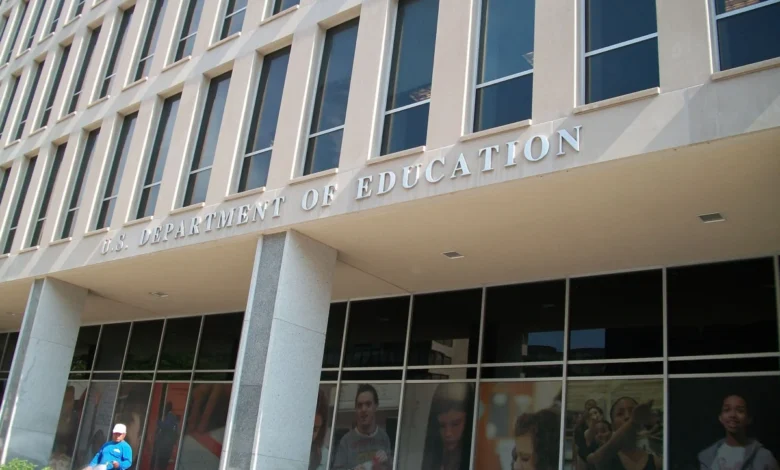
Leadership Stability Crumbles as Major Structural Shifts Begin
The top special education official at the U.S. Department of Education has abruptly resigned, stepping down just as the federal agency implements a controversial plan to outsource critical responsibilities and programs supporting students with disabilities. Kelly Rogers, who has been serving as the acting assistant secretary for the Office of Special Education and Rehabilitative Services (OSERS) since May, informed her colleagues on Wednesday that Friday would be her final day in office. She will be returning to her home state of Florida, leaving a significant leadership vacuum at a time when the division is undergoing unprecedented structural upheaval.
The timing of Rogers’ resignation has heightened anxieties among educators, disability advocates, and lawmakers. Her departure coincides directly with the physical relocation of more than 100 OSERS staffers to the Department of Health and Human Services (HHS). Concurrently, 57 employees from the Education Department’s Office for Civil Rights (OCR) are scheduled to be transferred to the Department of Justice (DOJ) the following week. These sweeping personnel movements, confirmed by the American Federation of Government Employees Local 252—the union representing Department of Education workers—are the operational realization of interagency agreements first established earlier in the year.
As the agency presses forward with these massive transitions, federal officials have yet to clarify who will assume leadership of OSERS, whether the incoming successor will report through the Department of Education or HHS, or how Rogers’ sudden departure will influence the long-term execution of the outsourcing plan. Despite the growing uncertainty, the Department of Education maintains an optimistic public stance regarding the multi-agency realignment.
Chronology of the Overhaul: From Initial Agreements to Congressional Pushback
The restructuring of the Department of Education’s special education and civil rights apparatus has unfolded rapidly over the course of several months, triggering intense opposition from stakeholders who argue the measures will severely undermine federal oversight and protections for vulnerable students.
The trajectory of the current crisis traces back to key developments over the summer:
- June: The Department of Education officially announces interagency agreements designed to offload substantial special education functions to HHS, alongside shifting select civil rights enforcement duties to the DOJ.
- July: Kelly Rogers outlines initial operational details, indicating that while OSERS staff would physically transition to HHS, she would continue supervising them from her position at the Department of Education, bolstered by cross-agency administrative support.
- Late July: The Senate Health, Education, Labor and Pensions (HELP) Committee takes legislative action, advancing a bill explicitly designed to block the Department of Education from transferring OSERS or entering into binding administrative agreements with external agencies. A companion bipartisan proposal is subsequently introduced in the House of Representatives.
- August: The interagency transfer plans manifest physically. More than 100 OSERS employees begin moving to HHS facilities, while OCR staffers prepare for their transition to the DOJ.
Prior to her resignation, Rogers expressed confidence in the transition, writing in an internal email obtained by advocacy groups that she remained assured of the team’s capability to drive positive outcomes through the HHS partnership. Nevertheless, her exit disrupts the leadership continuity that federal workers and outside observers deemed essential during such a complex structural migration.
Scope of the Restructuring: Beyond OSERS and the Office for Civil Rights
The departure of the acting assistant secretary and the relocation of OSERS and OCR personnel are part of a much broader federal downsizing and restructuring initiative. According to labor union representatives, nearly 180 employees within the Department of Education have been transferred to four distinct federal agencies over the course of the summer alone.
Adding to the logistical and operational turmoil, the Department of Education has initiated a formal process to relocate its primary headquarters to a significantly smaller building. Union officials warn that additional departmental offices are slated to be packed up and moved either to the new, downsized headquarters or dispersed among other federal agencies in the coming months. This shrinkage of physical infrastructure and human capital has reinforced fears among civil servants and public sector unions that the long-term viability of the cabinet-level education agency is being systematically degraded from within.
Official Responses and Stakeholder Alarm
The unfolding events have drawn sharp rebukes from former government officials, public education advocates, and organizational leaders who argue that fragmenting federal education oversight will inflict direct harm on students, parents, and local school districts.
Stephanie Smith Lee, who directed the Education Department’s Office of Special Education Programs under President George W. Bush and currently serves as co-director of policy and advocacy at the National Down Syndrome Congress, condemned the ongoing staff relocations.
"It is deeply disturbing that OSERS staff are being physically moved to HHS this week and OCR staff are being moved to DOJ," Smith Lee stated. "The administration claims that dismantling the Department of Education will lead to reduced bureaucracy. In fact, the opposite will occur as states, schools, and families will need to deal with multiple agencies for guidance, funding, and regulatory issues, and we lose the current collaboration among offices."
Chad Rummel, chief executive officer of the Council for Exceptional Children, echoed these sentiments, emphasizing that leadership instability compounds the operational risks of the transition.
"Having the OSERS leader step down during this transition from the Department of Education to HHS adds chaos and uncertainty, raising concerns among educators, families, and advocates," Rummel noted. "Department of Education staff should be focusing on supporting educators, strengthening special education, and improving outcomes for students with disabilities, rather than getting bogged down in reporting structures, internal agreements, and unclear priorities."
Similarly, Jacqueline Rodriguez, CEO of the National Center for Learning Disabilities, highlighted the lack of basic administrative clarity surrounding the handover.
"OSERS staff are moving to HHS now, and basic questions remain about who will be in charge and how this will work in practice," Rodriguez said, reiterating calls for legislative intervention. "We continue to urge Congress to stop these transfers."
Conversely, the Department of Education has defended the strategic realignment as a forward-thinking measure designed to optimize government services. In a statement provided to media outlets, an agency spokesperson asserted, "ED is excited to take this next step in our partnerships as we work in pursuit of better outcomes for students with disabilities and bolstered civil rights enforcement in schools and on campuses across America."
Implications for Special Education and Future Policy Outlook
The departure of Kelly Rogers and the execution of the interagency transfers mark a critical juncture in federal education policy. For decades, the Department of Education has served as the central clearinghouse and regulatory authority for the Individuals with Disabilities Education Act (IDEA), ensuring that millions of American children with developmental, physical, and cognitive disabilities receive the federally mandated free appropriate public education to which they are legally entitled.
By migrating core special education responsibilities to a health-focused bureaucracy like HHS—an agency primarily structured around public health programs, Medicare, Medicaid, and biomedical research—critics argue that educational expertise risks being diluted. Special education is fundamentally pedagogy-driven, requiring deep coordination with general education curricula, teacher training standards, and local school administration. Integrating these specialized functions into a health agency introduces potential bureaucratic friction that could delay critical federal guidance, complicate funding streams, and hinder regulatory enforcement.
Furthermore, the simultaneous movement of civil rights personnel to the Department of Justice signals a potential shift in how educational discrimination and accessibility complaints will be prioritized and investigated. While the DOJ possesses extensive litigation authority, its mandate differs significantly from the proactive compliance monitoring traditionally maintained by the Education Department’s Office for Civil Rights.
As Congress weighs legislative measures to halt or reverse the interagency agreements, the immediate reality on the ground remains turbulent. With OSERS currently lacking a confirmed permanent or acting leader, and with scores of institutional knowledge-holders packing their desks for relocation to external departments, the administrative framework supporting America’s special education system faces an unprecedented period of testing. Educators, families, and advocacy organizations remain on high alert, watching closely to see whether the federal government can maintain its statutory commitments to students with disabilities amidst a crumbling internal administrative architecture.
Related posts: