Unlocking the Past: A Guide to Ancient World Heritage Sites for Wheelchair Users

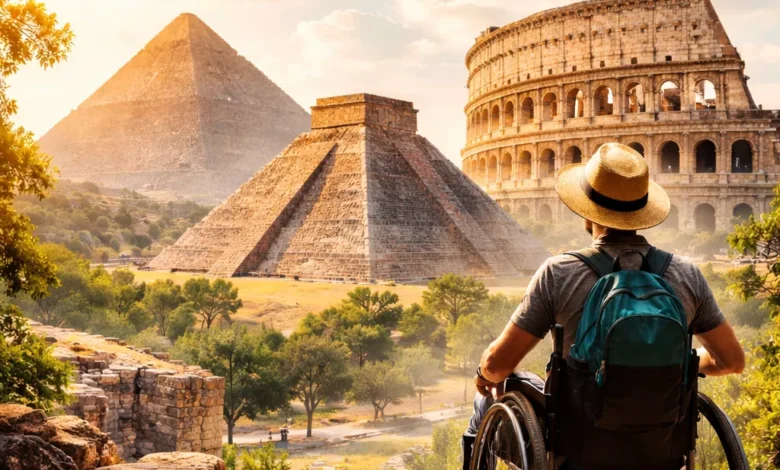
Ancient history belongs to everyone, yet for centuries, the world’s most significant archaeological sites were effectively closed to individuals with mobility impairments. Built long before the concept of universal design, these monuments were constructed with rugged terrain, steep staircases, and narrow passages that served as architectural barriers. However, a modern shift in heritage management—driven by both legislative mandates and a growing global emphasis on inclusive tourism—is transforming how these wonders are experienced. While accessibility remains a complex, ongoing challenge, there are now several iconic sites where wheelchair users can realistically engage with the remnants of human history.
The Evolution of Inclusive Heritage Management
The global movement to make ancient sites accessible is rooted in the 1972 UNESCO World Heritage Convention, which emphasizes the universal value of these locations. In recent decades, heritage organizations have been tasked with balancing the preservation of fragile, millennia-old structures with the fundamental right of public access. This has led to the installation of discrete ramps, the implementation of specialized elevator systems, and the creation of hard-packed, level pathways that do not compromise the integrity of the archaeological record.
The challenge, however, is immense. Many sites, such as the Incan citadel of Machu Picchu or the rugged desert terrain of Petra, were designed to be defensible and isolated. Retrofitting such sites requires precision engineering to ensure that accessibility solutions are reversible and aesthetically sympathetic to the site’s historical character.
Global Landmarks and Their Accessibility Status
The Great Pyramid of Giza, Egypt
The Great Pyramid, dating to approximately 2600 BCE, remains the only surviving structure of the Seven Wonders of the Ancient World. For wheelchair users, the Giza Plateau presents a mix of natural and man-made challenges. The site consists largely of uneven desert sand and limestone bedrock. While modern improvements have paved areas around the base of the Great Pyramid, movement across the plateau often requires a sturdy, all-terrain chair or an assistant. Visitors should note that while the interior of the pyramid is largely inaccessible due to steep, narrow, and low-ceilinged passageways, the external experience of the monument offers a profound sense of scale that remains a bucket-list destination for travelers worldwide.
The Colosseum, Rome, Italy
Constructed in the 1st century CE, the Roman Colosseum serves as a benchmark for modern heritage accessibility. Italian authorities have invested heavily in creating a visitor experience that respects the site’s status as a masterpiece of Roman engineering while ensuring functionality for all. An elevator is available to transport visitors to the upper tiers, and the interior floor has been significantly leveled, allowing for a comprehensive view of the hypogeum (the underground chambers). The integration of these features demonstrates how historical authenticity can coexist with modern mobility requirements.
The Acropolis and Parthenon, Athens, Greece
The Acropolis is perhaps the most significant symbol of Classical antiquity. For years, the steep, rocky ascent made the Parthenon inaccessible to many. However, a major infrastructure project, including the installation of a state-of-the-art lift system, has changed the paradigm. This elevator allows wheelchair users to bypass the treacherous, uneven marble steps of the Propylaea. While the system is subject to maintenance and wind conditions, its existence signals a critical shift in how Greece manages its most prized cultural assets, ensuring that the legacy of the Athenian democracy is accessible to a wider demographic.
Chichén Itzá, Mexico
As a testament to Maya civilization, Chichén Itzá attracts millions of visitors. Unlike many European sites characterized by steep hills, the landscape of the Yucatán Peninsula is largely flat. The main pathways through the archaeological complex have been cleared and smoothed, making it one of the more manageable ancient sites for wheelchair users. While certain inner temple areas remain restricted due to the fragile nature of the architecture, the primary ceremonial plaza—featuring the iconic Temple of Kukulcán—is navigable, offering an immersive experience of one of the New World’s greatest achievements.
Ephesus, Turkey
Ephesus offers one of the most complete urban experiences for a visitor. Walking—or rolling—down the Curetes Street, past the Library of Celsus, provides a visceral sense of what life was like in a major Roman provincial capital. Because the city was built on a grid with stone-paved streets, it is remarkably well-suited for wheelchair travel. While some sections feature original, uneven stonework that can be jarring, the main thoroughfare is accessible, and the sheer volume of preserved architectural detail provides a level of immersion that is difficult to replicate elsewhere.
Petra, Jordan
The "Rose City" of Petra is a site of immense geographic scale. The journey through the Siq, a narrow gorge leading to the Treasury, involves a long descent over gravel and sand. While this is physically demanding, it is a rite of passage for all visitors. Modern tourism operators have increasingly utilized specialized transit options to help visitors reach the primary viewing areas. Reaching the Treasury viewpoint is widely considered a major achievement in accessible travel, as it allows individuals to witness the architectural brilliance of the Nabataeans in a desert environment that was historically considered impenetrable.
The Realities of Limited Accessibility: A Case Study in Machu Picchu
Not all ancient sites are suitable for universal access. Machu Picchu, the 15th-century Incan estate in the Andes, remains a critical point of discussion in the travel industry. Due to its location on a mountain ridge and its reliance on terracing, steep stone staircases, and narrow walkways, it is not broadly wheelchair accessible.
Heritage advocates and tourism officials maintain that it is vital to be transparent about these limitations. Managing expectations prevents dangerous situations and ensures that resources are directed toward the most feasible viewpoints. For those who cannot physically navigate the central citadel, virtual reality tours and accessible viewing platforms on the perimeter provide an alternative way to appreciate the site’s historical significance without the risks associated with its challenging topography.
Implications for Future Heritage Conservation
The trend toward accessible tourism has significant economic and social implications. A report from the World Tourism Organization (UNWTO) suggests that accessible tourism is a growing market segment, as the global population ages and the demand for inclusive travel experiences rises. By investing in accessibility, heritage sites do more than just accommodate individuals with disabilities; they enhance the infrastructure for elderly visitors and families with strollers, thereby increasing overall visitor capacity and revenue.
Furthermore, the integration of accessibility features acts as a catalyst for deeper preservation. The materials used to smooth paths often protect the original, more fragile ground surfaces from erosion. As technology advances, we can expect to see more "soft" accessibility solutions, such as augmented reality apps that allow users to view inaccessible areas of a site in high-fidelity 3D, bridging the gap between physical reality and historical education.
Practical Considerations for the Accessible Traveler
For those planning a visit to these historical sites, preparation is paramount. Accessibility status is rarely static. Weather patterns, ongoing archaeological excavation, and mechanical failures of infrastructure like elevators can shift the situation in a matter of days.
- Pre-Visit Verification: Always check the official website of the site no more than 48 hours before arrival. Many sites now list the operational status of elevators or the availability of specialized electric shuttles.
- Consult Local Guides: Hiring a local guide who specializes in accessible tours is often the most reliable way to navigate the nuances of a site. They are often aware of the "backdoor" routes or secondary pathways that are more level than the primary tourist thoroughfares.
- Equipment Check: Ensure that your mobility device is appropriate for the terrain. While manual chairs are often sufficient for paved sites like Ephesus, rugged, battery-assisted devices or all-terrain tires may be required for desert or mountainous locations.
The effort required to visit these sites is significant, but the reward—the ability to stand in the presence of history—is a fundamental human experience. As the world continues to move toward more inclusive standards, the barrier between the past and the present grows smaller, ensuring that the legacy of our ancestors remains a shared inheritance rather than a gated privilege.