The Inspiring Life and Legacy of Judy Heumann Take Center Stage in Apple Original Films Feature Being Heumann


The cinematic landscape is set to welcome a powerful biographical drama chronicling the extraordinary life of Judith Heumann, widely celebrated as the mother of the disability rights movement. Titled Being Heumann, the feature film is scheduled for its grand world premiere on Thursday as the opening night selection of the prestigious Toronto International Film Festival. The high-profile screening marks the beginning of the movie’s journey toward audiences worldwide, generating significant Oscar buzz and bringing vital disability narratives to the forefront of mainstream entertainment.
Produced by Apple Original Films, the biographical picture will follow its festival debut with a targeted theatrical run in select markets beginning November 6. Shortly thereafter, the feature will become globally available for streaming on Apple TV starting November 13. Industry analysts anticipate that the project will draw considerable critical attention, largely due to its compelling subject matter and the creative team steering the production.
At the helm of Being Heumann is Academy Award-winning director Siân Heder, whose previous work includes the groundbreaking 2021 film CODA. Heder made history with CODA by directing the first film featuring a predominantly deaf cast to capture the Academy Award for Best Picture. Bringing her distinct sensitivity to underrepresented communities, Heder directs a stellar ensemble cast. The film stars Ruth Madeley, an acclaimed actress with spina bifida, in the demanding role of Judy Heumann. The cast also features prominent Hollywood names, including Mark Ruffalo, Dylan O’Brien, and Madeline Delp, ensuring broad commercial and critical appeal.
From Personal Adversity to Global Activism
The narrative of Being Heumann is adapted directly from Heumann’s bestselling memoir of the same name. Rather than attempting to encapsulate her entire decades-long crusade in a single narrative arc, the film zeroes in on a defining historical flashpoint: the legendary 1977 San Francisco federal building sit-in. This pivotal event stands as one of the most successful and enduring peaceful protests in the history of American civil rights.
For nearly a month—precisely 28 days—Heumann orchestrated and sustained a takeover of the federal building alongside more than 100 individuals with diverse disabilities. The demonstration was organized to pressure the federal government into finally enforcing Section 504 of the Rehabilitation Act of 1973. Although the legislation had been signed into law years prior, bureaucrats repeatedly delayed issuing the necessary regulations to put the law into effect. Section 504 was designed as a crucial safeguard, barring discrimination against individuals with disabilities in any program or activity receiving federal financial assistance.
The recent release of the official trailer for Being Heumann offers a glimpse into the fierce determination that defined Heumann’s life. In one striking sequence, Heumann is depicted in her wheelchair strategically blocking a city transit bus while rallying her fellow activists. "They see you in front of the stairs and they think that you’re the problem," Heumann declares to the gathered crowd, her voice ringing with absolute clarity. "The stairs are the problem." This philosophy encapsulated her lifelong mission: shifting the burden of accommodation away from the disabled individual and placing it squarely on inaccessible societal infrastructure.
A Lifetime of Overcoming Systemic Barriers
To fully understand the magnitude of Heumann’s activism, historians point to her formative years, which forged her unyielding resilience. Born in Philadelphia in 1947 to German-Jewish immigrants who had fled the Holocaust, Heumann contracted polio at just 18 months old. The illness left her paralyzed from the legs down, requiring the permanent use of a wheelchair.
When Heumann reached school age, her parents encountered overt systemic discrimination. Local public school officials attempted to bar her from attending classes, classifying her as a "fire hazard" and deeming her incapable of learning alongside able-bodied children. Her parents, however, refused to relent, forcing the school system to make accommodations and allowing her to receive an education.
The systemic resistance Heumann faced in education repeated itself when she entered the professional workforce. After graduating from Long Island University and subsequently earning her master’s degree in public health from the University of California, Berkeley, she applied for a teaching license in New York State. The Board of Education rejected her application, explicitly citing her paralysis as a danger during a fire evacuation. Refusing to accept discrimination masked as safety concerns, Heumann took legal action against the board. Her successful lawsuit resulted in a landmark victory, allowing her to break a major barrier and become the very first teacher in a wheelchair in the history of New York State.
Expanding the Legislative Landscape
While the 1977 San Francisco sit-in remains the dramatic centerpiece of the new Apple film, Heumann’s legislative fingerprints are stamped across nearly every major disability civil rights victory in modern history. Following her grassroots organizing in California, Heumann transitioned into formal advocacy and policy roles, bringing her formidable intellect and uncompromising drive to the halls of government.
During the Clinton administration, Heumann served as the Assistant Secretary of Special Education and Rehabilitative Services in the U.S. Department of Education, holding the position from 1993 to 2001. In this role, she oversaw the implementation and funding of programs impacting millions of children and adults with disabilities across the nation. Later, under the Obama administration, she was appointed as the first Special Advisor on International Disability Rights at the U.S. Department of State, effectively making accessibility a cornerstone of American foreign policy and human rights diplomacy abroad.
Furthermore, Heumann was a central architect and coalition builder behind the enactment of the Individuals with Disabilities Education Act (IDEA), the landmark Americans with Disabilities Act (ADA) of 1990, and the United Nations Convention on the Rights of Persons with Disabilities. Through these legislative milestones, physical barriers in public transport, architectural designs, and employment practices began to crumble, fundamentally altering the fabric of daily life in the United States and inspiring global movements.
Cultural Implications and Industry Impact
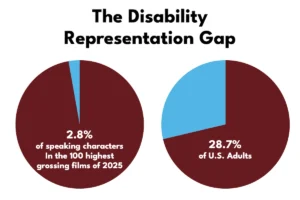
The release of Being Heumann arrives at a critical juncture for authentic representation in the entertainment industry. For generations, characters with disabilities were routinely played by non-disabled actors, and stories centering disability were frequently framed through tragic, pity-inducing lenses known pejoratively as "inspiration porn."
By casting Ruth Madeley—a visible disabled performer—in the title role and enlisting Siân Heder to direct, Apple Original Films is signaling a major shift toward authentic storytelling. Disability advocates and cultural analysts have long argued that authentic casting not only provides overdue economic and creative opportunities for disabled artists but also results in more nuanced, grounded, and accurate portrayals of the human experience.
The film’s arrival also holds profound commemorative significance. Following Heumann’s passing in March 2023 at the age of 75, the global disability community mourned the loss of its most visible matriarch. Tributes poured in from world leaders, civil rights organizations, and artists alike, cementing her status alongside figures like Martin Luther King Jr., Susan B. Anthony, and Harvey Milk as a foundational pillar of American civil rights history.
Anticipation and Future Outlook
As the cast and crew prepare to walk the red carpet at the Toronto International Film Festival, anticipation within both the film industry and the disability advocacy sector has reached a fever pitch. Early industry tracking suggests that Being Heumann could emerge as a major player during the upcoming awards season, potentially positioning Ruth Madeley for historic recognition.
Beyond the accolades and box office figures, those close to the production emphasize that the true measure of the film’s success will lie in its ability to educate and mobilize new generations. As accessibility debates continue to evolve in the digital age—encompassing everything from web accessibility standards to public transit modernization—the timeless strategies demonstrated by Judy Heumann remain as relevant as ever.
When audiences stream Being Heumann this November, they will not merely be watching a historical period piece about a 1970s protest. They will be witnessing the blueprint for modern civil rights advocacy—a vivid reminder that monumental societal change is achieved not through passive waiting, but through collective, uncompromising, and joyous resistance.
Related posts: