
From Bedbound to Beyond: How Liam Virgo Turned a London Dream into a Blueprint for Disability Travel

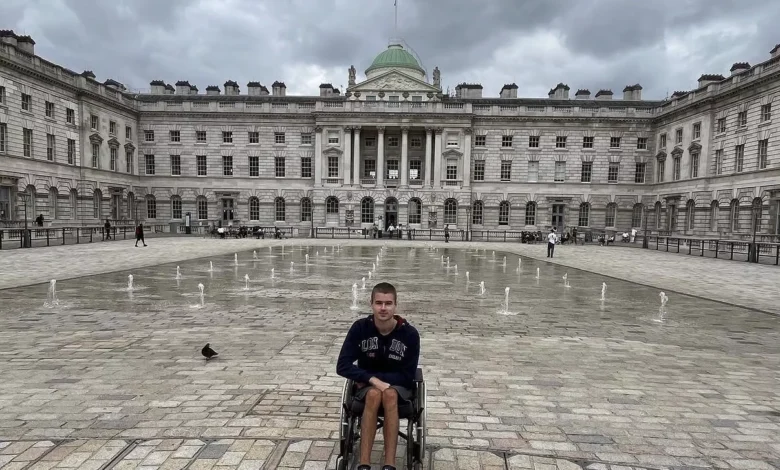
In 2016, the life of 13-year-old Liam Virgo underwent a radical and traumatic transformation. A healthy, active teenager, Virgo was suddenly struck by a severe onset of Functional Neurological Disorder (FND), a condition where the brain’s software—the signals between the central nervous system and the rest of the body—experiences a critical failure. Within days, Virgo transitioned from a life of typical adolescent mobility to complete paralysis and the loss of speech. What followed was a multi-year period of intensive clinical rehabilitation and psychological endurance, eventually leading to a recovery journey that has seen him travel to over 120 towns and cities across the United Kingdom.
The Clinical Context of Functional Neurological Disorder
Functional Neurological Disorder acts as a bridge between neurology and psychiatry, though it is fundamentally a physical condition. According to the FND Hope organization, the disorder occurs when the brain is structurally intact but functionally impaired, leading to symptoms that can include motor paralysis, seizures, sensory disturbances, and speech impediments.
For patients like Virgo, the onset is often sudden, creating a "locked-in" sensation where the mind remains active while the body fails to respond to cognitive commands. Clinical data suggests that early, multidisciplinary intervention—involving physical therapy, occupational therapy, and psychological support—is critical to restoring function. Virgo’s case highlights the psychological toll of the condition, as he spent months essentially immobile and unable to tolerate even the mechanical pressure of a standard wheelchair, confined strictly to a hospital bed.
Chronology of a Recovery Mission
The trajectory of Virgo’s rehabilitation was anchored by a specific, self-imposed goal: visiting London. This "London Dream" served as a cognitive anchor, transforming the mundane and often painful aspects of physiotherapy into a goal-oriented mission.
- 2016 (Onset): Virgo is diagnosed with severe FND. He experiences full paralysis and total loss of communication abilities.
- 2016–2019 (The Dormant Phase): A three-year period of intense clinical focus. During this time, Virgo remained bedbound, unable to sit upright due to chronic pain and physical intolerance to mobility aids.
- 2019 (The Breakthrough): After years of persistent physical therapy, Virgo achieves the ability to sit in a wheelchair for the first time. This milestone marked the shift from clinical confinement to community integration.
- 2020–Present (The Expansion): Following his initial success in navigating London, Virgo began an ambitious travel schedule, eventually documenting visits to more than 120 UK destinations.
Accessibility Infrastructure: The London Case Study
London presents a unique paradox for disabled travelers: it is a city of immense historical value but one built long before modern accessibility standards were established. However, the city has undergone significant modifications to comply with the Equality Act 2010, which mandates that service providers make "reasonable adjustments" to ensure accessibility.
Virgo’s experience highlights the "step-free" infrastructure of the city. Modern hubs, such as those found in the South Bank, Canary Wharf, and Stratford, represent the gold standard of modern urban planning. These areas utilize level-access surfaces, wide-entry points, and universal design principles. Conversely, the city’s older, independent venues often pose significant challenges. Research into accessible tourism indicates that a "single-step" barrier is the primary deterrent for wheelchair users in historic European cities.
Strategic Travel for the Mobility Impaired
For travelers navigating similar conditions, the methodology employed by Virgo—pre-trip vetting—is considered best practice by disability advocates. Utilizing digital tools such as Google Street View to inspect entrances, paired with direct communication with venue managers, effectively mitigates the risks posed by historic architecture.
Regarding accommodation, the Park Plaza County Hall serves as an industry example of inclusive design. The facility provides roll-in wet rooms and spacious floor plans, which are essential for individuals requiring extra space for assistive equipment. Data from the accessible tourism market suggests that hotels prioritizing these features see a significant increase in repeat patronage from the disability community, a demographic that accounts for an estimated £12 billion in annual tourism expenditure in the UK alone.
Broader Implications and Societal Impact
The story of Liam Virgo serves as more than an individual success narrative; it reflects a growing movement within the travel industry toward "Inclusive Tourism." This sector is shifting from a view of disability as a medical limitation to one that views it as a variation of human experience, necessitating a shift in infrastructure.
The societal implications are clear: when urban environments are designed for the most vulnerable, they become more efficient for everyone. The removal of barriers—such as the installation of lifts, the standardization of ramps, and the digitization of accessibility information—benefits parents with strollers, the elderly, and those with temporary injuries.
Advocacy and Future Goals
Virgo’s current mission involves extending his travel horizons beyond the UK, with plans for an upcoming excursion to Cyprus. His advocacy work, primarily conducted through his digital platforms, emphasizes that the wheelchair itself is not the barrier. Instead, the barrier is the failure of architects and urban planners to prioritize universal access in the built environment.
By cataloging his experiences, Virgo is creating a crowdsourced database of accessibility that helps others navigate their own journeys. His transition from a patient confined to a hospital bed to a traveler exploring over 120 cities serves as a case study in the efficacy of goal-oriented rehabilitation.
Ultimately, the goal of such advocacy is to normalize travel for individuals with complex medical histories. As diagnostic tools for conditions like FND improve, the demand for accessible infrastructure will likely increase. The work of individuals like Virgo provides the empirical, real-world data needed to influence future urban policy, ensuring that the "London Dream" can be a reality for any individual, regardless of their physical constraints. Through sustained pressure on local governments and private businesses to maintain high standards of inclusion, the travel industry is slowly evolving to ensure that mobility aids are viewed as tools of empowerment rather than symbols of restriction.
Related posts: