Palliative Care Intervention for Patients with End-Stage Liver Disease: A Cluster Randomized Controlled Trial

A recent cluster randomized controlled trial published in JAMA has shed light on the effectiveness of palliative care interventions for patients suffering from end-stage liver disease (ESLD). The study, led by researchers from Thomas Jefferson University and the Icahn School of Medicine at Mount Sinai, compared the outcomes of patients receiving palliative care from specialists versus those receiving care from hepatologists trained in primary palliative care. This groundbreaking research aims to address the significant symptom burden and psychosocial challenges faced by this vulnerable patient population, for whom limited evidence-based interventions have been available.
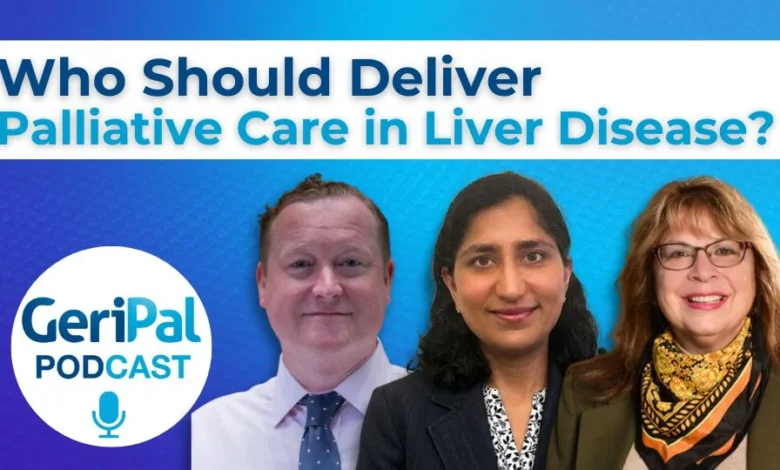
The GeriPal Podcast recently hosted a discussion with three of the study’s authors: Manisha Verma, an internist and researcher at Thomas Jefferson University; Chris Woodrell, a palliative care doctor and associate professor at Mount Sinai; and Marie Bakitas, a retired professor and associate director of the Center for Palliative and Supportive Care at the University of Alabama, Birmingham. The conversation delved into the study’s design, findings, and implications for future palliative care delivery in ESLD.
The Need for Early Palliative Care in Liver Disease
Manisha Verma highlighted the critical need for early palliative care interventions in patients with advanced liver disease. She pointed out that while the symptom burden and psychosocial challenges are well-documented, there’s a notable lack of interventions specifically designed to address these issues. Data suggests that less than 10% of these patients receive palliative care, and often, it is too late, within six hours of death, rendering it ineffective.
"This is a chronic, complex, progressive illness where patients are often at the terminal stage, facing either death or transplantation," Verma explained. "Transplantation is not always an option due to limited organ availability, making decision-making exceptionally complex for this patient population. Despite clear evidence that palliative care improves quality of life, symptom burden, and decision-making in many serious non-cancer illnesses, these patients often receive delayed interventions."
The study was conceived approximately six years prior to its publication, driven by the recognition of this gap in care. The researchers aimed to implement early interventions and address existing barriers to effective palliative care for individuals with ESLD.
Study Design: Comparing Two Models of Care
The cluster randomized controlled trial compared two distinct models of palliative care delivery:
- Model 1: Palliative Care Specialists: In this arm, patients received palliative care from dedicated palliative care specialists who possessed extensive training, experience, and board certification in the field. These specialists utilized evidence-based guidelines to deliver care.
- Model 2: Hepatologists Trained in Primary Palliative Care: This model involved hepatologists who underwent a 12-week online training program focused on primary palliative care skills. The training was adapted from a medical oncology curriculum and tailored to the specific needs of liver disease patients. It focused on enhancing skills in effective communication, serious illness conversations, caregiver assessment, symptom management, and shared decision-making.
The training program, developed with support from the Albert Einstein Society, incorporated liver-specific case scenarios informed by both palliative care physicians and hepatologists. It also included input from a patient and caregiver advisory board, emphasizing the patient-centered nature of the research. The online format included weekly sessions and synchronous Zoom discussions, requiring approximately two to three hours per week.
Addressing the "Why": The Necessity of Disease-Specific Trials
Eric Widera, co-host of the GeriPal Podcast, raised a pertinent question regarding the necessity of disease-specific randomized controlled trials (RCTs) for palliative care. He drew a parallel to cardiology, where numerous RCTs exist for specific conditions, and patients routinely see cardiologists for these issues.
Marie Bakitas responded, "I don’t think we need them, but we’re not going to get those patients seen or those clinicians convinced unless the palliative care study is done in disease A, B, C, or D. Because everyone turns around and says, ‘Well, just because it works in cancer, advanced liver disease is very different than cancer, although HCC is part of that.’ So, I think it’s a matter of more convincing the clinicians who refer and the patients who will and caregivers who will benefit."
Chris Woodrell added that the study was designed not to question whether palliative care works, but rather to determine the best way to deliver it to patients with advanced liver disease, especially given that less than 10% of these patients receive timely palliative care.
Patient Population and Trial Conduct
The study enrolled patients with decompensated cirrhosis who had experienced at least one episode of decompensation (e.g., ascites, bleeding, encephalopathy) in the preceding six months. Liver cancer patients, excluding those in stage D, were also included. A key exclusion criterion was patients expected to undergo transplantation within the next three months, as transplantation represents a distinct and complex care journey. Additionally, patients with a prognosis of less than six months, as determined by the hepatologist, were excluded, leading to a study population that was relatively functional and had a lower-than-expected mortality rate. Patients already enrolled in hospice or who had received palliative care within the previous three months were also excluded to ensure the integrity of the intervention.
The trial was designed as a cluster randomized controlled trial, meaning that entire sites (centers) were randomized to either the palliative care specialist arm or the hepatologist training arm. This design was chosen because the intervention involved training hepatologists, making it impractical to randomize individual patients within a center. The training for hepatologists occurred post-randomization but prior to patient enrollment at those sites.
The COVID-19 pandemic significantly impacted the study’s timeline, which spanned approximately a decade from its inception to publication. This prolonged period necessitated adjustments, including a reduction in the initial sample size target.
Navigating Methodological Challenges
The study faced several methodological challenges, including the introduction of a non-inferiority framework midway through the trial. Initially designed to assess superiority (whether hepatologists were better than palliative care specialists), the framework shifted to include non-inferiority to maintain study integrity, particularly given the complexities of implementing palliative care training within busy hepatology practices.
Manisha Verma explained the rationale behind this shift: "We attended a meeting with biostatisticians, and the question arose, ‘What if superiority fails?’ Particularly during COVID, there was a brilliant idea from like-minded statisticians that there is a way to build in non-inferiority, not to demonstrate that one is non-inferior, but to actually keep your study’s integrity intact. We added this non-inferiority during the trial design but without any outcomes data. None of the investigators, not even the statistician himself, had access to outcomes data."
This approach was motivated by feasibility and implementation considerations. The non-inferiority margin was set at four points, based on previous research on palliative care in non-cancer patients, representing half of the minimal clinically important difference for quality of life instruments.
Another challenge was the exclusion of patients transitioning to hospice or transplantation within the three-month primary endpoint assessment period. While this exclusion was necessary to isolate the effect of the hepatologist intervention, it meant that patients who might benefit from timely hospice referrals—a key component of palliative care—were not fully represented in the primary analysis. However, the number of patients transferred to hospice was small (17 in total), with only a marginal difference between the arms, suggesting it did not significantly skew the results.
Key Findings: Equivalence in Care Models
The study found a numerically larger improvement in quality of life in the palliative care arm (7-point improvement) compared to the hepatologist arm (8-point improvement) from baseline to three months. While the superiority test for hepatologists was non-significant, the pre-determined non-inferiority hypothesis was statistically significant, indicating that the two models of care were comparable.
"We are not comparing providers; we are really comparing the two models," Verma emphasized. "We are really comparing the implementation aspects of both these models. And both are equally good. That’s the real outcome."
It was noted that the hepatologist group had a slightly worse quality of life score at baseline, which was accounted for in the final adjusted analysis. The difference in patient numbers between the two arms, with fewer patients in the hepatologist group, was attributed to challenges in research operations and staff turnover at some of those sites. However, the researchers concluded that this did not significantly influence the study outcomes, as baseline characteristics were comparable.
Implications for Practice and Future Directions
The study’s findings have significant implications for the integration of palliative care into routine practice for patients with ESLD. The equivalence of the two models suggests that trained hepatologists can effectively deliver primary palliative care, potentially expanding access and alleviating the burden on specialist palliative care teams.
Chris Woodrell highlighted the importance of this finding: "The fact that we have a non-inferiority finding is interesting because it begs a question, right? So now it’s like, well, what are the implementation questions? What are the factors in one health system versus another that might promote success of one model’s implementation over another based on preferences, structural, systemic, all the things. So for me, that’s a huge takeaway."
Qualitative data from the study revealed that hepatologists found the training valuable and that it improved their relationships and communication with patients and caregivers. A significant finding was that many hepatologists reported never having systematically engaged with caregivers before, a practice that is routine for palliative care specialists.
Marie Bakitas elaborated, "The timing piece and the caregiver piece were two things that really came out in terms of practical implementation going forward. The hepatologists, they used to book their study patients when there was no other patient following them… So they had plenty of time at the end of the day or on a non-clinic day. And the palliative care clinicians reflected on time and said they think it’s great, but I don’t know where they’re going to find the time to do this, you know, sort of going forward outside of the study."
The study also indicated that patients and caregivers in both arms valued the extra time and felt listened to, experiencing a level of care and responsiveness that differed from their previous experiences. This suggests that even with the time constraints, the patient and family experience was positively impacted.
The "Magic Wand" for Implementation
When asked about their vision for implementing these findings, the researchers offered compelling perspectives:
Manisha Verma envisioned engaging healthcare system CEOs to present two choices: Model 1, where palliative care specialists focus on early interventions for earlier-stage patients, and Model 2, where trained hepatologists and gastroenterologists deliver primary palliative care, freeing up specialist resources for more complex cases.
Chris Woodrell suggested a hybrid approach, utilizing small, multidisciplinary palliative care teams as champions and clinicians to liaise between departments, provide ongoing education, and facilitate referrals between trained hepatologists and specialists.
Marie Bakitas expressed a desire to remove the constraints of time and financial incentives, allowing clinicians to focus on providing excellent care based on their expertise and patient needs.
The study’s findings offer a promising roadmap for enhancing palliative care for patients with end-stage liver disease. By demonstrating the effectiveness of both specialist-led and primary palliative care delivered by trained hepatologists, the research paves the way for broader implementation and improved quality of life for this underserved patient population. The ongoing efforts to condense training programs and develop clear implementation strategies are crucial steps toward realizing this vision.